
Inglewood is defined as a city in Los Angeles County with a population of 105,575 that has become one of Southern California’s most watched communities, driven by world-class sports venues, deep cultural roots, and a rapidly shifting real estate market. Home to SoFi Stadium, Intuit Dome, and The Forum, the city draws millions of visitors each year while its longtime residents navigate the pressures of growth and change. In 2026, Inglewood sits at a crossroads: a place where historic Black and Latino community traditions coexist with billion-dollar developments and global sporting events. Whether you are researching the neighborhood for lifestyle, culture, or employment context, this guide delivers a grounded picture of what Inglewood actually looks like today.
What events and cultural offerings define Inglewood?
Inglewood’s community calendar in 2026 is one of its most underappreciated assets. The city’s Parks, Recreation and Community Services Department maintains a full schedule of free public events open to all residents, with a dedicated information line at (310) 412-8750. That commitment to accessibility is not accidental. It reflects a deliberate city strategy to keep longtime residents connected to public life even as development reshapes the physical environment around them.
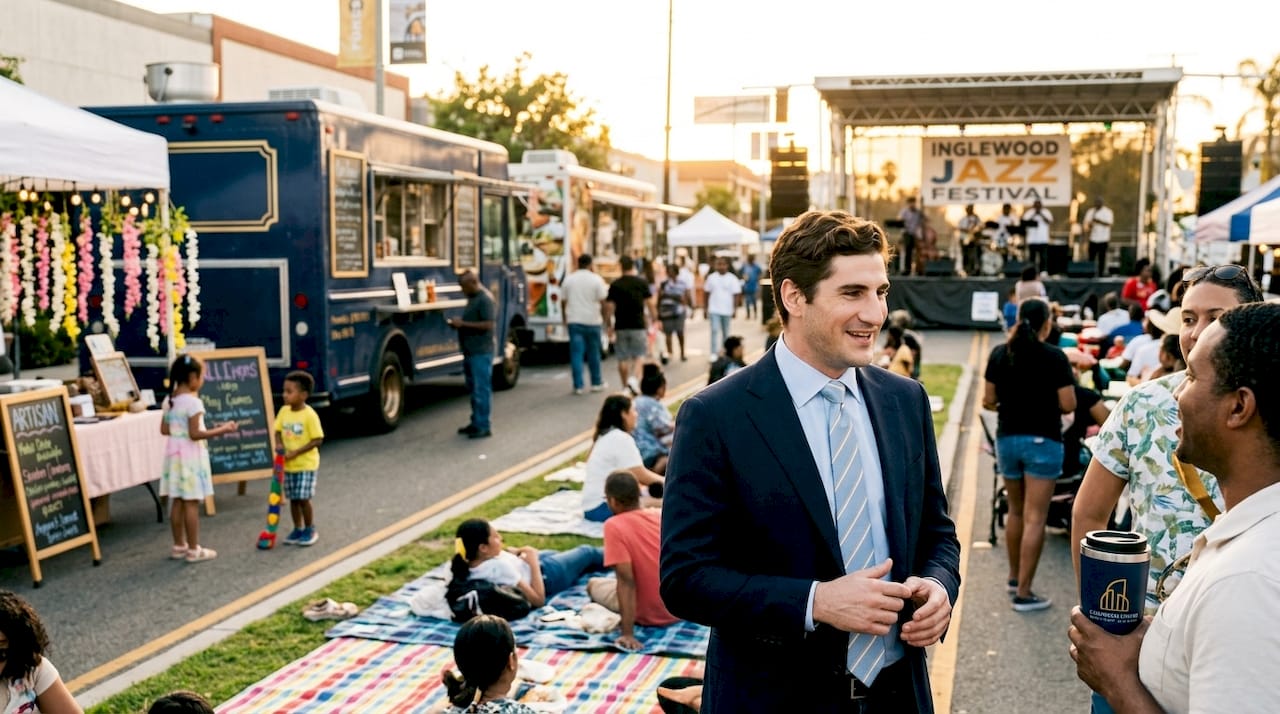
The flagship event of 2026 is The Wood Cup, a sports and cultural street festival held on Market Street in downtown Inglewood. On June 12, from 2 to 6 PM, Market Street goes vehicle-free to host six entertainment zones, local vendors, live music, community art installations, and a FIFA World Cup watch party. The event is a direct example of how Inglewood blends neighborhood identity with global sporting culture, giving residents a front-row seat to international events without leaving their own blocks.
Beyond The Wood Cup, Inglewood’s cultural ecosystem includes:
- Local arts organizations supporting Black and Brown artists through community galleries and rotating exhibitions
- City-sponsored programming tied to major venue calendars, including concerts, youth sports leagues, and seasonal festivals
- Neighborhood block events coordinated through the Parks Department that activate public spaces throughout the year
- FIFA World Cup watch parties organized at multiple community locations, making the tournament accessible to residents who cannot attend SoFi Stadium in person
Pro Tip: If you plan to attend The Wood Cup or any city-sponsored event, check the official Inglewood city website or call (310) 412-8750 in advance. Event details, parking, and transit options are updated regularly as major sporting events approach.
The integration of city events with global programming creates a cultural ecosystem that is rare among cities of Inglewood’s size. Residents get both the energy of international events and the grounding of locally organized community life.
How do Inglewood’s sports venues shape the local economy?
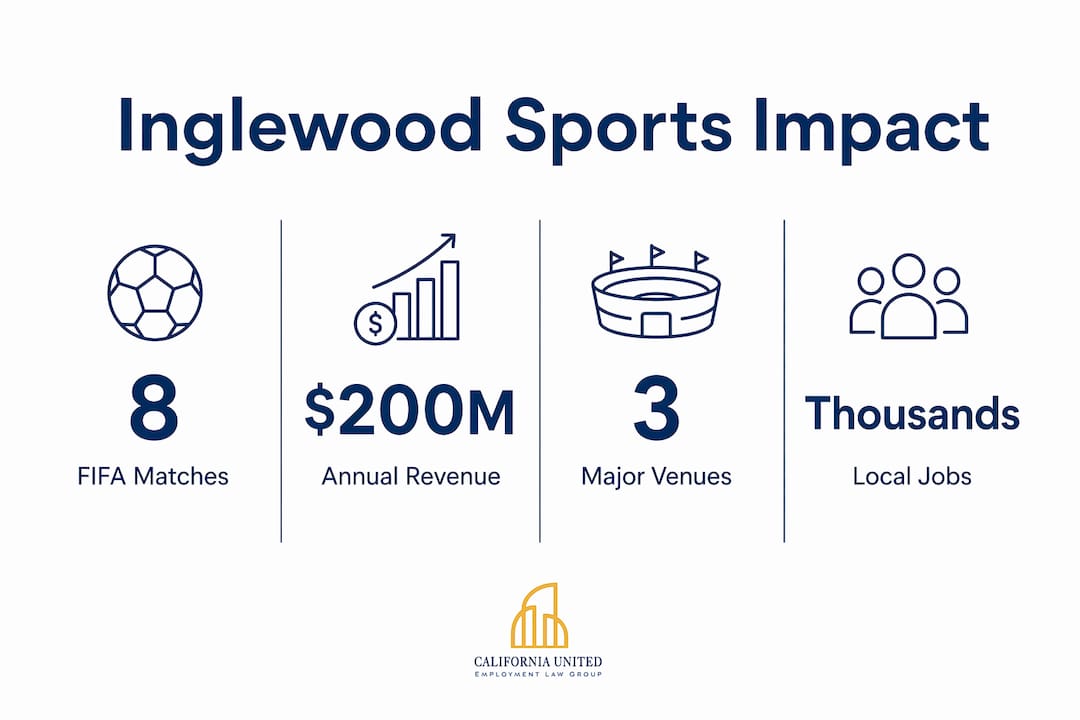
Inglewood’s transformation over the past decade is inseparable from its major venues. Four developments define the current sports and entertainment district:
- SoFi Stadium opened in 2020 at a construction cost of $5.5 billion, making it the most expensive stadium ever built. It hosts eight 2026 FIFA World Cup matches beginning June 12, along with NFL games, concerts, and major entertainment events year-round.
- Intuit Dome serves as the home of the Los Angeles Clippers and opened in 2024, adding a second major arena to the district and increasing foot traffic on non-stadium event days.
- The Forum remains an active concert venue with a legacy dating back to 1967, drawing fans who connect its history to the city’s broader cultural identity.
- Hollywood Park is the mixed-use development surrounding SoFi Stadium, incorporating retail, hotels, office space, and residential units designed to create a walkable district around the stadium complex.
The economic impact of this concentration of venues is significant. Visitor influx on event days generates revenue for local restaurants, hotels, and transportation services. The Metro K Line, which connects Inglewood to the broader Los Angeles transit network, has improved access for both residents and visitors. A planned people mover at LAX is designed to further reduce car dependency and connect the airport corridor to the stadium district.
The challenges, however, are real. Rising rents near stadium areas, increased traffic congestion on event days, and pressure on small businesses to compete with venue-adjacent retail all affect the quality of life for longtime residents. Growth creates opportunity, but it does not distribute that opportunity evenly.
What is the current real estate situation in Inglewood?
Inglewood’s housing market reflects the tension between rapid appreciation and community affordability. According to 2023 ACS data, the city’s median household income is $71,029, the median home value is $744,300, and the average rent sits at $1,725 per month. With 11.3% of residents living below the poverty line, the gap between housing costs and household income is a defining challenge for the community.
The rental market tells an even sharper story. Nearly 64% of housing units in Inglewood are renter-occupied, and luxury rents near stadium areas have climbed above $2,500 per month for studios. That figure represents a significant burden for workers in the hospitality and service sectors who support the very venues driving those rent increases.
| Housing Indicator | Inglewood 2023 Data |
|---|---|
| Median household income | $71,029 |
| Median home value | $744,300 |
| Average monthly rent | $1,725 |
| Renter-occupied units | ~64% |
| Residents below poverty line | 11.3% |
One concrete example of development risk is the Nutwood Street site. Plans for 140 apartments at 100 E. Nutwood St. collapsed after nearly four years of planning. A $4.6 million purchase agreement signed in 2022 ultimately failed, and the city re-listed the land in 2026. The vacant plot now affects surrounding foot traffic and nearby business patterns, illustrating how delayed development creates ripple effects that extend well beyond a single property.
Pro Tip: If you are a renter in Inglewood and your rent has increased significantly near a stadium development zone, California law provides specific tenant protections. Consulting an employment or tenant rights attorney can clarify your options before you make any housing decisions.
Rapid development sparks genuine political and social sensitivity about who benefits and who is displaced. That tension is not unique to Inglewood, but the scale of investment here makes it especially visible.
What local restaurants and businesses reflect Inglewood’s identity?
Inglewood’s food scene is one of its most authentic expressions of community identity. The city’s culinary culture predates the stadium era and continues to anchor neighborhood life for longtime residents and new visitors alike.
Key dining destinations include:
- The Serving Spoon on Manchester Avenue, a decades-old breakfast institution beloved for its soul food and its role as a community gathering place. It represents the kind of legacy business that defines a neighborhood’s character long before any stadium arrives.
- Dulan’s Soul Food Kitchen, another cornerstone of Inglewood’s Black culinary tradition, known for its Southern-style cooking and consistent community presence.
- Coni’Seafood, which draws food enthusiasts specifically for its Nayarit-style Mexican seafood, particularly the pescado zarandeado. It has earned regional recognition as one of the best seafood spots in the Los Angeles area.
- Cosm Los Angeles, a venue near the stadium district featuring an 87-foot domed screen that combines immersive entertainment with food and beverage service, representing the newer wave of experience-driven venues.
- Little Belize, a small restaurant offering Belizean cuisine that reflects the city’s diverse immigrant community and adds depth to the local dining options available near the sports corridor.
The practical value of organizing dining around stadium district proximity is real. On event days, restaurants within walking distance of SoFi Stadium and the Metro K Line fill quickly. Knowing which spots are legacy community businesses versus new venue-adjacent concepts helps you make choices that support the local economy more directly.
Blending major venues with Black-owned and immigrant-owned food institutions enriches the visitor experience while preserving the community identity that makes Inglewood worth visiting in the first place.
How does Inglewood’s growth connect to local employment concerns?
The concentration of sports, entertainment, and hospitality businesses in Inglewood creates a large workforce of event workers, food service employees, hotel staff, and contract laborers. Many of these workers face employment conditions that deserve attention, particularly as the city’s profile rises and employer expectations intensify around major events.
Common employment concerns for Inglewood workers in the hospitality and entertainment sectors include:
- Wage and hour violations, including unpaid overtime, missed meal breaks, and failure to pay for all hours worked during event shifts
- Misclassification of workers as independent contractors when their actual working conditions qualify them as employees under California law. California applies a presumption of employee status when a worker provides labor for pay. Under the ‘ABC test’ established in Dynamex Operations West, Inc. v. Superior Court (2018) 4 Cal.5th 903 and codified in California Labor Code § 2775, a hiring entity must satisfy all three prongs of the test to properly classify a worker as an independent contractor — and failure to do so exposes the employer to liability for unpaid wages, overtime, and missed meal and rest breaks.
- Retaliation against workers who raise concerns about unsafe conditions or unpaid wages
- Discrimination and harassment in workplaces that experience high turnover and inconsistent management during peak event periods
California’s Labor Code and the Fair Employment and Housing Act (FEHA) — which applies to employers with five or more employees — provide strong protections for workers in these situations. Understanding those protections is the first step toward addressing a workplace problem effectively. Workers near SoFi Stadium, for example, have specific rights regarding hours worked and pay that apply regardless of whether they are hired directly or through a staffing agency. Under California law, a worker placed by a temporary staffing agency may simultaneously be considered an employee of both the agency and the contracting employer for purposes of FEHA coverage, depending on which entity controls the relevant terms and conditions of employment. Jimenez v. U.S. Continental Marketing, Inc. (2019) 41 Cal.App.5th 189.
Housing affordability and employment stability are connected in Inglewood. When rents rise faster than wages, workers face compounding pressure that affects their ability to remain in the community. Knowing your paystub rights in Inglewood is one practical step toward understanding whether your employer is meeting its legal obligations.
Key Takeaways
Inglewood’s identity in 2026 is shaped by the intersection of world-class venues, deep community culture, and real housing and employment pressures that affect everyday residents.
| Point | Details |
|---|---|
| Major venues drive the economy | SoFi Stadium, Intuit Dome, and The Forum generate significant visitor traffic and business activity. |
| Community events remain free | The city keeps public programming accessible through free events coordinated by the Parks Department. |
| Housing pressure is measurable | 64% renter occupancy and studio rents above $2,500 near stadiums create affordability challenges. |
| Local dining anchors identity | Legacy restaurants like The Serving Spoon and Dulan’s preserve community culture alongside newer venues. |
| Workers have legal protections | California Labor Code protections apply to all workers in Inglewood regardless of employer size. FEHA’s anti-discrimination protections apply to employers with five or more employees. Both laws cover hospitality and event sector workers. |
What I’ve Learned Watching Inglewood Change From The Outside In
I have spent time studying cities that experience rapid venue-driven development, and Inglewood follows a pattern that is both exciting and worth watching carefully. The energy around SoFi Stadium and the 2026 FIFA World Cup is genuine. The city has real momentum, and the investment in public programming to keep events free and accessible shows civic leadership that many comparable cities lack.
What concerns me is the gap between the headline numbers and the lived experience of longtime residents. A median home value of $744,300 in a city where 11.3% of residents live below the poverty line is not a sign of shared prosperity. It is a sign of a market that has moved faster than the community it sits within. The Nutwood Street failure is a small example of a larger truth: development promises do not always become development outcomes, and the people who bear the cost of that gap are usually the ones who were already most vulnerable.
The food culture in Inglewood gives me genuine optimism. When The Serving Spoon and Dulan’s remain full on a Tuesday morning, that tells you something real about community resilience. Those businesses are not surviving because of stadium traffic. They are surviving because they built something worth returning to. That is the kind of foundation that holds a neighborhood together through cycles of investment and neglect.
For workers in this city, understanding your legal rights is not a luxury. It is a practical tool for staying in a community that is worth staying in.
How California United Law Group Supports Inglewood Workers
If you live or work in Inglewood and have questions about your employment rights, California United Law Group is here to help. The firm represents employees in wage and hour disputes, wrongful termination cases, discrimination claims, and retaliation matters under California’s Labor Code and FEHA.
Workers near SoFi Stadium, Intuit Dome, and Inglewood’s hospitality corridor face specific legal challenges that California law addresses directly. Whether you are dealing with unpaid wages, missed breaks, or workplace harassment, understanding your rights is the starting point.
California United Law Group offers free initial consultations for Inglewood employment issues and handles cases at all stages, from pre-litigation through trial. For a broader overview of how California employment law protects workers across industries, visit the firm’s primary resource page. This content is for general educational purposes only and does not constitute legal advice.
FAQ
What major events are happening in Inglewood in 2026?
SoFi Stadium hosts eight 2026 FIFA World Cup matches beginning June 12, and The Wood Cup street festival on Market Street runs the same day from 2 to 6 PM. The city also maintains a full calendar of free public events through its Parks, Recreation and Community Services Department.
What is the average rent in Inglewood, CA?
The average rent in Inglewood is $1,725 per month based on 2023 ACS data, though studio apartments near stadium development zones have reached above $2,500 per month. Approximately 64% of housing units in the city are renter-occupied.
What are the best restaurants in Inglewood?
The Serving Spoon and Dulan’s Soul Food Kitchen are longtime community institutions known for soul food and Southern cooking. Coni’Seafood draws regional attention for its Nayarit-style Mexican seafood, and Cosm Los Angeles offers an immersive dining and entertainment experience near the stadium district.
What employment rights do Inglewood hospitality workers have?
California’s Labor Code protects hospitality and event workers from wage theft, misclassification, and retaliation regardless of employer size. FEHA’s anti-discrimination and anti-harassment protections apply to employers with five or more employees. Workers placed through staffing agencies retain these rights as well. Workers hired through staffing agencies retain the same core protections as direct employees under California law.
Is Inglewood a good place to live in 2026?
Inglewood offers strong cultural amenities, free community events, and proximity to major employment centers, but rising rents and housing affordability remain significant challenges. The city’s median home value of $744,300 and 11.3% poverty rate reflect a community navigating rapid growth alongside persistent economic pressure.
Recommended
- Living and Working in Culver City, CA: 2026 Guide – California United Law Group –
- Living in Burbank, CA: Your 2026 Resident Guide – California United Law Group –
- Long Beach California: Your 2026 Travel and Living Guide – California United Law Group –
- Glendale California USA: A Complete City Guide – California United Law Group –