
Most people think of Los Angeles when they picture Southern California’s cultural heartbeat. But Glendale, California, USA tells a different story. As the fourth-largest city in Los Angeles County, Glendale carries serious weight, not just in population, but in cultural identity, economic presence, and community character. It holds the largest Armenian community in the United States, a thriving retail scene, outdoor parks, and a civic life shaped by residents who genuinely care about where they live. Whether you are planning a visit or considering a move, this guide covers what you actually need to know.
Table of Contents
- Key takeaways
- Glendale, California: geography, history, and demographics
- Attractions, neighborhoods, and things to do in Glendale
- Economic development and community services
- Living in Glendale: housing, transport, and everyday life
- My take on Glendale’s changing identity
- How California United Law Group supports Glendale workers
- FAQ
Key Takeaways
| Point | Details |
|---|---|
| Fourth-largest in L.A. County | Glendale ranks among the most significant cities in Los Angeles County by population and economic activity. |
| Culturally distinct identity | The city hosts the largest Armenian community in the U.S., shaping its food, business, and civic culture. |
| Strong retail and outdoor mix | From the Americana at Brand to Deukmejian Wilderness Park, Glendale offers both urban amenities and nature access. |
| Housing market is competitive | Median home values sit near $1,043,900, making Glendale one of the pricier markets in greater Los Angeles. |
| Active civic engagement | Residents hold candidates to high standards, focusing on public safety, historic preservation, and urban design. |
Glendale, California: Geography, History, And Demographics
Glendale sits at the intersection of the Verdugo Mountains and the northeastern edge of the Los Angeles Basin. It borders Burbank to the north, Pasadena to the east, and Los Angeles to the south and west. Its position on the Glendale California map makes it one of the most strategically located cities in the greater L.A. region, with easy freeway access via the 2, 5, and 134 corridors.
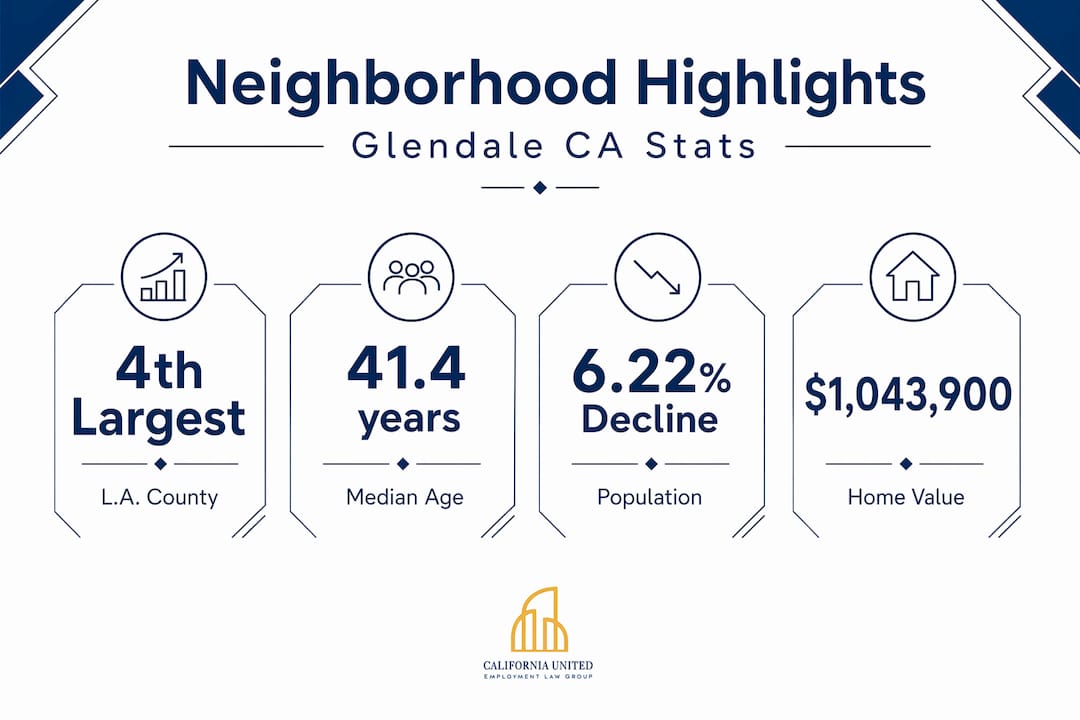
The city was incorporated in 1906 and grew rapidly through the mid-20th century as suburban development expanded outward from Los Angeles. By 2017, Glendale reached a population peak of over 201,000 residents. Since then, the city has experienced a gradual population decline of approximately 6.22% since 2020, with current estimates placing it between 183,761 and 192,270 people.
Here is a quick demographic snapshot of Glendale today:
| Category | Data |
|---|---|
| Current population | 183,761 to 192,270 (2026 estimate) |
| Median age | 41.4 years |
| Median household income | $84,262 to $88,393 |
| Median home value | Approximately $1,043,900 |
| Population change since 2020 | Decreased approximately 6.22% |
The city’s cultural makeup is one of its most defining characteristics. Glendale hosts the largest Armenian community in the United States, a demographic reality that shapes everything from the restaurant scene to local politics and civic organizations. You will also find significant Korean, Hispanic, and Filipino communities throughout the city’s neighborhoods. This layering of cultures gives Glendale a distinctly cosmopolitan feel despite its relatively compact footprint.
Attractions, Neighborhoods, And Things To Do In Glendale
Glendale CA attractions span a wider range than most visitors expect. The city covers both upscale shopping and genuine outdoor adventure, sometimes within a few miles of each other.
Shopping and Entertainment
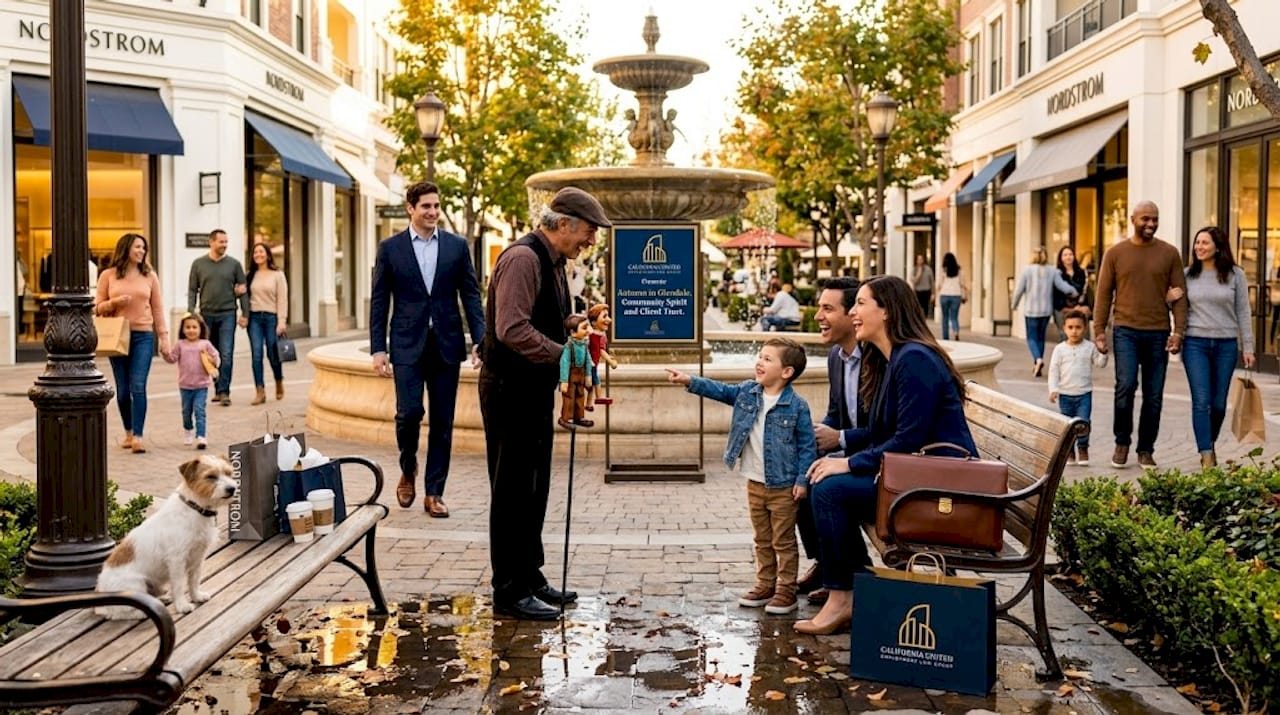
The Americana at Brand is Glendale’s social centerpiece. This open-air lifestyle center combines national retailers, local restaurants, a movie theater, and a central plaza with a dancing fountain that hosts family events throughout the year. Just blocks away, the Glendale Galleria offers more traditional mall-style retail. Between these two anchors, Brand Boulevard supports a walkable corridor of shops, cafes, and cultural venues, including the historic Alex Theatre, which hosts concerts and performing arts events year-round.
The Montrose neighborhood, located in the foothills north of central Glendale, offers a more boutique experience. Its Honolulu Avenue shopping district features independent bookstores, specialty food shops, wine bars, and weekend farmers markets. If you prefer a quieter, neighborhood-centered feel over the Americana’s energy, Montrose is worth the detour.
Outdoor Spaces And Parks
- Deukmejian Wilderness Park: Over 700 acres of open space with trails that climb into the Verdugo Mountains. This is one of the best places in Glendale for hiking, with views stretching across the L.A. Basin on clear days.
- Brand Park: Combines green lawns, playgrounds, and hiking trails with the Brand Library, which hosts art exhibitions and concerts. The park also features a Japanese-style Whispering Pine Tea House, a genuinely unexpected gem.
- Verdugo Park: A neighborhood park with sports facilities, picnic areas, and easy access for families.
Food And Culture
Glendale’s Armenian community has created one of the most authentic Middle Eastern and Armenian food scenes in the country. You will find lamejun bakeries, Persian restaurants, and specialty markets throughout the city. For more mainstream local flavor, Porto’s Bakery on Brand Boulevard draws long lines for its Cuban pastries and sandwiches.
Pro Tip: Visit Porto’s Bakery on a weekday morning before 10 a.m. to avoid the midday crowds. The line moves faster than it looks, but timing makes a real difference in your experience.
Economic Development And Community Services
Glendale’s economy is shifting upward in a visible way. The arrival of Erewhon in May 2026 signals where the city’s retail identity is heading. Erewhon, a premium organic grocery brand associated with Los Angeles’s most affluent neighborhoods, choosing Glendale reflects both rising household incomes and a broader push toward upscale commercial development.
This economic trajectory has stirred real debate among longtime residents. Here is what shapes civic life in Glendale right now:
- Public safety remains a top priority. Residents consistently rank crime prevention and police accountability among their most pressing concerns in local elections.
- Historic preservation is contested. Development pressure has led to the demolition of beloved local institutions. The 57-year closure of Acapulco Restaurant to make way for a car wash became a flashpoint for debate about what kind of city Glendale wants to be.
- Urban design matters here. Residents and candidates alike discuss building density, streetscape quality, and the visual character of neighborhoods in ways you rarely hear in other L.A.-area cities.
- Civic participation is strong. Voting access is broad, with 24/7 drop-off ballot boxes at city sites and extended in-person voting hours at multiple centers.
“We need to balance smart growth with preserving the historic character and livability that makes Glendale special.” — Dr. Carolyn Kaloostian, candidate for Glendale City Council, on the tension between development and preservation
Glendale’s city government operates under a council-manager structure with five city council members elected at large. Glendale voters hold candidates to unusually high standards, scrutinizing both policy positions and personal conduct. This civic seriousness is part of what shapes the city’s political culture.
Living In Glendale: Housing, Transport, And Everyday Life
If you are thinking about relocating to Glendale, the numbers tell one part of the story. Median household income sits at roughly $84,262 to $88,393, and the median home value is approximately $1,043,900. That puts homeownership out of reach for many, though the rental market offers more variety, with a mix of older apartment buildings, newer luxury complexes, and single-family rentals throughout different Glendale California neighborhoods.
Transportation And Connectivity
Glendale connects well to the rest of Los Angeles County. The Glendale Beeline bus system operates local routes throughout the city, and Metro connections provide access to downtown Los Angeles. The 134 freeway links Glendale directly to Pasadena to the east. Commuting by car is still the dominant mode, but walkability in central Glendale, particularly around Brand Boulevard and the Americana, is genuinely strong by Southern California standards.
Neighborhood Character
Glendale’s neighborhoods each carry a distinct personality:
| Neighborhood | Character |
|---|---|
| Downtown / Brand Boulevard | Urban, walkable, retail and dining focused |
| Montrose | Quiet, village-style, boutique shops and families |
| Adams Hill | Residential, artistic, close-knit community vibe |
| Chevy Chase Canyon | Upscale, hillside homes, near outdoor spaces |
| Sparr Heights | Mid-century homes, local pride, family oriented |
Pro Tip: If you are relocating, spend a Saturday morning in both the Montrose Farmers Market and the Americana at Brand before deciding which neighborhood fits your lifestyle. The contrast tells you more about Glendale’s range than any listing ever will.
The community vibe in Glendale rewards engagement. Joining a neighborhood council, attending city council meetings, or participating in local events accelerates your sense of belonging here faster than it would in most large cities.
My Take On Glendale’s Changing Identity
I have spent considerable time studying cities across the Los Angeles region, and Glendale consistently surprises people who write it off as a quiet suburb. What I have observed is a city genuinely at a crossroads.
The tension between growth and preservation is not unique to Glendale, but here it feels more personal. When Acapulco Restaurant closed after 57 years so a car wash could take its place, longtime residents did not just shrug. They organized, wrote letters, and showed up at council meetings. That kind of civic response tells you something real about who lives here.
What I think newcomers miss is that Glendale’s Armenian community is not just a demographic footnote. It is an organizing force in local culture, business, and politics. Understanding that dynamic changes how you read everything from restaurant choices to ballot results.
My honest read on Glendale’s future: the luxury retail push and new residential development will reshape parts of the city. Some of that change will be welcome. Some will not. What keeps Glendale from becoming just another upscale suburb is the number of residents who actually pay attention and push back when they need to. That civic muscle is the city’s most underrated asset.
How California United Law Group Supports Glendale Workers
Glendale’s workforce spans healthcare, retail, entertainment, and small business sectors, all areas where employment disputes can arise. If you work in Glendale and have experienced wrongful termination, wage violations, discrimination, or retaliation, understanding your rights under California law matters.
California United Law Group represents employees in employment law disputes throughout California, including Glendale. The firm handles matters under the California Labor Code and the California Fair Employment and Housing Act (FEHA), including wage and hour claims, workplace harassment, employment discrimination, retaliation, and wrongful termination. Employees pursuing claims under FEHA must first file a complaint with the California Civil Rights Department (CRD) and obtain a right-to-sue notice before proceeding to civil court.
California courts have interpreted these protections broadly and consistently in workers’ favor. On retaliation, the California Supreme Court in Yanowitz v. L’Oreal USA, Inc. (2005) 36 Cal.4th 1028 held that a series of individually non-actionable adverse acts can collectively constitute unlawful retaliation — an important protection for employees facing a pattern of workplace hostility. On wrongful termination, the court in Faust v. California Portland Cement Co. (2007) 150 Cal.App.4th 864 held that terminating an employee for exercising rights under the California Family Rights Act (CFRA) is actionable as wrongful termination in violation of public policy. For Glendale’s religiously diverse workforce, California Fair Employment & Housing Comm’n v. Gemini Aluminum Corp. (2004) 122 Cal.App.4th 1004 found that an employer violated FEHA by denying an employee time off for a religious observance without making any good-faith effort to explore an accommodation. And on wage claims, the California Supreme Court in Martinez v. Combs (2010) 49 Cal.4th 35 interpreted the definition of “employer” under the Labor Code broadly, potentially expanding the pool of parties liable for unpaid wages.
Glendale’s culturally diverse workforce also raises specific questions around religious accommodations and protection from workplace discrimination based on race, national origin, religion, and other characteristics protected under FEHA. California United Law Group handles these matters with professionalism and care, advising and representing employees at each stage of the process as appropriate to their individual circumstances. If you believe your rights as a worker have been violated, speaking with an employment lawyer in Glendale can help you understand your options.
The information in this section is provided for general informational purposes only and does not constitute legal advice or create an attorney-client relationship. Outcomes in individual cases vary depending on the specific facts and applicable law.
FAQ
What is Glendale, California known for?
Glendale, California, is known for hosting the largest Armenian community in the United States, the Americana at Brand shopping and entertainment complex, and its position as the fourth-largest city in Los Angeles County.
What are the best things to do in Glendale, CA?
Top things to do in Glendale include shopping at the Americana at Brand and Glendale Galleria, hiking in Deukmejian Wilderness Park, exploring the Montrose shopping village, and dining at Armenian and Middle Eastern restaurants throughout the city.
What is the population of Glendale, California in 2026?
Glendale’s 2026 population is estimated between 183,761 and 192,270, reflecting a decline of approximately 6.22% since 2020 after the city peaked at over 201,000 residents in 2017.
Is Glendale, California expensive to live in?
Yes, Glendale is relatively expensive. The median home value sits near $1,043,900, and the median household income is approximately $84,262 to $88,393, making it comparable in cost to other desirable Los Angeles County cities.
Which Glendale neighborhoods are best for families?
Montrose, Sparr Heights, and Chevy Chase Canyon are consistently popular among families for their quieter streets, access to parks, and strong community character within Glendale’s broader neighborhood mix.
Recommended
- Employment Lawyer Glendale – California United Law Group
- Glendale Employer Liability For Inaccurate Timesheets – California United Law Group
- Glendale Healthcare Overtime Pay Disputes Explained – California United Law Group
- Pregnant Employees in Glendale: Schedule Reduction Rights – California United Law Group