
Major entertainment studios in Burbank face mounting legal challenges over pay discrimination and wage violations. Disney settled a gender pay discrimination case for $43.25 million, compensating nearly 9,000 female employees who earned less than male counterparts in similar roles. Meanwhile, Warner Bros. is accused of widespread labor violations including unpaid on-call time and overtime. These cases reveal systemic pay equity problems that persist in 2026 despite California’s strong legal protections. This guide explains what entertainment workers should know about their rights, current legal frameworks, and practical steps to address wage disputes.
Table of Contents
- Unpacking Disney’s $43 Million Gender Pay Settlement
- Understanding California’s Equal Pay And Wage Laws Protecting Entertainment Employees
- Allegations And Legal Challenges At Warner Bros.: What Employees Should Know
- Moving Toward Pay Equity: What Studios Must Do And What Employees Can Expect
- How California United Law Group Can Help With Pay Equity And Wage Disputes
- Frequently Asked Questions About Pay Gaps At Burbank Studios
Key takeaways
| Point | Details |
|---|---|
| Disney’s $43 million settlement | Nearly 9,000 female employees received compensation for gender-based wage disparities in California. |
| California Equal Pay Act protection | State law prohibits paying employees less for substantially similar work based on sex or other protected characteristics. |
| Warner Bros. labor allegations | Class action claims include unpaid on-call hours and missed overtime compensation for employees. |
| Mandatory pay equity audits | Studios must retain outside economists to analyze pay structures and implement transparent salary benchmarking. |
| Employee documentation matters | Tracking work hours, communications, and pay details may support wage dispute claims if violations are later discovered. |
Unpacking Disney’s $43 million gender pay settlement
The Disney settlement represents one of California’s largest gender pay discrimination resolutions. Nearly 9,000 female employees who worked at Disney’s California locations between 2015 and 2022 received compensation averaging around $4,800 each. The lawsuit alleged that Disney paid women workers less than their male counterparts performing substantially similar work.
The case originated when LaRonda Rasmussen, a financial analyst at Disney, discovered she earned substantially less than six male colleagues in equivalent positions. Her complaint triggered an investigation revealing systemic patterns across multiple departments and job categories. Female employees consistently received lower starting salaries and smaller raises compared to men with similar experience, education, and responsibilities.
California’s Equal Pay Act and Fair Employment and Housing Act formed the legal basis for these claims. The settlement requires Disney to implement significant structural changes beyond monetary compensation:
- Retain outside labor economists to conduct comprehensive pay equity analyses for three years
- Hire industrial consultants to provide job evaluation and benchmarking training
- Establish transparent salary bands and promotion criteria
- Implement ongoing compliance monitoring and reporting
Settlement agreements requiring ongoing monitoring and structural reforms have become increasingly common in employment discrimination cases. In Ellis v. Costco Wholesale Corp. (2012) 657 F.3d 970, the Ninth Circuit approved a similar approach requiring external auditing and policy changes to address systemic discrimination, recognizing that monetary relief alone may not prevent future violations.
These requirements aim to prevent future violations by creating accountability mechanisms and transparent pay structures. The settlement also includes provisions for employees to report concerns confidentially without retaliation.
“The settlement not only provides substantial compensation but also mandates systemic changes to prevent future discrimination, setting a precedent for entertainment industry pay practices.”
This case demonstrates how documentation and collective action can expose widespread pay disparities. Entertainment workers should understand that California law protects their right to discuss wages with colleagues and seek legal insights when disparities emerge. The three-year monitoring period means Disney’s compliance will face ongoing scrutiny through 2027.
Understanding California’s equal pay and wage laws protecting entertainment employees
California provides robust legal protections for workers facing pay discrimination. Employers are prohibited from paying employees less than those of the opposite sex for substantially similar work under the California Equal Pay Act. This law extends beyond gender to protect against wage disparities based on race and ethnicity.
The Fair Employment and Housing Act complements these protections by prohibiting discrimination in all employment terms and conditions, including compensation, promotions, and benefits. The lawsuit alleged Disney violated California’s Fair Employment & Housing Act and Equal Pay Act by maintaining systemic pay gaps across job categories.
Substantially similar work means jobs requiring comparable skill, effort, and responsibility performed under similar working conditions. This definition is broader than “equal work” and captures roles with different titles but equivalent demands. For example, a production coordinator and project manager might perform substantially similar work despite different job labels.
California courts have reinforced the broad interpretation of ‘substantially similar work.’ In Rizo v. Yovino (9th Cir. 2018) 887 F.3d 453, the Ninth Circuit held that prior salary alone cannot justify pay disparities under the Equal Pay Act. The California Supreme Court in Lawson v. PPG Architectural Finishes, Inc. (2022) 12 Cal.5th 703 clarified that employees asserting Equal Pay Act violations need not prove discriminatory intent—the focus is on whether a wage differential exists for substantially similar work. These decisions strengthen protections for workers discovering pay inequities at major studios like Disney and Warner Bros.
Key protections under California law include:
- Prohibition against salary history inquiries that perpetuate past discrimination
- Right to discuss wages with coworkers without retaliation
- Requirement for employers to justify pay differences with legitimate business factors
- Protection for employees who file complaints or participate in investigations
These laws apply to all California employees, including non-union entertainment workers who may lack collective bargaining protections. Studios cannot justify pay disparities based on prior salary, gender, or protected characteristics. Legitimate factors might include seniority systems, merit-based systems, or systems measuring quantity or quality of production.
Transparent pay practices help prevent violations. Employers should document objective criteria for starting salaries, raises, and promotions. Employees should understand their rights under both wage violations in Los Angeles protections and broader discrimination protections under FEHA. Documentation of job duties, performance evaluations, and compensation history strengthens potential claims.
Under California law, Equal Pay Act claims based on statutory wage violations have a three-year statute of limitations. This means employees can recover back pay for up to three years of underpayment if they act promptly. Claims may also be brought under contract theories, which carry different limitation periods depending on whether the employment agreement is written (four years) or oral (two years). This means employees can recover back pay for several years of underpayment if they act promptly.
Allegations and legal challenges at Warner Bros.: What employees should know
Warner Bros. faces allegations in pending litigation extending beyond pay equity to fundamental wage and hour violations. These claims have not been proven in court, and Warner Bros. has not admitted liability. Employees were required to be on-call without compensation, creating unpaid work time that violated California labor standards. The class action lawsuit claims systematic failures to pay minimum wage, overtime, and meal and rest break premiums.
On-call time becomes compensable work when employees face significant restrictions on personal activities. California law requires payment when workers must remain available to respond quickly, stay within certain geographic areas, or face discipline for unavailability. The California Court of Appeal in Mendiola v. CPS Security Solutions, Inc. (2015) 60 Cal.4th 833 held that determining what qualifies as compensable ‘hours worked’ during on-call time requires examining the degree of employer control and restrictions on the employee’s personal activities. Courts consider factors such as geographic restrictions, response time requirements, and frequency of calls, though the ultimate determination is a question of law. The Warner Bros. allegations suggest employees experienced these restrictions without corresponding compensation.
The lawsuit details several violation categories:
- Failure to pay for all hours worked, including on-call availability
- Unpaid overtime for employees exceeding 40 hours weekly or 8 hours daily
- Missed meal and rest break premiums when breaks were interrupted or denied
- Inaccurate wage statements that obscured actual hours and pay rates
These allegations illustrate how wage violations can compound. An employee denied proper meal breaks while working unpaid on-call hours and receiving no overtime creates multiple simultaneous violations. California’s Labor Code provides separate penalties for each violation type, potentially resulting in substantial back pay and damages.
Pro Tip: Maintain detailed records of all work-related communications, including texts, emails, and calls received during supposed off-hours. Note dates, times, and whether you had to respond or remain available. This documentation proves invaluable for wage claims.
The Warner Bros. case differs from Disney’s pay equity focus but shares common threads. Both involve systemic practices affecting multiple employees and demonstrate how major studios can fail basic compliance despite substantial legal resources. Entertainment workers should understand that wage and hour laws protect all employees regardless of employer size or prestige.
Class action status allows affected employees to join collective claims rather than pursuing individual cases. This approach shares legal costs, creates strength in numbers, and can expose patterns individual plaintiffs might miss. Workers who believe they experienced similar violations should consult employment attorneys about joining existing actions or initiating new claims.
Moving toward pay equity: what studios must do and what employees can expect
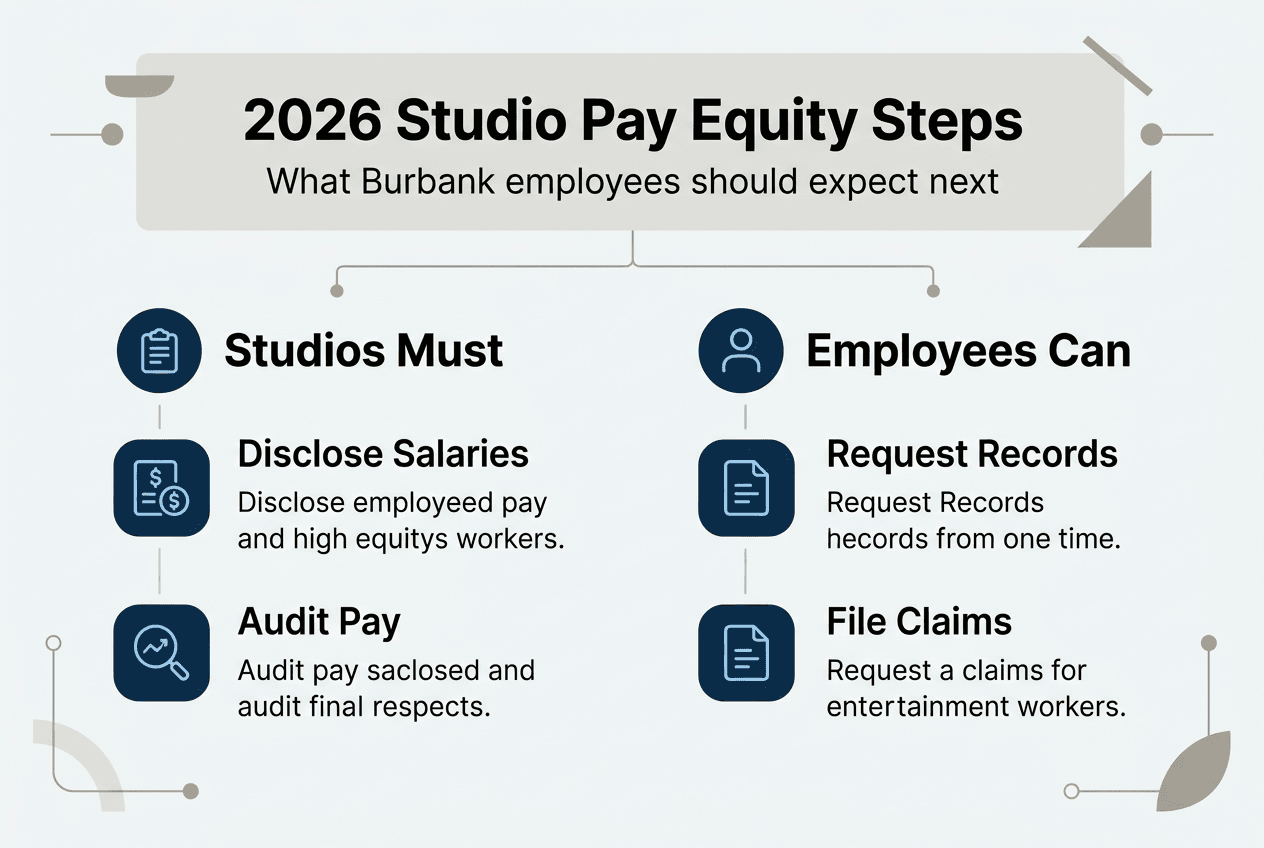
Studios face increasing pressure to implement meaningful pay equity measures. Disney will retain an outside labor economist to perform a pay equity analysis and an industrial consultant for training as part of its settlement obligations. These requirements create accountability through independent oversight rather than relying on internal compliance.
Comprehensive pay equity programs typically include several components working together:
- Pay equity audits analyzing compensation data across demographics, job categories, and departments to identify unexplained disparities
- Job benchmarking establishing objective criteria for evaluating substantially similar positions and appropriate compensation ranges
- Transparent salary bands publishing pay ranges for positions so employees understand earning potential and promotion pathways
- Ongoing compliance reviews conducting regular analyses to catch emerging disparities before they become systemic problems
- Manager training educating decision-makers on bias recognition, objective evaluation methods, and legal requirements
These steps address root causes rather than simply responding to individual complaints. External economists and consultants provide objectivity that internal human resources teams may lack. Independent experts can identify patterns, challenge assumptions, and recommend structural changes without organizational bias.
Pro Tip: When discussing compensation with managers, ask specific questions about how your pay compares to others in similar roles and what criteria determine raises and promotions. Document these conversations and any commitments made.
Studios failing to implement genuine pay equity measures face significant risks beyond legal liability. Reputational damage affects recruiting, retention, and public perception. Entertainment industry talent increasingly values workplace equity and may avoid employers with discrimination histories.
“Companies that fail to address pay equity proactively face mounting legal costs, reputational harm, and difficulty attracting top talent in competitive labor markets.”
Employees should expect increased transparency as studios respond to legal pressure and market demands. Salary bands, clear promotion criteria, and regular pay reviews should become standard practices. Workers who notice disparities should document concerns, discuss issues with human resources, and seek legal counsel when internal processes fail.
The employment lawsuit process overview provides guidance for employees considering legal action. Understanding your rights and available remedies helps you make informed decisions about addressing pay equity concerns.
How California United Law Group can help with pay equity and wage disputes
California United Law Group, P. C. represents entertainment industry employees facing pay discrimination, wage violations, and other workplace disputes. Our experience with California Labor Code and FEHA claims means we understand the specific challenges entertainment workers encounter at major studios and production companies.
The firm handles cases involving gender pay gaps, unpaid overtime, missed meal and rest breaks, and retaliation for raising wage concerns. California United Law Group, P.C. represents employees at all dispute stages, from initial consultations through trial and appeals.
Confidential consultations allow you to discuss your situation without commitment or risk. We evaluate whether you have viable claims, explain your legal options, and outline potential outcomes. Many employment cases resolve through negotiation, but we prepare every case for trial to maximize leverage.
Explore our employment law services for comprehensive information about workplace rights and protections. Our wage and hour legal help page details specific wage violation remedies. Review our employment lawsuit process overview to understand what pursuing a claim involves. California entertainment workers deserve fair compensation and equal treatment. We help make that happen.
This article provides general information about employment law and does not constitute legal advice. Every case depends on its specific facts and circumstances. If you believe you have experienced wage violations or pay discrimination, consult with a qualified employment attorney to evaluate your individual situation.
Frequently asked questions about pay gaps at Burbank studios
Do pay gaps still affect employees at Disney and Warner Bros. in 2026?
Yes, recent lawsuits confirm ongoing disparities despite increased awareness. Disney’s $43 million settlement and Warner Bros.’ pending class action demonstrate that systemic wage problems persist at major studios. While settlements mandate corrective measures, implementation takes time and requires monitoring.
What legal protections do California entertainment workers have against pay discrimination?
California’s Equal Pay Act prohibits wage disparities for substantially similar work based on sex, race, or ethnicity. The Fair Employment and Housing Act provides broader discrimination protections affecting all employment terms. These laws allow employees to recover back pay, damages, and attorney fees when violations occur.
How should I document potential pay equity or wage violations?
Maintain detailed records of your job duties, hours worked, compensation received, and performance evaluations. Save emails, texts, and other communications about work expectations and availability requirements. Note conversations with managers about pay, promotions, and comparisons to colleagues. This documentation supports potential claims.
Can I discuss my salary with coworkers without getting fired?
Yes, California law protects your right to discuss wages with colleagues. Employers cannot prohibit wage discussions or retaliate against employees who share compensation information. These protections help workers identify pay disparities and take collective action when necessary.
What should I do if I discover I’m paid less than colleagues in similar roles?
Document the disparity with specific examples of comparable work, responsibilities, and qualifications. Raise the issue with human resources or management, requesting an explanation and adjustment. If internal processes fail, consult an employment attorney in your area to evaluate legal options. Act promptly, as statutes of limitations restrict how long you can wait to file claims.
What remedies are available for proven pay discrimination or wage violations?
Successful claims can result in back pay for underpayment periods, liquidated damages doubling the back pay amount, compensation for emotional distress, punitive damages in egregious cases, and attorney fees. Employers may also face penalties payable to the state. Remedies aim to make employees whole and deter future violations.