
Disclaimer: This article provides general legal information about California employment law and Proposition 22. It is not legal advice and does not create an attorney-client relationship. For advice about your specific situation, please consult with a qualified employment attorney.
Delivery drivers across Los Angeles have faced unprecedented confusion about their wages since Proposition 22 reshaped the gig economy landscape. Legal battles challenging the law’s validity created uncertainty about whether drivers receive fair compensation under the new system. Many drivers question if their earnings truly reflect livable wages or if they’re being shortchanged despite promised protections. This article examines available evidence and discusses what LA delivery drivers should consider regarding their pay rights in 2026.
Table of Contents
- Understanding Proposition 22 And Its Impact On Delivery Drivers In Los Angeles
- How Prop 22 Affects Delivery Driver Pay: Reality Versus Perception
- Comparing Driver Earnings: Prop 22 California Versus Other Gig Worker Minimum Wage Laws
- What Delivery Drivers In Los Angeles Should Do To Protect Their Wage Rights In 2026
- Need Help Understanding Your Wage Rights As A Delivery Driver?
- Frequently Asked Questions
Key takeaways
| Point | Details |
|---|---|
| Prop 22 classification | Drivers work as independent contractors with limited benefits but no full employee protections under California law. |
| LA pay supplements | Many drivers receive frequent top-ups because base rates fall below minimum wage guarantees established by Prop 22. |
| Earnings variation | Driver income varies dramatically based on how platforms calculate active time versus total online hours. |
| Promotion dependence | Boost programs and surge pricing significantly impact whether drivers earn sustainable income levels. |
| Ongoing debates | Legal challenges continue regarding whether Prop 22’s compensation structure complies with California constitutional requirements. |
Understanding Proposition 22 and its impact on delivery drivers in Los Angeles
California voters approved Proposition 22 in 2020, fundamentally changing how app-based delivery platforms classify their workers. The measure passed with nearly 60% support after companies spent over $200 million campaigning for it. Prop 22 created a new employment designation specifically for app-based drivers, cementing their status as independent contractors rather than employees.
It is important to note that Proposition 22’s constitutionality has been challenged. In Castellanos v. State of California (2023) 89 Cal.App.5th 131, the California Court of Appeal upheld most of Proposition 22 while striking down one provision limiting legislative amendments. The California Supreme Court granted review in June 2023 (Case No. S279622) to determine whether Proposition 22 violates the California Constitution and is therefore unenforceable. As of March 2026, this case remains pending, creating ongoing uncertainty about the law’s future.
The law provides certain protections while maintaining contractor status:
- Healthcare stipends for drivers working 15 or more hours weekly
- Minimum earnings guarantee set at 120% of local minimum wage
- Vehicle expense reimbursement at 30 cents per engaged mile
- Occupational accident insurance for on-the-job injuries
Drivers retain scheduling flexibility, choosing when and how much to work without mandatory shifts. This flexibility formed the central argument supporters used to justify the contractor classification. However, critics highlight what Prop 22 doesn’t provide: unemployment insurance, disability coverage, workers’ compensation, or paid sick leave.
Understanding worker misclassification rights becomes critical as these distinctions directly impact your long-term financial security and legal protections. The benefits Prop 22 grants fall far short of full employee status, creating a middle ground that many argue leaves drivers vulnerable.
How Prop 22 affects delivery driver pay: reality versus perception
The actual calculation of driver earnings under Prop 22 reveals significant complexity that many drivers don’t fully grasp. Platform pay formulas include base fare, mileage rates, active delivery time, customer tips, and promotional bonuses. The devil hides in how platforms define “active time” versus total hours you spend available for deliveries.
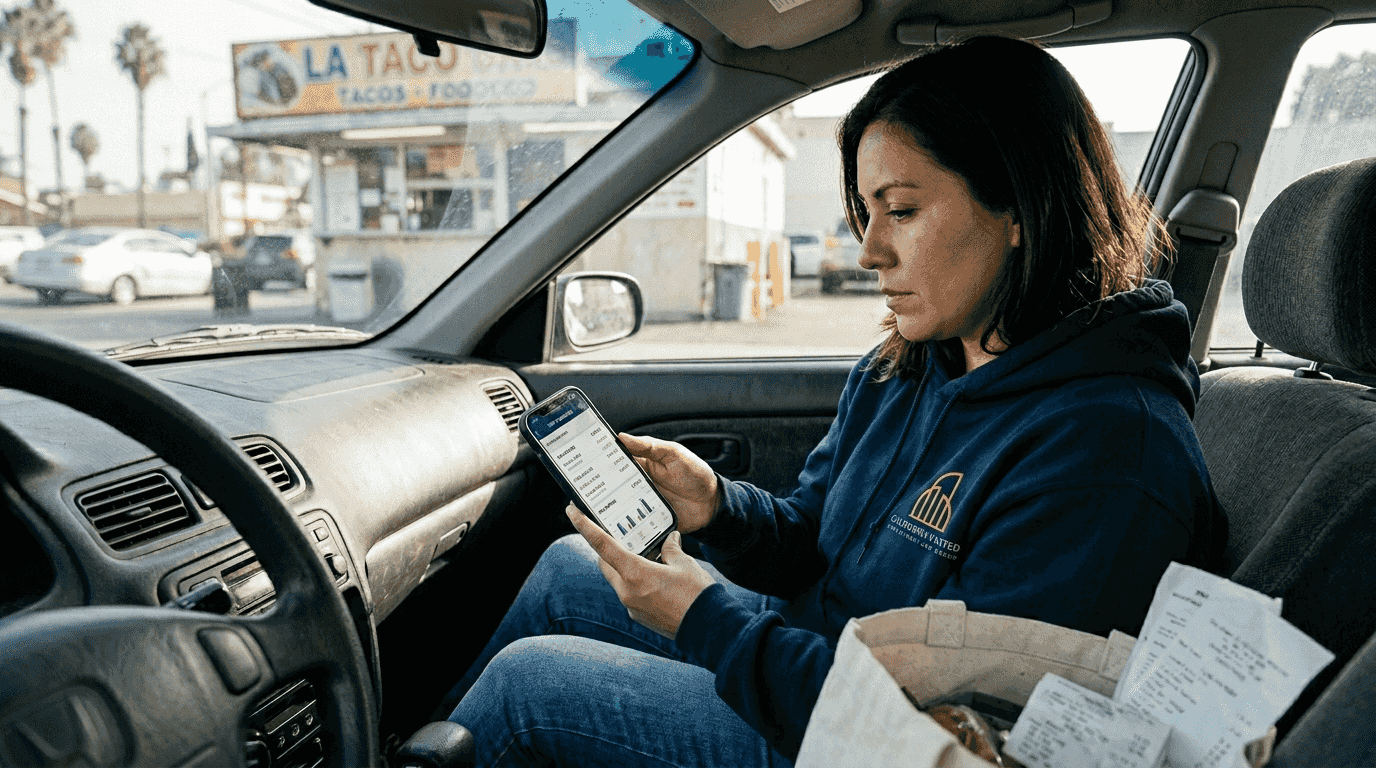
Active time counts only from accepting an order through delivery completion. Wait time between orders, driving to hotspots, and positioning yourself strategically don’t count toward minimum wage calculations. This distinction dramatically impacts your effective hourly rate, often cutting actual earnings well below what headline numbers suggest.
The classification of gig workers as independent contractors versus employees has been the subject of significant litigation. In Dynamex Operations West, Inc. v. Superior Court (2018) 4 Cal.5th 903, the California Supreme Court established the “ABC test” for determining worker classification under California wage orders. Under this test, a worker is presumed to be an employee unless the hiring entity proves: (A) the worker is free from control and direction; (B) the worker performs work outside the usual course of the hiring entity’s business; and (C) the worker is customarily engaged in an independently established trade or business. Proposition 22 was specifically designed to exempt app-based drivers from this ABC test analysis, though the legal validity of this exemption remains under review by the California Supreme Court.
Real-world data from Los Angeles drivers shows troubling patterns. Many LA drivers receive frequent top-ups because their base earnings fall below the 120% minimum wage threshold. These supplemental payments indicate that without the Prop 22 floor, drivers would earn even less under platform payment structures.
Promotional programs become essential for meaningful income:
- Boost multipliers during peak hours
- Surge pricing in high-demand areas
- Quest bonuses for completing trip targets
- Referral incentives for bringing new drivers
Without these promotional add-ons, base rates alone rarely provide sustainable income. Drivers essentially chase bonuses to reach livable wages rather than earning fair base compensation.
Pro Tip: Screenshot every trip summary and maintain a detailed spreadsheet tracking your total online hours versus paid active time. This documentation may be important if you need to dispute pay calculations or file a wage claim with the California Labor Commissioner. Your records may reveal discrepancies that platforms won’t volunteer.
Reviewing employment contracts and understanding how platforms structure compensation helps you identify when your rights might be violated.
Comparing driver earnings: Prop 22 California versus other gig worker minimum wage laws
Looking beyond California reveals stark contrasts in how different jurisdictions approach gig worker compensation. Seattle implemented an App-Based Worker Minimum Payment Ordinance that dramatically increased driver earnings. Research shows average hourly equivalent pay jumped from $3.17 to $12.08 after the ordinance took effect in 2022.
Yet even Seattle’s stronger protections have limitations. Driver earnings often remained below the city’s full minimum wage when accounting for all expenses and unpaid time. This reality underscores how challenging it is to ensure fair gig worker compensation regardless of regulatory approach.
| Location | Worker Status | Minimum Pay Guarantee | Healthcare | Expense Coverage |
|---|---|---|---|---|
| Los Angeles (Prop 22) | Independent Contractor | 120% local minimum (active time only) | Stipend if 15+ hrs/week | 30¢ per engaged mile |
| Seattle | Independent Contractor | Per-mile and per-minute minimum | No guaranteed coverage | Included in rate formula |
| New York City | Independent Contractor | $19.96/hour minimum (2024 rate) | No guaranteed coverage | Included in minimum |
| San Francisco (Prop 22) | Independent Contractor | 120% local minimum (active time only) | Stipend if 15+ hrs/week | 30¢ per engaged mile |
These comparisons reveal that classification as independent contractors remains consistent, but payment structures and guarantees vary significantly. LA drivers under Prop 22 receive theoretically strong protections on paper, but the active time calculation method substantially reduces their effectiveness.
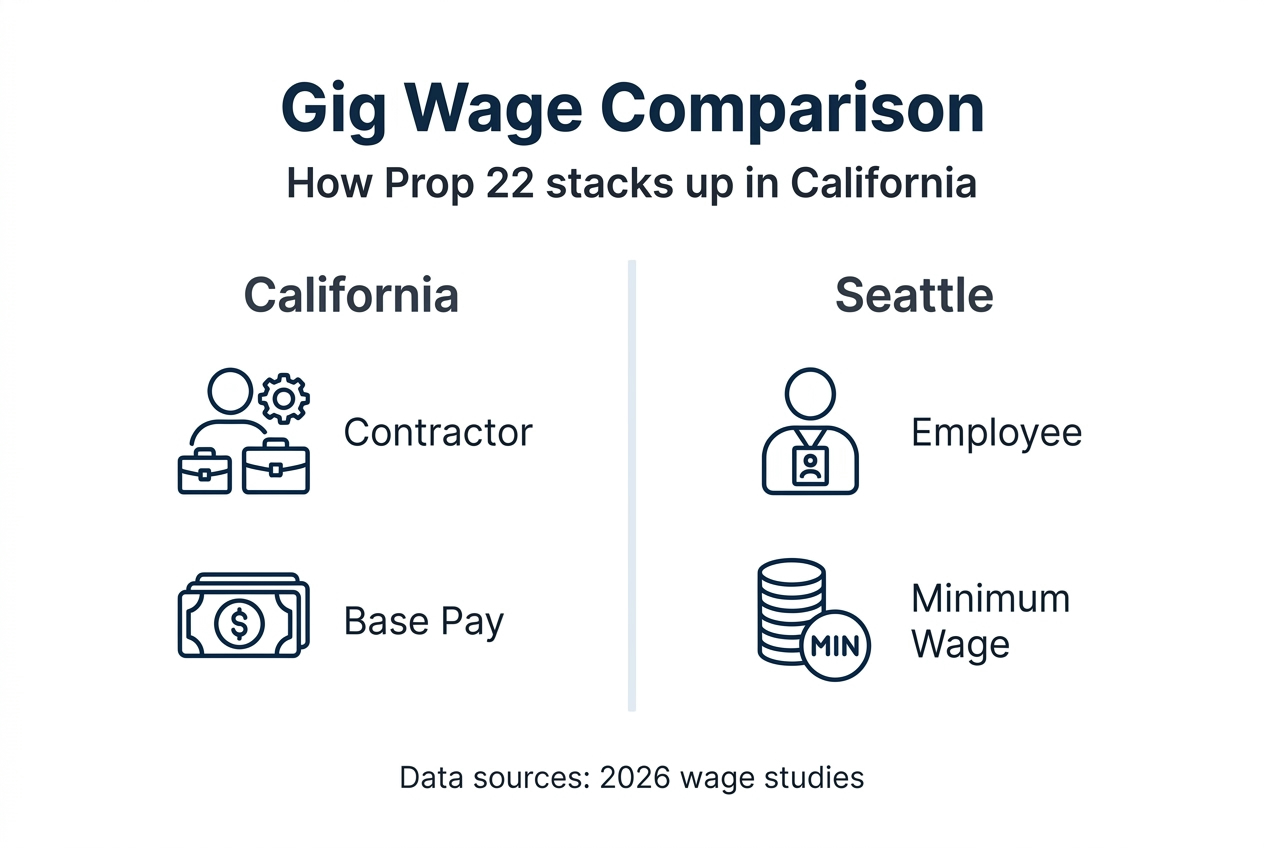
Exploring legal insights about these varying approaches helps contextualize where California stands nationally and what reforms might improve driver outcomes.
What delivery drivers in Los Angeles should do to protect their wage rights in 2026
Taking proactive steps to monitor and protect your compensation rights matters more than ever as Prop 22 continues facing legal scrutiny. Ongoing legal challenges create uncertainty about whether the law will remain in its current form or face modifications that could affect your status and pay.
Follow these essential steps to safeguard your earnings:
- Document every delivery with screenshots showing pickup time, drop-off time, distance, and total compensation including tips and bonuses.
- Calculate your own hourly rate by dividing total earnings by total hours online, not just active time, to understand your true wage.
- Compare your calculated pay against what platforms report to identify potential discrepancies or missing payments.
- Track all vehicle expenses including gas, maintenance, insurance, and depreciation to understand your net earnings after costs.
- Join driver communities and forums to share information about pay issues, platform changes, and collective concerns.
- Report suspected wage violations to the California Labor Commissioner’s Office if you believe platforms aren’t meeting minimum guarantees.
Understanding your classification status and its implications proves crucial for knowing what protections you can claim. While Prop 22 designates you as an independent contractor, specific wage and benefit guarantees still apply. Platforms cannot simply ignore these requirements because you’re not an employee.
Pro Tip: Consider setting aside a portion of your gross earnings for taxes and expenses. Many tax professionals recommend 25-30% for self-employed individuals, though your specific tax obligation will vary based on your individual circumstances. Consult with a tax professional for personalized guidance. Independent contractor status means you’re responsible for self-employment taxes that employees never see deducted. Many drivers underestimate this burden and face financial stress during tax season.
Familiarizing yourself with wage and hour rights helps you recognize violations even within the independent contractor framework. If you suspect misclassification or believe your situation warrants employee status, consulting with experts about worker classification rights provides clarity on your legal options.
Staying informed about legislative developments and court decisions affecting Prop 22 allows you to adapt your strategy as the legal landscape evolves throughout 2026 and beyond.
Need help understanding your wage rights as a delivery driver?
If you believe your rights as a delivery driver have been violated, you may wish to consult with an employment attorney who can review your specific situation. California United Law Group, P.C. represents workers in employment law matters, including wage and hour disputes and worker misclassification claims.
Every case is different, and outcomes depend on the specific facts and applicable law. We cannot guarantee any particular result, but we can provide an evaluation of your situation and explain your legal options.
Prior results do not guarantee a similar outcome. The information provided here is for general educational purposes and does not constitute legal advice.
For more information about California employment law, you can review resources from the California Labor Commissioner’s Office (dir.ca.gov/dlse) or consult with a qualified employment attorney.
To schedule a consultation with California United Law Group, P.C., please contact our office.
The information in this article is current as of March 2026 and is subject to change based on new legislation, court decisions, or regulatory developments. For the most current information applicable to your situation, please consult with a qualified attorney.
Frequently asked questions
Are delivery drivers underpaid after Prop 22 in Los Angeles?
Data suggests that many drivers may earn less than anticipated when accounting for all expenses and unpaid time between deliveries. While Prop 22 guarantees 120% of minimum wage for active time, this excludes waiting periods and positioning time that can represent 30 to 50% of hours spent working. Evidence shows frequent top-ups are needed to meet even these limited guarantees.
What benefits does Prop 22 provide to delivery drivers in California?
Prop 22 offers healthcare stipends for drivers working 15 or more hours weekly, calculated based on average weekly engaged time. The law guarantees minimum earnings at 120% of local minimum wage for active delivery time. Drivers also receive vehicle expense compensation at 30 cents per engaged mile plus occupational accident insurance coverage.
Can delivery drivers challenge their classification under Prop 22?
Legal challenges to Prop 22 continue working through California courts and may eventually affect driver classification. Individual drivers who believe they may be misclassified should consult with an employment attorney to evaluate their specific situation and whether legal remedies may be available. Understanding the ABC test for employee status versus contractor status helps determine if you have grounds for a classification challenge.
How can delivery drivers maximize their earnings under the current system?
Focus on working during promotional periods when Boost multipliers and surge pricing are active. Track all trips meticulously to catch payment errors and verify you’re receiving correct compensation. Manage vehicle expenses carefully by maintaining your car properly and choosing fuel-efficient routes. Select delivery times and locations strategically based on demand patterns to maximize trip frequency and minimize unpaid waiting time.