
Disclaimer: This article is provided for informational purposes only and does not constitute legal advice. California United Law Group, P.C. is a law firm representing employees in workplace disputes. Results depend on the specific facts of each case.
Hostile work environment claims represent a substantial portion of California harassment complaints, yet many West Hollywood employees misunderstand what legally qualifies as hostility under California law. Understanding the specific legal standards under the Fair Employment and Housing Act helps you recognize unlawful conduct and protect your workplace rights. This guide clarifies what creates a hostile work environment in West Hollywood, explains how courts evaluate claims, and outlines practical steps for employees facing harassment or discrimination.
While this guide focuses on West Hollywood, the legal standards discussed apply throughout California under FEHA. Local venue and procedural considerations may vary, so consulting with an attorney familiar with Los Angeles County employment litigation is advisable.
Table of Contents
- Understanding Hostile Work Environment Under California Law
- Types Of Conduct That Constitute A Hostile Work Environment
- How California Courts Determine Hostility: Severity And Frequency Analysis
- Common Misconceptions About Hostile Work Environments
- Practical Steps For Employees Facing A Hostile Work Environment
- Legal Protections And Remedies Available In West Hollywood
- Get Legal Help For Hostile Work Environments In West Hollywood
Key takeaways
| Point | Details |
|---|---|
| Legal definition | Hostile work environment requires unwelcome conduct based on protected categories like race, sex, or sexual orientation that is severe or pervasive enough to create intimidating or abusive conditions. |
| Severity and frequency | California courts evaluate claims using a totality of circumstances approach, balancing how severe or frequent the conduct is and whether it unreasonably interferes with work performance. |
| Common misconceptions | Isolated rude comments or workplace conflicts without protected category connections typically do not meet legal hostility thresholds under FEHA. |
| Employee actions | Document incidents promptly, report to employer HR or CRD within legal timelines, and consult an employment lawyer to evaluate your options. |
| Available remedies | California law provides injunctive relief, back pay, emotional distress damages, and attorney fees for proven hostile work environment claims. |
Understanding hostile work environment under California law
A hostile work environment under California law involves unwelcome conduct based on protected categories that creates intimidating, hostile, or abusive working conditions. FEHA defines hostile work environments by requiring the conduct to relate to protected traits and meet specific severity or pervasiveness standards. Protected categories include race, sex, sexual orientation, gender identity, national origin, disability, age, religion, genetic information, veteran or military status, marital status, and ancestry covered by the Fair Employment and Housing Act.
The legal threshold requires conduct severe or pervasive enough to alter employment conditions and create an abusive atmosphere. California courts apply detailed criteria from judicial precedents to assess whether behavior crosses this line. West Hollywood’s diverse workforce frequently implicates protections for sexual orientation and gender identity in local hostile environment cases, making familiarity with these standards essential for employees.
California courts have established clear precedents for evaluating these claims. In Hughes v. Pair (2009) 46 Cal.4th 1035, the California Supreme Court clarified that conduct must be ‘severe enough or sufficiently pervasive to alter the conditions of employment and create a work environment that qualifies as hostile or abusive.’ The court emphasized that FEHA is not a ‘general civility code’ for workplaces but rather targets conduct that materially affects employment conditions.
Key legal elements include:
- The conduct must be unwelcome by the employee experiencing it
- Behavior must relate to a protected category under FEHA
- The harassment must be severe or pervasive enough to create an objectively hostile environment
- A reasonable person in the same situation would find the conditions abusive
- The conduct unreasonably interferes with work performance or creates intimidating conditions
Understanding national origin discrimination laws and workplace retaliation rights helps you recognize when conduct violates California protections. Employers have legal duties to prevent and correct harassment, and FEHA legal standards establish clear accountability when they fail to act.
Types of conduct that constitute a hostile work environment
Hostile conduct must be unwelcome and linked to protected categories to qualify legally under California law. Harassment and discrimination behaviors recognized by California courts include sexual harassment, racial slurs, discriminatory jokes, and exclusionary actions targeting protected traits. The connection between conduct and protected characteristics is critical for establishing a hostile environment claim.
Common behaviors that create hostile environments include:
- Repeated sexual advances, requests for sexual favors, or unwanted touching
- Racial, ethnic, or homophobic slurs and derogatory comments
- Jokes, cartoons, or images that demean people based on protected traits
- Exclusion from work activities or opportunities because of protected characteristics
- Threats, intimidation, or physical aggression related to protected categories
- Display of offensive symbols or materials targeting protected groups
West Hollywood’s demographics often lead to hostile environment claims involving sexual orientation and gender identity harassment. California case law provides concrete examples of conduct thresholds, helping employees assess whether their experiences meet legal standards. Reviewing workplace harassment examples from actual cases clarifies what courts consider unlawful.

Pro Tip: Keep a detailed log with dates, times, locations, witnesses, and exact words or actions for every hostile incident. This documentation becomes critical evidence if you pursue a legal claim.
How California courts determine hostility: severity and frequency analysis
Courts assess hostile work environment claims by evaluating the totality of circumstances, not isolated incidents alone. California courts use a totality approach to balance severity and frequency when determining whether conduct creates a hostile environment. This analysis considers how the behavior affects the employee’s ability to perform job duties and whether it unreasonably interferes with work.
The severity and frequency balancing test works as follows:
- Severe single events can establish hostility even without repetition if sufficiently egregious
- Repeated lesser acts accumulate to create hostility when frequent enough to alter conditions
- Physical threats or touching typically meet severity thresholds more readily than verbal conduct
- Pattern and duration of conduct influence whether environment becomes objectively hostile
- Impact on employee’s psychological wellbeing and work performance factors into analysis
Key precedents clarify that courts examine all factors together rather than applying rigid formulas. A single extremely severe incident like physical assault can constitute a hostile environment, while repeated offensive jokes might require months of documentation to meet legal thresholds. Understanding workplace harassment criteria helps you evaluate your situation accurately.
California law protects employees from conduct that is severe or pervasive (not both are required) to create an objectively hostile or abusive work environment, considering the totality of circumstances including frequency, severity, and impact on work performance.
This legal framework means employees should carefully document patterns over time while also reporting severe isolated incidents immediately. FEHA council regulations provide detailed guidance on how courts apply these standards in practice.
The totality of circumstances approach has been applied in numerous California cases. In Accardi v. Superior Court (1993) 17 Cal.App.4th 341, the court found a hostile environment where a female police officer faced multiple acts including sabotaged equipment, unfavorable assignments, false complaints, and threats. The court considered the pattern, frequency, and cumulative effect rather than evaluating each incident in isolation.
Common misconceptions about hostile work environments
Many employees mistakenly believe isolated rude comments are legally sufficient to prove a hostile work environment, but California law requires conduct to be severe or pervasive. Understanding what does not qualify as a hostile environment helps you focus efforts on legally actionable situations and avoid pursuing weak claims.
Common misconceptions include:
- Single incidents of rudeness or incivility typically do not meet legal hostility thresholds
- General workplace conflicts or personality clashes without protected category connections do not qualify
- Poor management decisions or unfair treatment alone do not create hostile environments legally
- Isolated offensive jokes or comments may not reach severity or pervasiveness standards
- All unpleasant work situations are not legally actionable under FEHA
Only conduct based on protected categories and meeting severity or frequency requirements counts as hostile under California law. A manager’s generally abrasive style affects everyone equally and lacks the protected category connection required for FEHA claims. Similarly, a coworker’s single inappropriate comment, while unprofessional, may not rise to the legal standard without additional context or repetition.
Pro Tip: If you are unsure whether your situation meets legal standards, consult an employment lawyer before filing complaints. Legal advice helps you understand whether pursuing a claim makes strategic sense given the facts.
Timely documentation and reporting strengthen legal claims when conduct does meet hostility thresholds. Understanding harassment misconceptions prevents wasted effort and improves legal outcomes by focusing on situations with strong legal foundations.
Practical steps for employees facing a hostile work environment
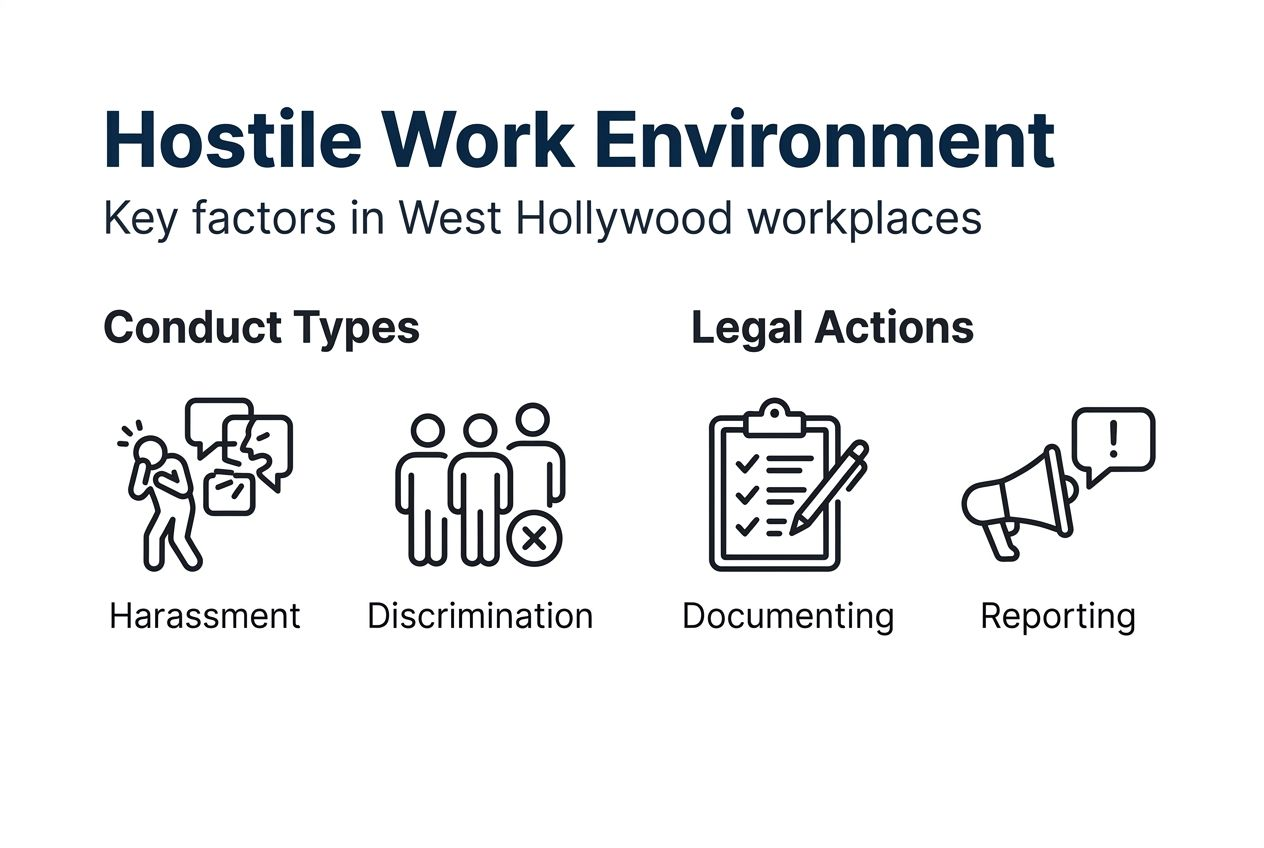
Documenting incidents promptly and reporting within California legal timelines is crucial for effective hostile work environment claims. Taking systematic action protects your rights and strengthens potential legal remedies.
Follow these steps if you face hostile conduct at work:
- Identify whether conduct relates to a protected category under FEHA such as race, sex, sexual orientation, gender identity, national origin, disability, age, or religion
- Assess whether behavior is severe or pervasive enough to create a hostile work environment using the legal standards courts apply
- Document every incident with date, time, location, detailed description of what happened, exact words or actions, and names of witnesses
- Report hostile conduct to your employer’s human resources department following company complaint procedures to give them opportunity to correct the situation
- File a complaint with the Civil Rights Department (CRD) if your employer fails to address the harassment or retaliation occurs. You must file within three years of the last act of harassment under current law, though consulting an attorney about specific deadlines for your situation is essential.
- Consult an experienced employment lawyer to evaluate your legal options, understand timelines, and determine next steps
Prompt action and thorough records improve chances of successful remedies. California law requires employees to exhaust administrative remedies before filing lawsuits, making timely CRD complaints essential. Understanding the employment lawsuit process overview helps you navigate these requirements effectively.
Keep copies of all emails, text messages, performance reviews, and other documents related to the hostile conduct. Take notes immediately after incidents while details remain fresh. Witness testimony strengthens claims, so identify coworkers who observed the behavior.
Legal protections and remedies available in West Hollywood
FEHA and California Labor Code provide broad protections including injunctive relief, damages, and employer accountability for hostile work environments. Understanding available remedies helps you assess the potential value of pursuing legal action.
Employer liability depends on who committed the harassment. When a supervisor creates a hostile environment, employers face strict liability. For coworker harassment, employers are liable if they knew or should have known about the conduct and failed to take immediate and appropriate corrective action. This distinction is critical for evaluating potential claims.
California law defines employer liabilities and employee rights through comprehensive frameworks. Employers are required to take reasonable steps to prevent and correct harassment once they know or should know about it. The Civil Rights Department enforces protections and investigates complaints filed by employees.
Available remedies include:
| Remedy Type | Description |
|---|---|
| Injunctive Relief | Court orders requiring employers to stop harassment, implement training, or change policies |
| Back Pay | Compensation for lost wages if hostile environment caused constructive discharge or termination |
| Emotional Distress Damages | Money for psychological harm, anxiety, and suffering caused by hostile environment |
| Punitive Damages | Additional damages to punish especially egregious employer conduct where the employer engaged in malice, oppression, or fraud (not available against individual harassers in FEHA cases) |
| Attorney Fees | Recovery of legal costs from employer if employee prevails in lawsuit |
Access to specialized employment lawyers in West Hollywood is key for navigating complex hostile environment claims. Legal representation helps you understand sexual orientation discrimination protections and other FEHA provisions relevant to your situation. Exploring legal insights on employment law provides additional context for workplace rights in California.
When to Consult an Employment Lawyer
Legal help is critical for employees facing hostile work environments in West Hollywood because navigating California employment law requires specialized knowledge and experience. Consulting with an employment attorney who handles FEHA cases can help you understand your rights and options. An experienced lawyer can guide you through documenting incidents, reporting procedures, and evaluating whether pursuing a claim makes sense for your situation. No attorney can guarantee specific outcomes, as each case depends on its unique facts and circumstances. Seeking legal advice early allows you to understand deadlines and preserve important evidence. Understanding the employment lawsuit process helps you make informed decisions about your next steps.
Frequently asked questions
What behavior legally counts as a hostile work environment in California?
Behavior legally counts when it is unwelcome, based on protected categories like race or sexual orientation, and severe or pervasive enough to create intimidating or abusive conditions. Courts evaluate the totality of circumstances including frequency, severity, and impact on work performance.
Can a single incident be enough to prove hostility?
Yes, a single extremely severe incident such as physical assault or explicit threats can establish a hostile work environment even without repetition. However, most cases involve patterns of repeated conduct that accumulate to create objectively hostile conditions over time.
What should I do if I experience hostile conduct at work?
Document every incident with detailed notes including dates, times, witnesses, and exact descriptions of what occurred. Report the conduct to your employer’s HR department promptly and consider filing a CRD complaint if the employer fails to address the situation. Consulting an employment lawyer helps you understand your legal options and timelines.
Who enforces hostile work environment laws in West Hollywood?
The California Civil Rights Department (CRD), formerly known as the Department of Fair Employment and Housing, enforces FEHA protections and investigates hostile work environment complaints filed by employees. Employees must file CRD complaints before pursuing lawsuits, making this administrative step essential for protecting legal rights.
Are employers always responsible for hostile environments created by coworkers?
Employers are responsible when they know or should know about harassment and fail to take reasonable corrective action. California law requires employers to prevent and promptly correct harassment, so liability depends on whether the employer responded appropriately once aware of the hostile conduct.