
If your employer pays you less than the Santa Monica minimum wage, you have several legal options. You may be able to file a wage claim with the California Labor Commissioner’s Office, pursue a civil lawsuit, or report widespread violations to state enforcement, depending on the facts and procedural posture of your situation. Which option fits depends on your facts, and an employment attorney can help you weigh them. If you have already started one process, ask an attorney how that may affect your other options before filing anything else.
This article is general education about California and Santa Monica law. It is not legal advice, and outcomes vary with the facts of each case.
TL;DR
- As of July 1, 2026, Santa Monica’s minimum wage is $18.47 per hour, and $25.00 per hour for hotel workers.
- Employees may be able to file a wage claim with the Labor Commissioner’s Office, bring a civil lawsuit, or discuss the best procedural route with an attorney, depending on the situation.
- Unpaid minimum wage claims often have a three-year limitations period, but different deadlines may apply depending on the legal theory, the dates worked, and the relief sought.
- California law protects employees who complain about wages from retaliation.
- You do not need a lawyer to file a wage claim, and immigration status does not matter for recovering wages you earned.
Table of Contents
- What the Santa Monica minimum wage is right now
- How unpaid minimum wage happens
- Your options for recovering unpaid minimum wage
- Deadlines: why timing matters
- Retaliation protections when you raise a wage problem
- Records that help any wage claim
- Perspective: what we see in wage cases
- How we can help
- Frequently asked questions
- Sources
What the Santa Monica minimum wage is right now
Santa Monica sets its own minimum wage, higher than a typical statewide floor. The city’s rate is adjusted every July 1 using the Consumer Price Index for the Los Angeles area. The city’s minimum wage page lists these current figures:
| Worker type | Hourly rate from July 1, 2026 |
|---|---|
| Most employees working in Santa Monica | $18.47 |
| Hotel workers and businesses on hotel property | $25.00 |
The rate that applies to you is the one in effect on the day you worked. If your shifts fell before July 1, 2026, the earlier rate applies to those hours. The city’s official notice for 2026-27 is the document employers are expected to post, and it covers failure to pay the minimum wage, notice and records requirements, and retaliation. Workers should confirm the rate that applied during the specific pay period at issue, because local minimum wage rates can change over time.
How unpaid minimum wage happens
Underpayment is not always a boss openly paying less than the posted rate. Common patterns include:
- An hourly rate that is below the Santa Monica rate, for example because the employer used a different minimum.
- Unrecorded time, such as work before clocking in or after clocking out. See our overview of off-the-clock work violations in Santa Monica.
- Pay averaged across hours, or deductions that bring effective pay below the minimum.
- Misclassification as exempt or independent contractor status, where the classification is not legally supported.
- Late paychecks or delayed final wages may raise separate wage-payment issues, including potential penalties, depending on the timing, employment status, and facts.
When you review your pay, look at both the hourly rate and the timing of payment.
Your options for recovering unpaid minimum wage
California gives employees more than one route. The right route can depend on the amount owed, whether other workers are affected, whether retaliation occurred, and whether the worker wants an administrative process or a court case. The Labor Commissioner’s own materials describe several avenues for relief: an individual wage claim, a report of widespread violations to the Bureau of Field Enforcement, or a civil lawsuit.
A wage claim with the Labor Commissioner
The Labor Commissioner’s Office, also called the Division of Labor Standards Enforcement (DLSE), is the state agency that handles individual wage claims. The agency says wage claims can be filed online, by email, by mail or in person, and that the more detail you provide at filing, the more effectively it can process the claim.
The process is designed to be accessible. According to the DLSE’s wage claim policies, you do not need a lawyer to file, interpreters are available, and immigration status is not a barrier to recovering unpaid wages. Many claims are resolved informally before a formal conference or hearing. If the claim does not resolve informally, the process can continue to a conference or hearing where documents, witnesses, and employer identity issues may matter.
Points the DLSE highlights that employees often miss:
- Bring copies of your documents to a conference, not originals.
- Know your employer’s legal status (sole proprietorship, partnership, corporation) so the right entity can be served.
- If the employer does not appear at the first conference, the matter is generally not over and is usually set for a formal hearing, which calls for more preparation.
For a closer look at how the process runs in a nearby community, see our guide on pursuing unpaid minimum wages through the DLSE.
Reporting widespread violations
If the underpayment looks like a practice affecting many coworkers, the Labor Commissioner’s materials point to the Bureau of Field Enforcement. Reports like this are about the employer’s pattern of conduct, rather than your individual paycheck. When the same violation affects a large group, a class action or representative action may be worth discussing with counsel, but those procedures have separate requirements and are not available in every situation. You can read about class actions on our site.
A civil lawsuit
California Labor Code section 1194 provides that an employee paid less than the legal minimum wage may recover the unpaid balance in a civil action, regardless of any agreement to work for less. CACI describes a minimum wage claim as requiring proof that the worker performed work for the employer, was paid less than the minimum wage for some or all hours worked, and the amount owed. California courts recognize Labor Code section 1194 as giving employees a statutory right to recover unpaid wages when an employer fails to pay minimum wage. Santa Monica’s own ordinance may also provide local enforcement rights for violations of the city’s minimum wage rules. The city’s code is available as Chapter 4.62 of the Santa Monica Municipal Code through its minimum wage resources.
A lawsuit can involve remedies beyond the unpaid wages themselves, but the available remedies depend on the statutes, ordinance, and facts. The Labor Commissioner’s brochure lists interest, reasonable attorney’s fees and, in specific circumstances, liquidated damages equal to the unpaid wages. Under Labor Code section 1194.2, liquidated damages can be denied if the employer shows it acted in good faith and had reasonable grounds to believe it was not violating the law. Whether any of these apply is fact-specific. Do not add punitive damages to this discussion unless the article separately explains a legally distinct claim that supports them.
Administrative and civil penalties against employers
Labor Code section 1197.1 addresses penalties for employers who pay less than the minimum fixed by a state or local rule. These penalties may be separate from the wages, interest, fees, costs, or liquidated damages an employee seeks, and the specifics depend on the statute, enforcement path, and facts.
Deadlines: why timing matters
DLSE materials identify a typical three-year limit for unpaid minimum wage claims, but related theories may have different deadlines. Claims based on oral promises carry a two-year limit, and written contracts four years. Each pay period is its own set of wages, so older underpayments may expire while newer ones remain open. This is why workers should evaluate the actual pay dates and pay periods, not just the first day they noticed the underpayment.
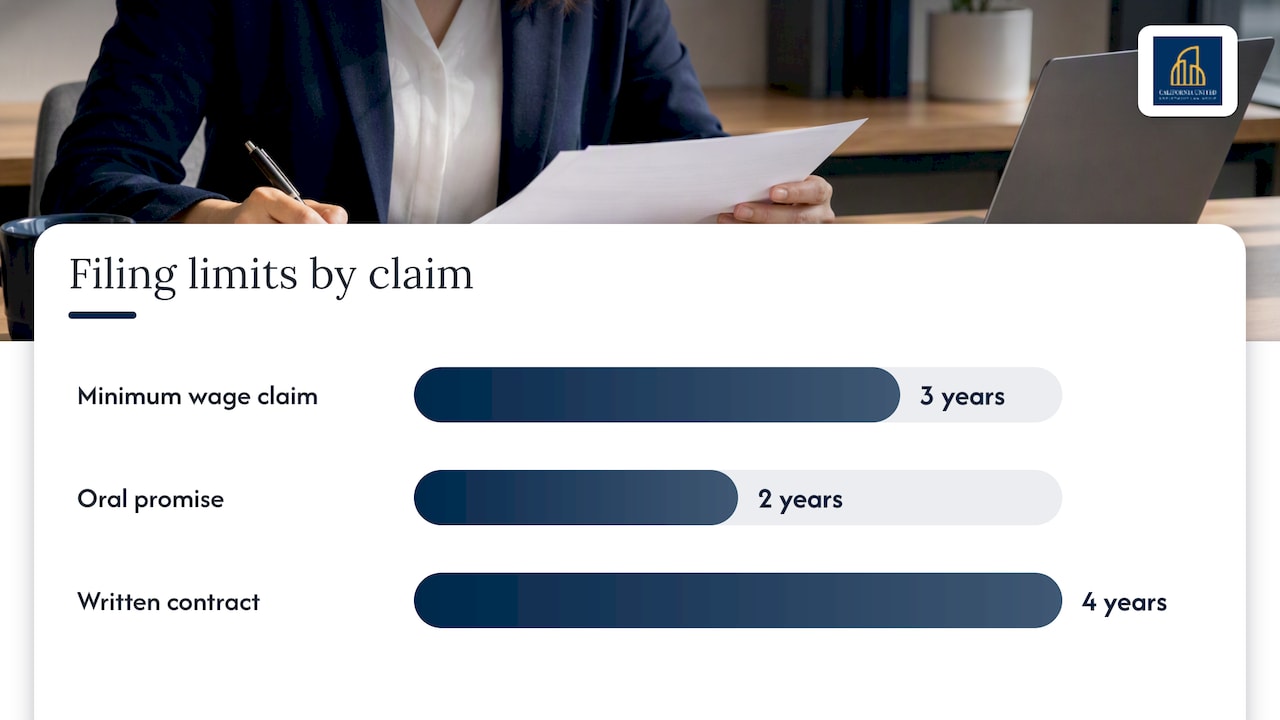
Because different legal theories carry different deadlines, do not assume a single date covers everything. For more on timing, see our resource on deadlines to recover unpaid wages in California.
Retaliation protections when you raise a wage problem
Many employees worry that speaking up will cost them their job. California law includes retaliation protections for workers who assert wage rights.
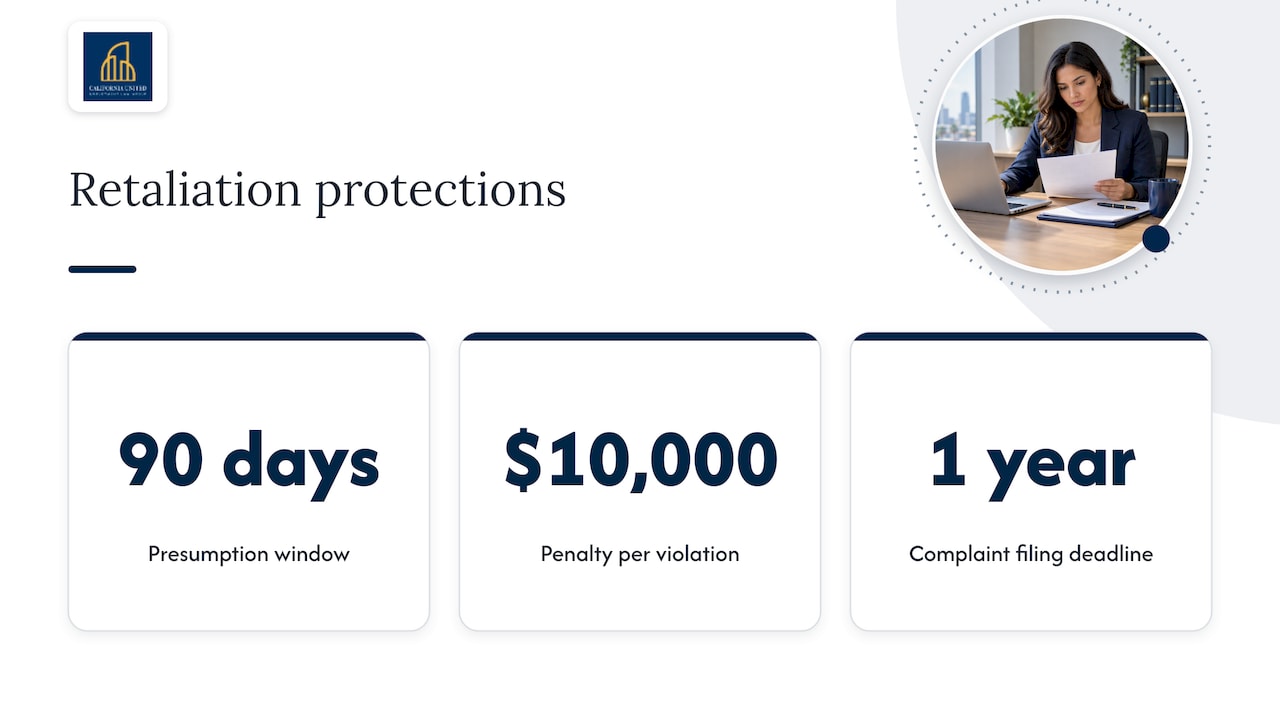
The current paragraph discusses retaliation protections. Under Labor Code section 98.6, certain adverse actions within 90 days of protected wage-related activity can create a rebuttable presumption of retaliation. Remedies may include reinstatement, lost wages, and statutory penalties, depending on the claim and enforcement route. Retaliation complaints to the Labor Commissioner generally must be filed within one year, though extensions for good cause may be available.
A presumption can be rebutted, and every situation turns on its own facts. To learn how retaliation can look in practice, read about the signs of employer retaliation, our overview of workplace retaliation in California, and what to know if you are fired after reporting violations.
Records that help any wage claim
Whatever route you consider, the same kinds of information tend to matter:
- Pay stubs, bank deposits and any written pay-rate notices.
- Your own record of days and hours worked, including start and end times.
- Schedules, texts or emails from supervisors about shifts.
- The employer’s exact business name and address, and the names of coworkers who may have the same issue.
Keep copies, and keep the originals for yourself.
Perspective: what we see in wage cases
We represent California employees in wage and hour matters, and minimum wage cases often begin with a practical question: did the paycheck satisfy the applicable minimum wage for the hours worked? Still, we find that people often wait because they assume a small hourly gap is not worth pursuing. The amount owed still depends on the applicable rate, hours worked, payments received, and any legally recognized credits or defenses.
We also want employees to know that the Labor Commissioner process exists and is open to you without a lawyer. For some people, that is the right place to begin. Others have claims that are more complicated: several pay violations at once, a termination after a complaint, or a workplace where many people are affected. In those situations, speaking with an attorney can help you understand which options may fit.
Our attorneys include lawyers with prior employer-side experience, which gives us insight into how employers evaluate and respond to wage claims. We cannot promise any result, and every case depends on its own facts.
— California United Law Group
How we can help
California United Law Group represents employees in wage and hour matters, including unpaid overtime and minimum wage claims, from pre-litigation through litigation. We work on a contingency fee basis. Attorney’s fees are paid from a settlement or award only if there is a recovery, and the written fee agreement explains how litigation costs are handled. Consultations are free. A consultation does not create an attorney-client relationship unless the firm and client agree to representation in writing.
👉 Talk with our team about your Santa Monica wage question
Frequently asked questions
What if my Santa Monica employer doesn’t pay minimum wage?
You may be able to file a wage claim with the Labor Commissioner’s Office, consider a civil lawsuit, or speak with an employment attorney about which path fits your facts. Gather your pay records first. You are protected from retaliation for raising the issue.
Can I sue my employer for not paying minimum wage?
Often, yes, if the facts support a legal minimum wage claim. California Labor Code section 1194 allows an employee paid less than the legal minimum wage to recover the unpaid amount in a civil action, and Santa Monica’s ordinance also allows suits over violations. Remedies can include interest and attorney’s fees. Results depend on the facts. The worker generally must prove work performed, payment below the applicable minimum wage for some or all hours, and the amount owed.
Do I need a lawyer to file a wage claim?
No. The Labor Commissioner’s Office accepts claims from employees without lawyers and provides interpreters. A lawyer can be useful if your situation involves several issues, a retaliation concern, or a large group of affected coworkers.
How long do I have to act?
Unpaid minimum wage claims typically have a three-year limit, with different limits for oral promises (two years) and written contracts (four years). Retaliation complaints to the Labor Commissioner generally have a one-year window. Because deadlines can vary by claim, remedy, and pay period, ask an attorney to review your specific dates before assuming any claim is timely.
Sources
- Santa Monica minimum wage page
- Santa Monica 2026-27 official minimum wage notice
- DLSE: Recover Your Unpaid Wages brochure
- DLSE: How to File a Wage Claim
- DLSE: Policies and Procedures for Wage Claim Processing
- DLSE: Late Payment of Wages FAQ
- California Labor Code section 1194
- California Labor Code section 1194.2
- California Labor Code section 1197.1
- California Labor Code section 98.6