
Yes. Missing or noncompliant paystubs can support a wage-statement claim under California Labor Code §226 when the employer’s failure is knowing and intentional and you cannot promptly and easily determine the required information. Remedies may include actual or statutory damages, civil penalties in appropriate cases, costs, and reasonable attorney’s fees, and the Division of Labor Standards Enforcement (DLSE) handles administrative wage claims. We can help you evaluate your situation.
TL;DR:
- Statements generally must list gross and net wages, total hours worked unless an exception applies, deductions, pay period dates, employee identifying information, employer name and address, each applicable hourly rate and the corresponding hours worked, and piece-rate units and rates when applicable.
- A private claim requires a knowing and intentional violation plus injury, such as receiving no statement or needing outside records to determine required information.
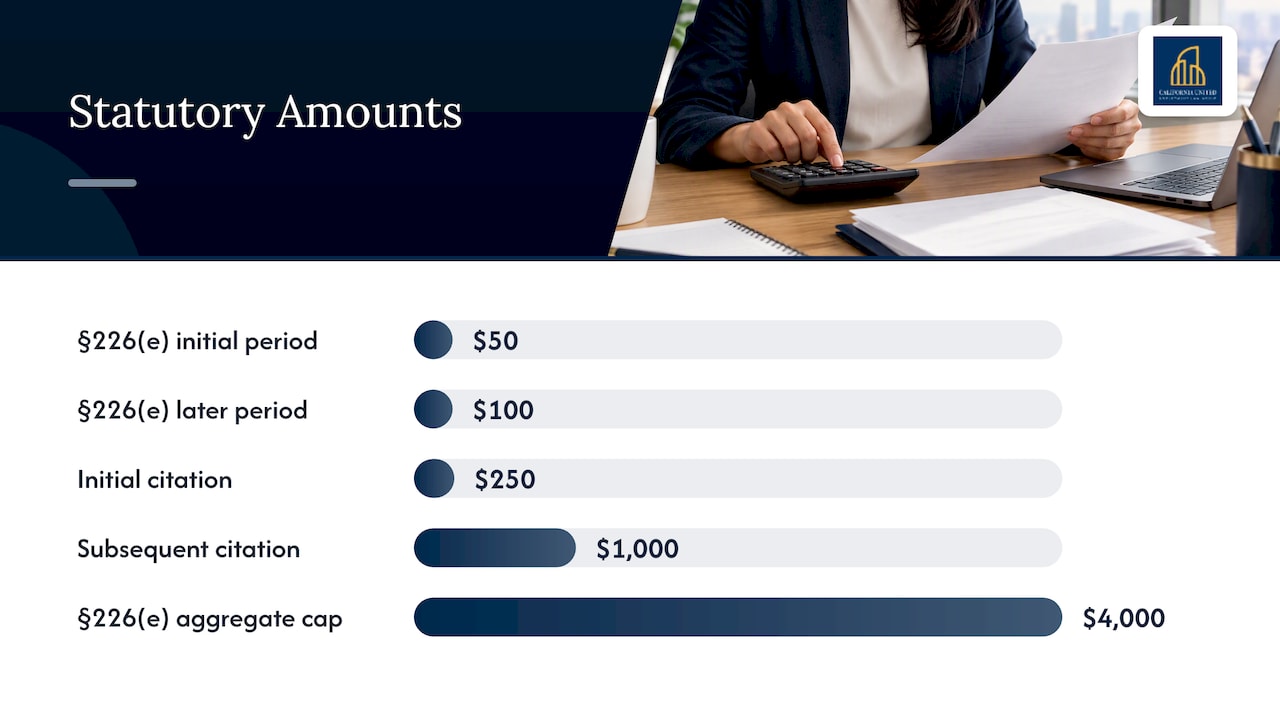
- Section 226(e) allows the greater of actual damages or $50 for the initial pay period and $100 for each later violating period, capped at $4,000, plus fees and costs.
- A DLSE claim, civil lawsuit, class action, or PAGA action may offer different routes depending on the facts; PAGA requires notice, and cure rules may affect whether or how penalties proceed.
- Save any paystubs, paychecks, deposit records, time logs, and messages about pay; you can file a wage claim even if you lack personal records.
Table of Contents
- What does Section 226 require on a Los Angeles wage statement?
- When does a missing or inaccurate paystub cause an injury under §226?
- What damages and penalties can apply, and how do cure rules work?
- How do DLSE claims, civil lawsuits and PAGA actions differ?
- What evidence helps in a Los Angeles paystub case?
- Our perspective on paystub disputes in Los Angeles
- Get help with a Los Angeles wage-statement claim
- FAQ
- Sources
What does Section 226 require on a Los Angeles wage statement?
Think of Section 226 as a checklist. Hold your most recent paystub up against it, or note what is absent if you never received one. According to the DLSE, an itemized wage statement must show:
- Gross wages earned
- Total hours worked, except for certain salaried exempt employees
- Piece-rate units earned and the applicable rate, if you are paid by the piece
- All deductions, which may be aggregated where the law allows
- Net wages earned
- The inclusive dates of the pay period
- Your name and only the last four digits of your Social Security number or employee ID
- The employer’s name and address
- All applicable hourly rates in effect during the pay period and the hours worked at each rate
Temporary services employers may have additional wage-statement requirements, including rate-of-pay and total-hours information for each temporary services assignment. If your pay changes by shift, job or assignment, each rate and its hours should appear separately.
Timing counts too. Employers must furnish the statement semimonthly or at the time of each wage payment. A computer-generated or duplicate record that contains the same information counts as a copy.
Employers also carry recordkeeping duties. Payroll records generally must be retained for at least three years, and those duties can make a missing paystub more than a paperwork problem. If the employer kept the required records, the information may exist even if it was not provided in the itemized form the law requires.
When does a missing or inaccurate paystub cause an injury under §226?
Not every flawed paystub leads to a claim. For a private damages claim under § 226(e), the statute sets threshold questions that shape how agencies and courts look at a case.
Knowing and intentional. Under Labor Code §226, private damages require a knowing and intentional failure to comply. The statute requires a knowing and intentional failure for the private damages described here. A single typo in an otherwise compliant statement may be treated differently from a pattern of missing information or no statements at all, depending on the employer’s knowledge, practices, and the facts.
Suffering injury. The same section treats an employee as injured when the employer fails to provide a wage statement at all, or when you cannot promptly and easily determine certain information from the statement alone. That includes information such as gross wages, net wages, deductions, applicable hourly rates and corresponding hours, piece-rate information when applicable, employee identifying information, and the employer’s name and address. If you had to use other documents or information to determine required wage-statement information, that may be the type of difficulty the statute describes.
A few related points are worth keeping straight:
- Requesting payroll records is a separate right, and the employer’s response deadline depends on the applicable statutory requirements.
- Refusing or failing to permit timely inspection of payroll records can carry a separate $750 penalty in appropriate circumstances.
- A missing paystub and a wrong paystub are both reviewed against the same checklist, but the facts of each situation differ.
Outcomes depend on the specific pay records, the employer’s practices and the evidence available. California courts have addressed wage-statement claims in several important decisions. In Gola v. University of San Francisco, the court applied a predicate-facts approach to whether an employer’s failure was knowing and intentional. Lopez v. Friant & Associates, LLC and Raines v. Coastal Pacific Food Distributors, Inc. address PAGA wage-statement claims and explain that PAGA penalties can differ from private damages under § 226(e). Because these cases turn on the statutory remedy and the facts, employees should not assume that every paystub mistake produces the same result.
What damages and penalties can apply, and how do cure rules work?
California law provides several potential remedies and penalty routes. They work differently, so it helps to separate them.
Private damages under §226(e). An employee who proves injury from a knowing and intentional violation may recover the greater of actual damages or statutory amounts, plus costs and reasonable attorney’s fees:
- $50 for the initial pay period in which a violation occurs
- $100 for each subsequent pay period with a violation
- An aggregate cap of $4,000 per employee
$4,000: the aggregate statutory cap per employee under Labor Code §226(e). Actual damages can exceed the statutory amount, and the court may also award costs and fees.
Civil penalties. Labor Code § 226.3 may authorize civil penalties of $250 per employee for an initial citation and $1,000 per employee for a subsequent citation, subject to the Labor Commissioner’s discretion and applicable authority. In some cases, PAGA may allow an aggrieved employee to seek civil penalties on behalf of the state, but the available penalty theory can depend on the type of violation and the case law.
Notice and cure. PAGA actions require statutory notice, and cure rules may affect whether penalties proceed. The cure process, timing, and consequences depend on the Labor Code provision, the type of wage-statement defect, and the current version of the statute. Because these rules have changed, employees should review the current statute or consult counsel before relying on a cure deadline.
Successful civil actions may also include injunctive relief, costs, and a fee award when authorized.
How do DLSE claims, civil lawsuits and PAGA actions differ?
Los Angeles employees may have more than one route. Each handles different remedies, deadlines, procedures, and risks, and none is a one-size-fits-all answer.
- DLSE wage claim. You can file with the Labor Commissioner’s office online, by mail or in person. The DLSE filing guidance asks for details such as the employer’s name and address, the pay periods involved and any pay records you have. The agency may investigate and may pursue wages, penalties, or other relief available through its process.
- Records request. Before or alongside a claim, an employee can ask the employer to produce payroll records. The employer must comply within the applicable statutory period, and failure to permit timely inspection can lead to a $750 penalty in appropriate circumstances.
- Civil lawsuit. A court action can seek private damages under § 226(e), plus costs and reasonable attorney’s fees when the statutory requirements are met. Our employment lawsuit process overview explains what that path generally involves for California workers.
- PAGA representative action. After the required notice, an aggrieved employee may be able to seek civil penalties on behalf of the state, and cure rules may affect whether, how, or in what amount penalties proceed.
- Class or representative actions. Where many employees received the same defective statements, a class or representative case may be possible depending on the facts, legal theory, and procedural requirements. We handle these through our class action practice.
Notice, cure windows and filing deadlines can change what is available, and those rules do not always point the same direction. Wage statement violations also often overlap with unpaid wage or overtime problems, which our wage and hour team reviews together. A complex case may benefit from a consultation before anything is filed.
What evidence helps in a Los Angeles paystub case?
You generally are not required to have a complete set of your own records to file a wage claim. Still, it helps to gather whatever you have, because employer records can help the agency evaluate the claim, and an employer’s failure to permit timely inspection may create a separate penalty issue.
Documents and details that commonly help:
- Any paystubs you did receive, even incomplete ones
- Paychecks and bank deposit records showing amounts and dates
- Time logs, calendars or personal notes of hours worked
- Texts, emails or written messages about your pay
- Names of supervisors and managers, with approximate dates
- Any written notices of employment terms or pay rates
- Worksite, route, vehicle, or assignment details, if relevant to how your hours or pay were recorded
Gaps are normal. Many employees begin with a few deposits and a handful of messages.
Pro Tip: Keep a simple dated note each pay date that records whether you received a statement, and save every message about pay in one folder.
Our perspective on paystub disputes in Los Angeles
In our experience, paystub problems often do not stand alone. A statement missing hours or rates may point to a larger pay question, and the useful move is to review the whole pay picture before deciding whether a DLSE claim, a civil case, a class action, or a representative action fits. A consultation can help clarify whether an employer’s correction or cure affects the claim, whether deadlines are an issue, and whether a civil claim deserves a closer look. This article is educational, not legal advice, and every situation turns on its own facts.
— California United Law Group
Get help with a Los Angeles wage-statement claim
We represent California employees in Section 226 and wage and hour matters. Fee arrangements depend on the terms of the engagement. Outcomes depend on the facts, and we cannot guarantee a result. If you want a case evaluation, contact us to discuss a consultation, and read our guide on challenging paystub violations in Los Angeles. Our full employment law practice covers related workplace disputes.
This article is general information and attorney advertising, not a substitute for advice from a qualified lawyer. Consult a qualified legal professional about your own circumstances before acting on anything here.
FAQ
What if I don’t get pay stubs, am I out of options?
No. Failing to provide a required wage statement may support a private damages claim under § 226 when the statutory requirements are met, including a knowing and intentional failure and injury. You can request your payroll records, file a DLSE wage claim, or speak with an employment attorney about a civil, class, or PAGA action.
How long do I have to bring a claim in California?
Deadlines depend on the type of claim, and different remedies carry different time limits. Because limitation periods vary by claim and facts, ask a California employment attorney or check with the DLSE soon after you notice the problem.
What can I do if my California employer is not paying my wages?
You may be able to file a wage claim with the DLSE, which handles unpaid wage claims, or pursue a civil action. Gathering paychecks, time logs and messages about your pay helps either route.
Do recent California labor law changes affect paystub claims?
Yes, in part. Recent PAGA reforms and cure rules may affect certain wage-statement claims, including whether civil penalties proceed and how penalties are calculated. Reviewing the current statute or speaking with counsel is the best way to see how the changes apply to your case.