
Yes, Burbank employees can challenge inaccurate timesheets, and California law gives you more than one way to do so. If your hours, overtime, or pay records do not match what you actually worked, you may file a wage claim with the Labor Commissioner’s office or pursue other legal remedies under the California Labor Code. Start by preserving your pay stubs and any personal notes on hours worked, request your payroll records from your employer in writing, and consider speaking with an employment attorney before deadlines pass. The deadline depends on the legal theory, so employees should not assume every timesheet-related claim has the same filing period.
TL;DR:
- Employees should request records in writing as soon as possible and keep personal notes to strengthen their claim if timesheets are inaccurate.
- Unpaid wage and overtime claims often have a three-year limitations period, written-contract claims may allow four years, oral-contract claims may allow two years, and retaliation or record-access claims may have shorter deadlines.
- Employers face penalties for failing to maintain proper records or providing inaccurate wage statements, which can support employee disputes.
- Evidence like pay stubs, emails, or coworker testimony can support claims even when employer records are missing or unreliable.
- Filing a wage claim or requesting payroll records early may help preserve evidence before memories fade or deadlines pass.
Table of Contents
- What California law requires employers to keep and report about hours and pay
- Remedies an employee can pursue: DLSE wage claim, civil suit, and PAGA
- Evidence that supports claims about inaccurate or altered timesheets
- Deadlines and timing: statutes of limitations to watch
- Retaliation protections if you complain about timesheet errors
- How the DLSE process works for a timesheet dispute
- How to properly request and obtain payroll records from the employer
- The role of employee handbook or company policies in disputing timesheets
- Potential outcomes and remedies if a timesheet dispute is resolved in your favor
- Differences in timesheet dispute rights specific to Burbank
- What this explainer gets right that most advice misses
- If you need help with a Burbank wage dispute
- FAQ
- Sources
What California law requires employers to keep and report about hours and pay
California employers carry specific, enforceable duties around timekeeping, and those duties are what make a challenge to inaccurate records possible in the first place.
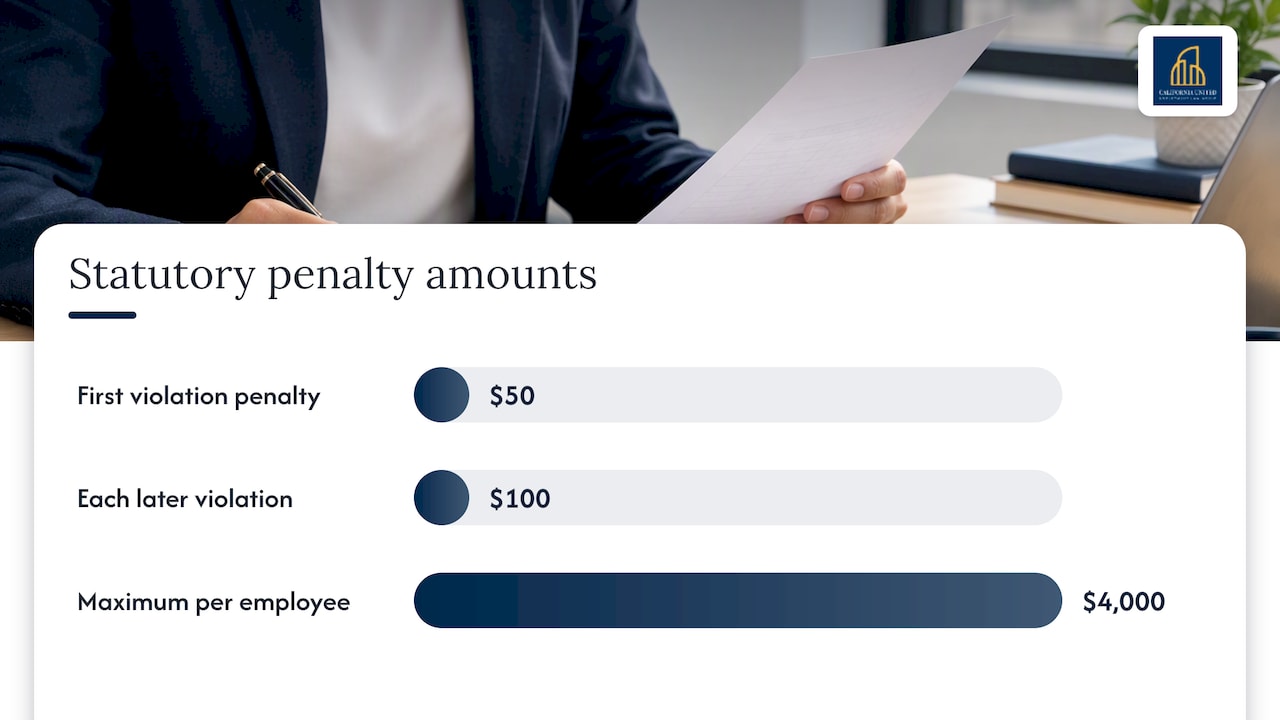
Labor Code §1174 requires employers to keep accurate payroll and time records and to make them available to the Division of Labor Standards Enforcement (DLSE) on request. Certain payroll and deduction records must be kept for at least three years, while some time and earnings records may have shorter minimum retention periods depending on the record type. Labor Code §226 separately requires employers to furnish an itemized wage statement each pay period showing hours worked, rates of pay, and deductions.
When an employer fails to meet these obligations, the consequences extend beyond paperwork:
- Employers face civil penalties for failing to maintain required records under Labor Code §1174.5.
- A knowing and intentional failure to provide accurate wage statements under §226 can trigger statutory penalties, generally starting at $50 for the first violation and $100 for each later one, up to $4,000 per employee.
- Missing or unreliable employer records can help an employee rely on testimony and reasonable estimates, although the employee still must present enough evidence to support the claim.
These statutes exist because accurate timekeeping is the foundation of lawful pay. When that foundation is missing, employees are not left without options.
Remedies an employee can pursue: DLSE wage claim, civil suit, and PAGA
Once you have identified a discrepancy, the path forward usually falls into one of three categories, and the right one depends on the size and nature of the problem.
- A DLSE wage claim is filed with the Labor Commissioner and is designed for individual disputes over unpaid wages, overtime, or missing premiums, without the cost of a lawsuit.
- A civil lawsuit may be appropriate when the dispute involves larger sums, multiple violations, or when an employee wants access to broader discovery tools than a DLSE hearing provides.
- A PAGA action (Private Attorneys General Act) allows an employee to pursue penalties on behalf of themselves and other affected employees for certain Labor Code violations, functioning differently from a traditional class action.
The DLSE’s claim filing guidance lists the remedies recoverable through a wage claim, including unpaid wages, unpaid overtime, meal and rest period premiums, and waiting-time penalties for former employees. Claims are filed at the DLSE office nearest your workplace. Given the overlap between these routes and the stakes involved in missed deadlines, many employees choose to consult an employment attorney before deciding which path fits their situation.
Evidence that supports claims about inaccurate or altered timesheets
Proving a timesheet is wrong does not require a perfect paper trail. California law recognizes that employees often lack the same access to records that employers do, so several forms of evidence can support a claim:
- Pay stubs and any wage statements you received, compared against your own recollection of hours worked.
- Original time punch records or schedules, if you have copies or can request them from your employer.
- Emails, text messages, or scheduling app records showing shift start and end times.
- Personal notes or calendars logging hours, even informal ones kept in real time.
- Coworkers who can corroborate your schedule or observed discrepancies.
When an employer’s records are missing or unreliable, courts and the DLSE have recognized that employee testimony and reasonable estimates can be used to reconstruct hours worked, a principle reflected in federal recordkeeping standards and California wage-hearing practice alike. The absence of employer documentation does not automatically prove the claim, but it can make employee testimony, reasonable estimates, and contemporaneous notes more important. For example, courts have recognized that when employers fail to keep accurate time records, employees may prove unpaid work through reasonable estimates supported by testimony and other evidence. In Furry v. East Bay Publishing, LLC, the court allowed imprecise employee evidence to support unpaid wage damages where the employer failed to keep accurate records. The federal rule comes from Anderson v. Mt. Clemens Pottery Co., which permits approximate damages when the employer’s records are inadequate and the employee presents a just and reasonable inference of uncompensated work.
Pro Tip: Keep a simple running log of your actual hours, dated as you go, even if your employer already tracks time electronically. A contemporaneous record is far more persuasive than a reconstruction made months later.
Deadlines and timing: statutes of limitations to watch
Timesheet disputes are time-sensitive, and the clock can run out before you realize it.
- Many unpaid wage and overtime claims have a three-year limitations period, but the exact deadline depends on the claim and facts.
- Claims based on a written contract may allow up to four years.
- Claims based on an oral promise allow 2 years.
- Record-access penalties and retaliation complaints may carry shorter deadlines, including one-year deadlines in some situations.
Filing guidance should be checked against the specific claim before relying on any deadline, because wage, contract, record-access, and retaliation theories can run on different timelines.
Retaliation protections if you complain about timesheet errors
Raising a good-faith concern about unpaid wages, inaccurate wage statements, payroll records, or retaliation may be protected activity under California law, depending on the facts.
- Protected activity includes filing a wage claim, requesting payroll records, or simply asking your employer to correct an error.
- Retaliatory actions can include termination, demotion, reduced hours, schedule changes, discipline, or sudden negative performance reviews following protected activity.
- When the DLSE finds retaliation occurred, available remedies include reinstatement, back pay, interest, and removal of related adverse records from your file.
- Retaliation complaints generally must be filed within 1 year of the retaliatory act.
If you file a retaliation complaint, expect to participate in investigator interviews and provide supporting documentation. Cooperation strengthens the record the DLSE builds on your behalf.
How the DLSE process works for a timesheet dispute
Understanding what happens after you file helps set realistic expectations for the weeks and months ahead.
- Intake: You submit a wage claim describing the dispute and supporting documents.
- Investigation: A deputy labor commissioner reviews the claim and may request records from your employer.
- Hearing: Both sides present evidence; bring original documents along with copies, and be available for direct questioning.
- Determination: The hearing officer issues a written decision on amounts owed.
- Appeal: If either side appeals, the matter moves to Superior Court, where evidence is presented again.
At a hearing, the employer typically must produce someone knowledgeable about how the timekeeping records were created. An inability to explain missing or inconsistent records may weigh against the employer, especially when the employee provides credible testimony or other supporting evidence.
California United Law Group handles DLSE filings and wage and hour disputes for employees working in Burbank and across California, including matters involving disputed or altered timesheets.
How to properly request and obtain payroll records from the employer
California law gives you the right to request copies of your own payroll records, and putting that request in writing creates a useful paper trail of its own.
Under California wage statement and payroll-record rules, employees may request to inspect or receive copies of payroll records, including wage statements and available time records. A written request, sent by email or certified mail, should specify the pay periods you want and ask for both wage statements and any time punch data your employer maintains. Keeping a copy of your request, along with the date it was sent, matters if your employer delays or refuses.
Employers who fail to provide requested payroll records within the statutory timeframe may face a separate penalty. If your employer does not respond, that failure becomes part of the evidence supporting your broader claim rather than a dead end.
Some employees find it easier to request records through Burbank paystub violation concerns that overlap with timesheet disputes, since missing hours often appear alongside missing wage statement details. Requesting records early, before a dispute escalates, also gives you time to review them for discrepancies while your own memory of the relevant pay periods is still fresh.
The role of employee handbook or company policies in disputing timesheets
Your employer’s internal policies do not override California law, but they can still matter to your case.
Many employers maintain a handbook describing how employees are expected to clock in and out, correct errors, or report discrepancies. If your employer has a documented process for disputing a timesheet and you followed it, that record helps show you raised the issue through proper channels, which can matter later if retaliation becomes a concern. Conversely, if your employer failed to follow its own stated procedures, or if the handbook conflicts with legal recordkeeping requirements, that gap can support your position.
Handbook language cannot shorten the deadlines set by statute, waive your right to accurate wage statements, or excuse an employer from the recordkeeping duties under Labor Code §1174. A policy that appears to waive or restrict statutory wage-and-hour rights may be unenforceable to that extent. Still, it is worth reviewing your handbook early, since it may describe an internal escalation process, a point of contact in human resources, or a timeframe for corrections that is useful to document even as you pursue a formal claim.
Potential outcomes and remedies if a timesheet dispute is resolved in your favor
If a timesheet dispute is resolved in the employee’s favor, available relief can vary based on the legal claim, forum, and evidence.
Recoverable amounts may include unpaid wages for hours not properly credited, unpaid overtime premiums, and meal or rest period premiums, depending on the facts and claim asserted. Former employees may also seek waiting-time penalties when final wages were not timely paid after separation, subject to the statutory requirements and available defenses. Where a knowing and intentional wage statement violation is also present, statutory penalties under Labor Code §226 may apply in addition to the underlying wage recovery.
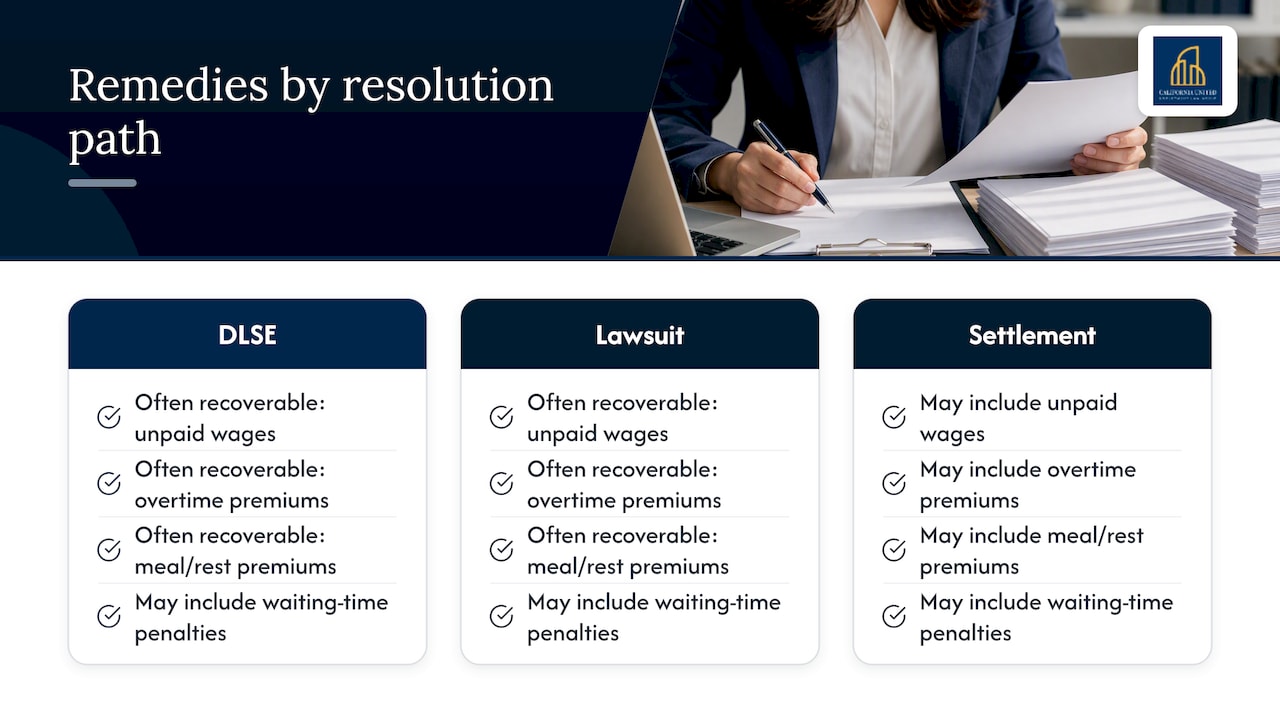
Case law has also shaped how these disputes play out. In Donohue v. AMN Services, the California Supreme Court addressed employer meal-period records and the rebuttable presumption that arises from records showing missed, short, or late meal periods. Keep this case reference limited to meal-period claims rather than timesheet disputes generally. Outcomes vary by case, and the specific remedies available depend heavily on the facts, the evidence preserved, and whether the dispute resolves through the DLSE, a lawsuit, or a negotiated settlement before either. For unpaid wage and overtime claims involving inaccurate records, Furry v. East Bay Publishing, LLC is a more directly relevant California case because it addresses proof of unpaid work when employer records are inaccurate or incomplete.
Differences in timesheet dispute rights specific to Burbank
Burbank employees generally pursue timesheet disputes under the same statewide California wage-and-hour framework that applies throughout the state, including rules governing wage statements and payroll records.
What differs locally is practical access: Burbank employees generally file wage claims through the DLSE office serving the Los Angeles area, and evidence tied to a Burbank workplace, such as witness coworkers or location-specific scheduling practices, stays relevant to how a claim is investigated. If your employer also operates in Glendale or elsewhere in the region, similar recordkeeping obligations apply across those locations as well.
If Burbank has no separate local wage or timekeeping ordinance applicable to the employee’s situation, the statewide Labor Code and DLSE procedures described in this article will generally control.
What this explainer gets right that most advice misses
Many online resources focus on the DLSE claim form, but early documentation and record requests can be just as important because missing or inconsistent employer records may affect how the dispute is evaluated.
Advice to simply file a claim can skip an important step: building a timeline before memories fade and while schedules, messages, pay stubs, and time records are still available. Deadlines ranging from one to four years sound generous until you realize that evidence quality, not just claim eligibility, often determines the outcome.
If there is one priority worth emphasizing, it is this: request your records in writing and start your own log the same week you notice a problem, not after you have decided whether to file. Employment disputes are fact-specific, and outcomes vary based on the records and testimony available, but early documentation consistently gives employees more options later, whether that means a DLSE claim, a negotiated correction, or a lawsuit.
— California United Law Group
If you need help with a Burbank wage dispute
Sorting out an inaccurate timesheet on your own can be difficult when your employer controls the records. California United Law Group represents California employees in wage and hour disputes, including matters involving miscalculated hours, missing overtime, and inaccurate wage statements, through wage-and-hour representation that may include DLSE filings or litigation when appropriate. We also handle broader Employment Law matters, including retaliation connected to a wage complaint, and Class Actions when a timesheet practice affects more than one employee.
We handle many employment matters on a contingency fee basis, meaning attorney’s fees are owed only if a recovery is obtained; clients should review the fee agreement to understand whether they may be responsible for litigation costs or expenses. Consultations are confidential, but contacting the firm does not create an attorney-client relationship unless and until the firm agrees to represent you. If you believe your timesheets have been miscalculated or altered, you can reach out through our contact page to discuss your situation with an employment attorney.
This article provides general information for California employees and is not legal advice or a guarantee of any outcome.
FAQ
Is it a crime to falsify a timesheet?
Falsifying timesheets can expose an employer to civil penalties under California wage-and-hour law, and in unusual circumstances involving fraud or intentional misconduct, criminal issues may arise. Whether specific conduct creates criminal exposure depends on the facts, including intent, and should not be assumed from a timesheet error alone.
What happens if payroll calculates employee hours incorrectly?
Incorrect calculation of hours can lead to underpayment of wages, missed overtime, inaccurate wage statements, and potential liability under California wage-and-hour laws. Employees affected by a calculation error may recover the shortfall through a DLSE wage claim or, where statutory penalties apply, through a civil claim.
What should I do first if I notice a timesheet discrepancy?
The first steps are to preserve your pay stubs and any personal notes on hours worked, then submit a written request to your employer for your payroll records. From there, you can evaluate whether a DLSE wage claim or a conversation with an employment attorney fits your situation.
How long do I have to file a wage claim over inaccurate timesheets?
Many unpaid wage and overtime claims have a three-year deadline, written-contract claims may allow four years, and oral-contract claims may allow two years, but the correct deadline depends on the claim asserted. Some record-access penalties and retaliation complaints may have shorter deadlines, including one-year deadlines in some situations, so employees should seek advice promptly.