
California hospitality workers facing LGBTQ discrimination often feel powerless, unsure if their experiences qualify as illegal treatment or if they have any recourse. The truth is, California law explicitly prohibits discrimination based on sexual orientation and gender identity in all workplaces, including restaurants, bars, and hotels throughout West Hollywood. This guide walks you through your legal rights, how to recognize discrimination, the process for filing claims, and when suing your employer becomes a viable option. Understanding these protections empowers you to take action and hold employers accountable for unlawful treatment.
Disclaimer: This article provides general information about California employment law and is not legal advice. Every case involves unique facts and circumstances. Consult with a qualified employment attorney to discuss your specific situation.
Table of Contents
- Understanding California LGBTQ Workplace Discrimination Laws
- Common Types Of LGBTQ Discrimination In West Hollywood Hospitality Workplaces
- How Hospitality Employees Can Sue For LGBTQ Discrimination In West Hollywood
- Practical Steps To Protect Your Rights And Find Legal Support
- Get Expert Legal Help Against Workplace LGBTQ Discrimination
- Frequently Asked Questions About LGBTQ Discrimination Lawsuits
Key takeaways
| Point | Details |
|---|---|
| Legal protections exist | California FEHA and local West Hollywood ordinances prohibit workplace discrimination based on sexual orientation and gender identity in hospitality settings. |
| Multiple discrimination forms | Discrimination includes hiring bias, unfair termination, harassment, hostile environments, unequal treatment, and denial of benefits or promotions. |
| Legal process requires steps | Employees typically must file with DFEH, obtain a right to sue notice, then pursue civil litigation within specific timeframes. |
| Documentation strengthens claims | Keeping detailed records of incidents with dates, witnesses, and descriptions significantly improves your legal case and credibility. |
| Retaliation is illegal | Employers cannot legally punish you for reporting discrimination, and retaliation itself creates additional grounds for legal action. |
Note: The Department of Fair Employment and Housing (DFEH) was renamed the Civil Rights Department (CRD) in 2022. This article uses DFEH as many resources still refer to the agency by this name.
Understanding California LGBTQ workplace discrimination laws
California provides some of the strongest protections for LGBTQ employees in the nation through the Fair Employment and Housing Act. FEHA explicitly prohibits discrimination based on sexual orientation and gender identity in all employment decisions. This means hospitality employers in West Hollywood cannot legally make hiring, firing, promotion, or compensation decisions based on your LGBTQ status. The law applies to businesses with five or more employees, covering virtually all restaurants, hotels, bars, and entertainment venues throughout the area.
West Hollywood has historically championed LGBTQ rights and maintains local ordinances that reinforce state protections. These laws create overlapping safeguards ensuring hospitality workers receive equal treatment regardless of sexual orientation or gender identity. Discrimination encompasses a broad range of behaviors beyond obvious slurs or termination. It includes subtle actions like consistently assigning less desirable shifts to LGBTQ employees, excluding them from team activities, denying advancement opportunities available to others, or creating workplace policies that disproportionately burden LGBTQ workers.
California courts have consistently reinforced these protections. Employers cannot discriminate in any aspect of employment based on an employee’s sexual orientation or gender identity, and these protections extend beyond obvious discriminatory acts to include subtle forms of differential treatment and harassment that create hostile work environments.
Employers have a legal duty under California law to prevent and address discrimination, not just refrain from discriminating themselves. This means management must take complaints seriously, investigate promptly, and implement corrective measures when violations occur.
Hospitality workplaces present unique challenges where discrimination often manifests through customer-facing roles, tip distribution, scheduling practices, and social dynamics among staff. California law recognizes these nuances and holds employers responsible for maintaining discrimination-free environments. If your employer fails to address known discrimination or creates policies that effectively exclude LGBTQ employees, you have grounds for legal action. Understanding sexual orientation discrimination helps you identify when your rights are violated and when legal intervention becomes necessary.
Pro Tip: Save all work communications including emails, text messages, and scheduling notices that might demonstrate discriminatory patterns or treatment differences based on your LGBTQ identity.
Common types of LGBTQ discrimination in West Hollywood hospitality workplaces
Discrimination takes many forms in hospitality settings, some obvious and others insidious. Overt discrimination includes derogatory comments about sexual orientation or gender identity, refusing to use correct pronouns, making jokes at the expense of LGBTQ employees, or explicitly stating that LGBTQ individuals are not welcome in certain roles. These blatant violations are easier to identify and document, making them strong foundations for legal claims.
Subtle discrimination proves equally harmful but harder to prove without careful documentation. Examples include consistently scheduling LGBTQ employees during slower shifts with lower tip potential, passing them over for promotions despite qualifications, assigning them to back-of-house positions to keep them away from customers, or excluding them from staff social events and professional development opportunities. These patterns demonstrate discriminatory intent when they disproportionately affect LGBTQ workers compared to their peers.
Hostile work environments develop when discrimination becomes pervasive enough to create an intimidating, offensive, or abusive workplace. In hospitality, this might involve coworkers making repeated comments about your appearance or relationships, customers harassing you while management does nothing, or supervisors tolerating discriminatory behavior from other staff members. The key legal standard under California law is whether the conduct is severe or pervasive enough that it alters the conditions of employment and creates a work environment that qualifies as hostile or abusive.
Common warning signs of LGBTQ discrimination in hospitality include:
- Differential enforcement of dress codes or grooming standards based on gender identity
- Denial of spousal benefits or family leave for same-sex partners when provided to opposite-sex couples
- Isolation from team communications or deliberate exclusion from shift trades and scheduling accommodations
- Verbal harassment including questions about personal relationships or invasive comments about gender presentation
- Physical intimidation or unwanted touching justified as jokes or friendly behavior
Retaliation often follows when employees report discrimination. Watch for sudden negative performance reviews, schedule reductions, assignment to undesirable tasks, or increased scrutiny of minor mistakes after filing a complaint. California law treats retaliation as a separate violation, meaning you can pursue claims for both the original discrimination and the subsequent punishment for speaking up.

Pro Tip: Create a detailed log immediately after each incident noting the date, time, location, what happened, who was involved, and any witnesses present, keeping this record outside your workplace in case you need it later.
How hospitality employees can sue for LGBTQ discrimination in West Hollywood
Pursuing legal action for LGBTQ discrimination follows a specific process under California law. Understanding these steps helps you navigate the system effectively and avoid procedural mistakes that could jeopardize your claim. The timeline matters significantly, as missing deadlines can permanently bar you from seeking justice.
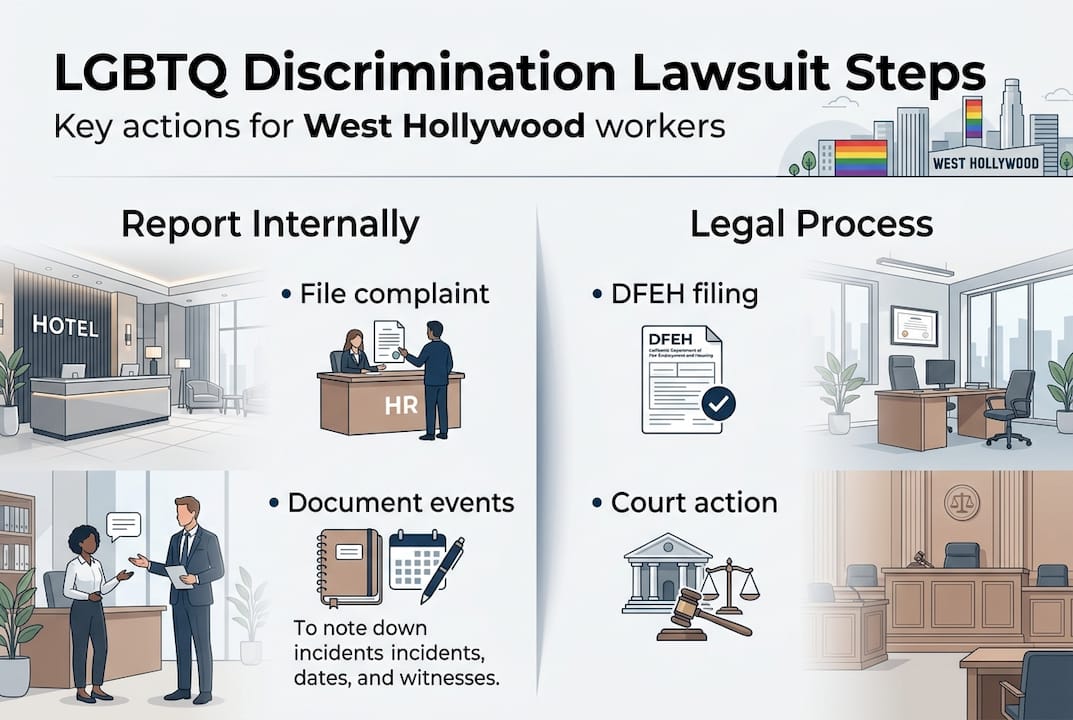
First, report the discrimination through your employer’s internal complaint process if one exists and feels safe to use. Many companies have HR departments or designated complaint procedures. Documenting that you reported internally and how the employer responded strengthens your case by showing you gave them an opportunity to address the problem. If reporting internally seems unsafe or your employer lacks proper procedures, you can proceed directly to filing with government agencies.
Second, file a complaint with the California Department of Fair Employment and Housing within one year of the discriminatory act. This administrative step is mandatory before you can sue in civil court. DFEH investigates complaints, attempts mediation, and issues a right to sue notice if they find sufficient evidence or if you request one. Some employees choose to request an immediate right to sue notice rather than waiting for the full investigation, allowing them to move forward with litigation more quickly.
Third, once you receive your right to sue notice from DFEH, you have one year to file a civil lawsuit in California court. This notice is your legal permission to proceed with litigation. Without it, courts will dismiss your case regardless of its merits. The notice comes either after DFEH completes its investigation or upon your request if you prefer to pursue litigation independently.
Fourth, your attorney files a complaint in civil court detailing the discrimination, legal violations, and damages you suffered. The litigation process involves discovery where both sides exchange evidence, depositions where witnesses give sworn testimony, and potentially settlement negotiations or trial. Most employment discrimination cases settle before trial, but having a strong case prepared for court increases your settlement leverage.
| Claim Type | DFEH Filing Deadline | Court Filing Deadline | Typical Duration |
| — | — | — |
| Sexual orientation discrimination | 1 year from incident | 1 year from right to sue notice | 12 to 24 months |
| Hostile work environment | 1 year from last incident | 1 year from right to sue notice | 15 to 30 months |
| Wrongful termination | 1 year from termination | 1 year from right to sue notice | 12 to 18 months |
| Retaliation | 1 year from retaliatory act | 1 year from right to sue notice | 12 to 24 months |
*Typical duration estimates are approximate and vary significantly based on case complexity, court schedules, and whether the case settles or proceeds to trial.
Successful claims can result in various remedies including back pay for lost wages, front pay for future earning losses, reinstatement to your position, compensatory damages for emotional distress, punitive damages to punish egregious conduct, and attorney’s fees. The availability and amount of damages depend on the specific facts of each case, the severity of the discrimination, and the impact on the employee. Not all remedies are available in every case. California courts take LGBTQ discrimination seriously and award substantial damages when employers violate the law.
Pro Tip: Consult an employment lawyer before filing with DFEH to ensure your complaint includes all relevant claims and legal theories, maximizing your potential recovery and avoiding procedural errors that weaken your case.
Practical steps to protect your rights and find legal support
Taking proactive steps protects your legal rights and strengthens any future discrimination claim. Start by creating a comprehensive record of every discriminatory incident as soon as possible after it occurs. Note the date, time, location, what was said or done, who was involved, and anyone who witnessed it. Include details about how the incident made you feel and any work impacts like lost tips, missed shifts, or emotional distress. Store this documentation outside your workplace in a personal email account or cloud storage where your employer cannot access or delete it.
Follow your employer’s complaint procedures when safe and appropriate. Submit written complaints rather than only verbal reports, and keep copies of everything you submit. If your employer has an employee handbook, review the discrimination and complaint policies so you can reference them in your documentation. Track how your employer responds to complaints, including whether they investigate, what actions they take, and how long the process takes. Inadequate responses or failures to investigate strengthen claims that the employer tolerated discrimination.
Watch carefully for retaliation after reporting discrimination. Common retaliation tactics include schedule reductions, assignment to less desirable shifts or positions, increased criticism or discipline for minor issues, exclusion from meetings or communications, denial of previously approved time off, or hostile treatment from supervisors and coworkers. Document these changes meticulously, as retaliation claims often prove easier to win than the underlying discrimination claims and carry their own damages.
Consult with experienced employment lawyers as early as possible in the process. Many employment attorneys offer free initial consultations to evaluate your case and explain your options. Early legal guidance helps you avoid common mistakes like missing deadlines, making statements that hurt your case, or accepting settlement offers that undervalue your claims. Attorneys can also communicate with your employer on your behalf, reducing stress and protecting you from saying something that could be used against you later.
Additional protective steps include:
- Preserve all work-related communications including emails, texts, schedules, performance reviews, and disciplinary notices
- Identify potential witnesses who observed discrimination and maintain contact information in case you need their testimony
- Seek support from LGBTQ employee resource groups or community organizations that can provide resources and emotional support
- Keep records of any medical or mental health treatment you seek due to workplace discrimination, as these can support damages claims
- Avoid discussing your legal situation on social media where posts could be discovered and used against you
Understand that California law prohibits employers from requiring you to keep discrimination complaints confidential or sign agreements waiving your right to report violations to government agencies. If your employer pressures you to stay silent or sign away your rights, that itself may constitute illegal retaliation. You have the right to discuss workplace conditions with coworkers and seek legal advice without employer interference.
Pro Tip: If you feel unsafe or face immediate threats at work, you can file a complaint with DFEH or consult an attorney without first reporting internally to your employer, protecting yourself from potential retaliation while still preserving your legal claims.
Get expert legal help against workplace LGBTQ discrimination
Facing LGBTQ discrimination in your hospitality job requires specialized legal expertise to navigate California’s complex employment laws effectively. California United Law Group’s practice emphasizes representing employees in workplace disputes, including discrimination, harassment, and retaliation claims throughout West Hollywood and greater California. Our attorneys understand the unique challenges hospitality workers face and have extensive experience handling LGBTQ discrimination cases under FEHA and local ordinances.
We provide personalized representation tailored to your specific situation, whether you are dealing with hostile work environments, wrongful termination, or ongoing harassment. Our team guides you through every step of the legal process, from filing administrative complaints to pursuing civil litigation when necessary. Early consultation with our West Hollywood employment lawyers can help ensure proper documentation, compliance with critical deadlines, and thorough case preparation.
Frequently asked questions about LGBTQ discrimination lawsuits
Can I sue my West Hollywood hospitality employer for LGBTQ discrimination?
Yes, California law allows you to sue employers who discriminate based on sexual orientation or gender identity. You must first file a complaint with DFEH and obtain a right to sue notice before filing in civil court. Most hospitality employers with five or more employees are covered by FEHA protections.
How long do I have to file a discrimination claim in California?
You generally have one year from the discriminatory act to file with DFEH, then another year from receiving your right to sue notice to file in court. Missing these deadlines typically bars your claim permanently, so prompt action is essential. Consulting an attorney early helps ensure you meet all critical deadlines.
What counts as LGBTQ discrimination under California law?
Discrimination includes any adverse employment action based on sexual orientation or gender identity, such as wrongful termination, harassment, hostile work environments, unequal pay, denial of promotions, or different treatment in scheduling and assignments. Both overt acts and subtle patterns of differential treatment qualify as illegal discrimination when based on LGBTQ status.
Can my employer retaliate against me for filing a discrimination complaint?
No, California law strictly prohibits retaliation for reporting discrimination or participating in investigations. Retaliation includes termination, demotion, schedule reductions, increased scrutiny, or any adverse action taken because you exercised your legal rights. Retaliation creates a separate legal claim with its own potential damages.
When should I contact an employment lawyer about LGBTQ discrimination?
Contact an attorney as soon as you experience discrimination or consider filing a complaint. Early legal guidance helps you document incidents properly, avoid procedural mistakes, meet filing deadlines, and understand your options. Many employment lawyers offer free consultations to evaluate your case and explain the legal process without obligation.
What damages can I recover in an LGBTQ discrimination lawsuit?
Successful claims can result in back pay for lost wages, front pay for future losses, compensatory damages for emotional distress, punitive damages for egregious conduct, reinstatement or promotion, and attorney’s fees. The specific damages depend on your situation, the severity of discrimination, and the impact on your career and wellbeing.