
Layoffs at major employers like Honda and Toyota in Torrance can leave employees uncertain about their future and their rights. If you’re over 40 and were affected by recent workforce reductions, you might wonder whether age played a role in the decision. California law provides strong protections against age discrimination in layoffs, and understanding these rights is essential. This article explains how California’s Fair Employment and Housing Act protects older workers, what signs suggest potential discrimination, and practical steps you can take to protect your legal interests.
Table of Contents
- Understanding Age Discrimination Protections Under California Law
- How Layoffs At Honda And Toyota Raise Age Discrimination Concerns
- What Steps Can Employees Take If They Suspect Age Discrimination After Layoffs?
- Additional Labor Law Concerns Related To Layoffs At Honda And Toyota
- How California United Law Group Can Help With Age Discrimination And Labor Law Issues
- Frequently Asked Questions About Honda And Toyota Layoffs And Age Discrimination
Key takeaways
| Point | Details |
|---|---|
| Legal protection | California’s FEHA protects employees aged 40 and above from age discrimination in layoffs and other employment decisions. |
| Warning signs | Disproportionate impact on older workers, age-related comments, or preference for younger employees may indicate discrimination. |
| Document everything | Keep records of performance reviews, communications, layoff criteria, and any age-related remarks made by management. |
| File complaints | Employees can pursue claims through the California Civil Rights Department or the federal EEOC within specific time limits. |
| Retaliation is illegal | California law protects workers who assert their rights or file discrimination complaints from employer retaliation. |
Understanding age discrimination protections under California law
California provides robust legal protections for older workers facing discrimination. The Fair Employment and Housing Act protects workers aged 40 and older from unfair treatment based on age in all aspects of employment. FEHA applies to private and public employers with five or more employees, covering hiring, firing, promotions, compensation, and layoffs. Understanding these protections helps you recognize when your rights may have been violated.
Age discrimination takes many forms in the workplace. Common examples include:
- Excluding older workers from hiring or promotion opportunities
- Paying older employees less than younger workers for similar roles
- Targeting older workers disproportionately during layoffs or restructuring
- Making age-related jokes or comments that create a hostile environment
- Denying training or advancement opportunities based on age
Courts have found age discrimination based on various types of evidence. For example, in DeJung v. Superior Court (2008), a 64-year-old applicant was told the court ‘wanted somebody younger, maybe in their 40’s’—a statement the court found to be direct evidence of discriminatory animus. Similarly, in Reid v. Google, Inc. (2010), the California Supreme Court held that age-biased remarks by supervisors, combined with statistical evidence and changing explanations for termination, were admissible to show an employer’s stated reasons were pretextual.
FEHA also prohibits workplace harassment based on age and protects employees from retaliation when they report discrimination. Employers cannot ask about your age or date of birth during the hiring process if the intent is to discriminate. These protections extend to all employment decisions, including layoffs, benefits, and working conditions.
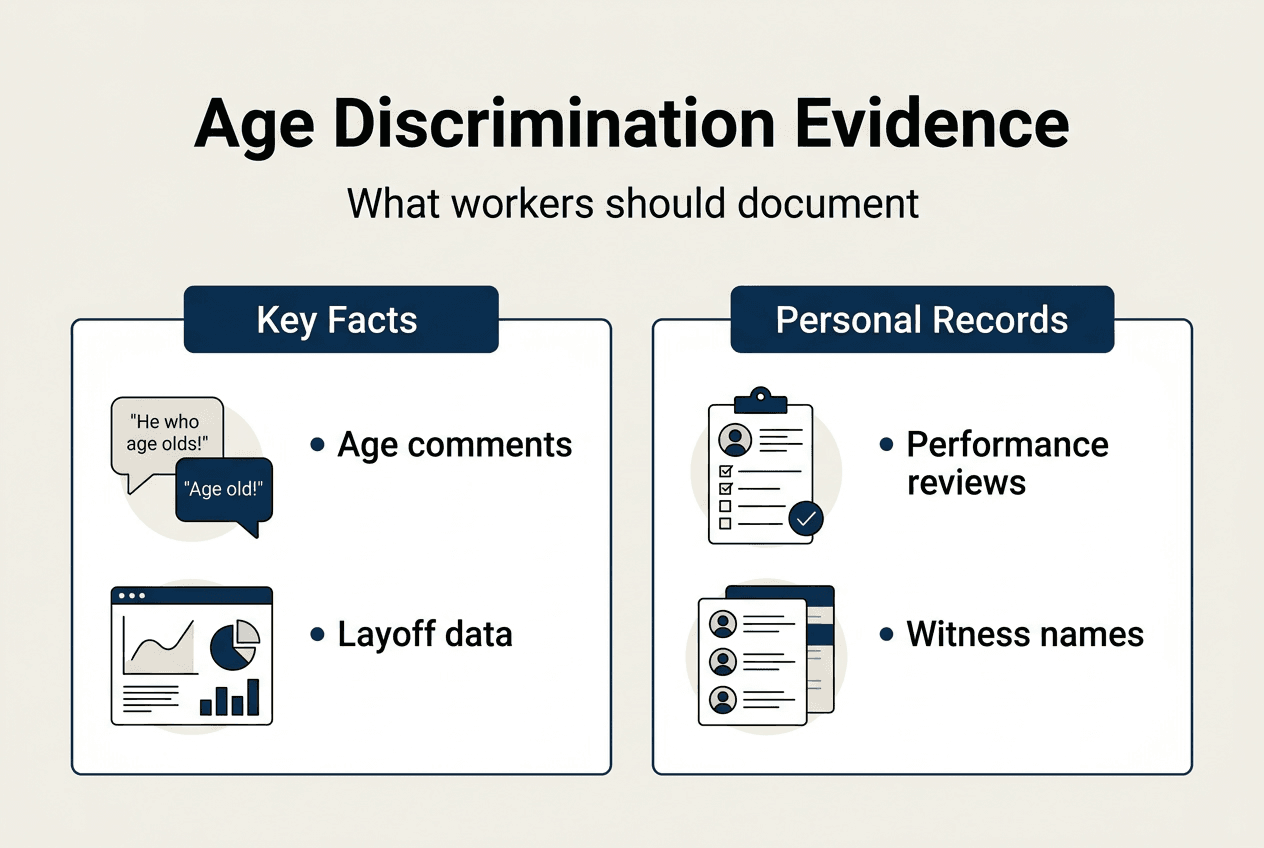
Pro Tip: Keep a personal log of any age-related comments or treatment patterns you observe at work. Document dates, witnesses, and specific language used. This contemporaneous record becomes valuable evidence if you later pursue a discrimination claim.
The connection between age discrimination and manufacturing employment in Torrance is particularly relevant given the automotive industry’s recent workforce changes. Older workers often have higher salaries due to tenure and experience, which can make them targets during cost-cutting measures disguised as neutral business decisions.
How layoffs at Honda and Toyota raise age discrimination concerns
Layoffs at major manufacturers can mask age discrimination when older workers are disproportionately affected. The recent workforce reductions at Honda and Toyota in Torrance raise potential discrimination concerns if the selection criteria or outcomes show patterns of age bias. Employers sometimes target older workers because of higher salaries, pension obligations, or assumptions about adaptability to new technologies.
Two legal theories apply to age discrimination in layoffs. Disparate treatment occurs when an employer intentionally discriminates based on age, such as explicitly preferring younger workers or making age-related comments during the selection process. Disparate impact involves facially neutral policies that disproportionately harm older workers, even without intentional bias. Both theories can support age discrimination claims under California and federal law.
The California Legislature has expressly rejected employer practices that have a disproportionate impact on older workers, even if facially neutral. In Corley v. San Bernardino County Fire Protection District (2018), a California appellate court confirmed that using salary as the basis for termination decisions may constitute age discrimination if it adversely impacts older workers as a group, since salary often correlates with age and experience.
California courts have recognized both theories in age discrimination cases. In Guz v. Bechtel National, Inc. (2000), the California Supreme Court adopted the burden-shifting analysis for proving age discrimination through circumstantial evidence. The court held that employees must first establish a prima facie case showing they are over 40, suffered an adverse employment action, were performing satisfactorily, and were replaced by someone significantly younger or other circumstances suggesting discrimination. Once established, the burden shifts to the employer to provide a legitimate, nondiscriminatory reason for the employment decision.
Recognizing warning signs helps you assess whether discrimination occurred:
- Management made comments about wanting a younger workforce or needing fresh perspectives
- Older workers were laid off at higher rates than younger employees in similar roles
- The company hired younger replacements shortly after laying off older workers
- Selection criteria emphasized traits stereotypically associated with youth, like tech savviness
- Performance reviews for older workers suddenly became negative before layoffs
To identify potential discrimination patterns, take these steps:
- Review the demographics of laid-off employees compared to those retained
- Examine whether layoff criteria were applied consistently across age groups
- Look for evidence that younger, less experienced workers were kept over older, qualified employees
- Check if the company’s stated business reasons align with actual selection decisions
- Identify any age-related comments or stereotypes expressed by decision-makers
Gathering evidence strengthens your position if you decide to pursue legal action. Collect your performance reviews, especially positive evaluations received before the layoff. Save emails, text messages, or other communications containing age-related remarks. Document the circumstances of your termination, including who delivered the news and what reasons were given. Note the ages and positions of other affected employees if possible.

Pro Tip: Request copies of your complete personnel file from your employer. California law requires employers to provide these documents within 30 days of a written request. Your file may contain performance evaluations, disciplinary records, and other materials relevant to proving your case.
Understanding the employment lawsuit process helps you prepare for potential legal action. California law requires specific procedures and timelines for filing discrimination claims, making early consultation with an attorney valuable.
What steps can employees take if they suspect age discrimination after layoffs?
Taking prompt action protects your legal rights and preserves evidence. Start by documenting everything related to your employment and termination. Gather performance reviews, emails, text messages, and any written communications about the layoff. Note the dates of important conversations and the names of people involved. Record any age-related comments you heard or witnessed, including who said them and when.
Consulting an employment attorney experienced in California age discrimination cases provides clarity on your legal options. An attorney can evaluate the strength of your claim, explain the legal process, and help you meet critical deadlines. Many employment lawyers offer free initial consultations and work on contingency, meaning you pay legal fees only if you recover compensation.
Filing a complaint with the appropriate agency is a required step before filing a lawsuit. You have two options:
- California Civil Rights Department (CRD): File a complaint with the state agency that enforces FEHA. The CRD investigates discrimination claims and may facilitate settlement or issue a right-to-sue notice.
- Equal Employment Opportunity Commission (EEOC): File with the federal agency that enforces the Age Discrimination in Employment Act. The EEOC also investigates and may issue a right-to-sue letter.
You can file with both agencies simultaneously through a dual-filing agreement. Time limits are strict. For CRD complaints, you generally have three years from the discrimination to file. For EEOC complaints, you have 300 days. Missing these deadlines can permanently bar your claim. These deadlines can be complex, and exceptions may apply depending on your specific circumstances. Consult an attorney promptly to ensure you don’t miss critical filing deadlines.
California law protects you from retaliation when you assert your rights. Employers cannot fire, demote, harass, or otherwise punish you for filing a discrimination complaint or participating in an investigation. If you experience retaliation, you may have an additional legal claim. Understanding workplace retaliation protections helps you recognize and respond to illegal employer conduct.
The employment lawsuit process typically involves filing an administrative complaint, participating in investigation or mediation, receiving a right-to-sue notice, and potentially filing a lawsuit in court. Your attorney guides you through each stage and advocates for your interests.
Pro Tip: Act quickly but thoughtfully. Consult an attorney before signing any severance agreement or release of claims. Once you sign away your rights, you typically cannot pursue legal action later, even if you discover evidence of discrimination.
Additional labor law concerns related to layoffs at Honda and Toyota
Beyond age discrimination, employees at Honda and related facilities face other labor law issues. Recent litigation highlights wage and hour violations involving unpaid time for donning and doffing personal protective equipment and improper overtime calculations. These violations affect workers regardless of age and demonstrate the importance of understanding your full range of employment rights.
Time spent putting on and removing required safety equipment is compensable work time under California law. If your employer required you to wear PPE but did not pay you for the time spent changing, you may have a wage claim. Similarly, overtime pay must include all forms of compensation, not just base hourly wages. Bonuses, shift differentials, and other payments factor into the overtime calculation.
The following table summarizes common wage and hour issues in manufacturing:
| Violation Type | Description | Employee Impact |
|---|---|---|
| Unpaid PPE time | Not compensating for time spent donning/doffing required safety gear | Lost wages for 15-30 minutes daily |
| Overtime miscalculation | Excluding bonuses or shift pay from overtime rate | Lower overtime compensation |
| Meal break violations | Not providing required 30-minute meal breaks or paying premium | Unpaid break premiums |
| Rest break violations | Denying required 10-minute rest breaks every 4 hours | Unpaid break premiums |
Understanding these rights complements your protections against age discrimination. Employers who violate wage and hour laws may also engage in discriminatory practices, and systemic issues often affect multiple areas of employment law. The lawsuit against Honda highlights potential patterns of labor law non-compliance that could impact current and former employees.
If you experienced wage violations in addition to potential age discrimination, you may have multiple claims. California’s wage and hour laws provide strong remedies, including recovery of unpaid wages, penalties, interest, and attorney’s fees. Discussing all potential claims with an employment lawyer ensures you pursue every available avenue for relief.
How California United Law Group, P.C. Can Help with Age Discrimination and Labor Law Issues
California United Law Group provides experienced legal representation for employees facing age discrimination, wrongful termination, and wage violations. Our attorneys understand California’s employment laws and have successfully represented workers in disputes with large employers. We guide clients through every stage of the legal process, from initial consultation through litigation if necessary. Past results do not guarantee similar outcomes in your case, as every case depends on its unique facts and circumstances.
Our firm assists employees in understanding and asserting their rights under FEHA and California Labor Code. We help you evaluate the strength of your claims, gather and preserve evidence, and navigate the complaint filing process with the California Civil Rights Department or EEOC. Our employment lawyers in Long Beach serve workers throughout the South Bay and Los Angeles County, including Torrance.
We explain the employment lawsuit process clearly and develop strategies tailored to your specific situation. Whether your case involves age discrimination, wage theft, or multiple violations, we provide skilled advocacy focused on protecting your rights and securing fair compensation. Contact us for a consultation to discuss your legal options.
Disclaimer: This article provides general information about age discrimination law and is not legal advice for your specific situation. Employment law cases depend heavily on their particular facts and circumstances. If you believe you have experienced age discrimination, consult with a qualified employment attorney to discuss your specific rights and options.
Frequently asked questions about Honda and Toyota layoffs and age discrimination
Do layoffs automatically mean age discrimination occurred?
No, layoffs alone do not prove age discrimination. Employers can conduct legitimate workforce reductions for business reasons. However, if older workers were disproportionately affected or if age-related comments or patterns suggest bias, discrimination may have occurred. The key is examining whether age played an improper role in selection decisions.
What evidence supports an age discrimination claim after layoffs?
Strong evidence includes age-related comments by managers, statistical data showing older workers were laid off at higher rates, documentation that younger or less qualified workers were retained, and performance reviews contradicting the stated reasons for your termination. Emails, text messages, witness statements, and personnel records all strengthen claims. Contemporaneous notes documenting discriminatory treatment are particularly valuable.
California courts in cases like Sandell v. Taylor-Listug, Inc. (2010) have emphasized that employees must show they were performing satisfactorily at the time of the adverse action, even though the burden ultimately remains on the employee to prove age discrimination was a substantial motivating reason for the employer’s decision.
How does California law protect employees over 40 from discrimination?
California’s FEHA prohibits discrimination based on age for workers 40 and older in all employment decisions, including layoffs. The law covers employers with five or more employees and provides remedies including back pay, front pay, emotional distress damages, and attorney’s fees. FEHA also protects against retaliation when employees assert their rights. Understanding age discrimination protections in Torrance manufacturing helps you recognize violations.
What is the process for filing an age discrimination complaint in California?
File a complaint with the California Civil Rights Department within three years of the discrimination. The CRD investigates your claim and may facilitate mediation or settlement. If resolution is not reached, the CRD issues a right-to-sue notice allowing you to file a lawsuit in court. You can also file with the federal EEOC, which has a 300-day deadline. Consulting an attorney before filing ensures you meet all procedural requirements and deadlines.
Can my employer retaliate against me for filing a discrimination complaint?
No, retaliation is illegal under California law. Employers cannot fire, demote, harass, reduce pay, or otherwise punish employees for asserting their rights or participating in discrimination investigations. If you experience retaliation, you have an additional legal claim. Document any adverse actions taken after you file a complaint or raise concerns about discrimination.