
What protections do Monterey Park employees have against sexual orientation discrimination?
If you work in Monterey Park, California law provides important protections against workplace discrimination based on sexual orientation, but whether a specific claim is actionable depends on the facts. The California Fair Employment and Housing Act (FEHA) is the primary state law protecting you, and it covers far more ground than federal law alone. Understanding both layers of protection is the first step toward knowing where you stand.
Key legal protections include:
- FEHA prohibits discrimination based on actual or perceived sexual orientation in all employment decisions, including hiring, pay, promotion, training, and termination, for employers with five or more employees.
- Harassment protections apply to every workplace in California, regardless of size. Even a business with a single employee cannot permit sexual orientation harassment under California law.
- Federal protections exist under Title VII of the Civil Rights Act of 1964. The U.S. Supreme Court’s decision in Bostock v. Clayton County (2020) confirmed that Title VII’s prohibition on sex discrimination covers sexual orientation and gender identity.
- California employers with five or more employees have prevention obligations, including required harassment-prevention policies and, where applicable, required harassment-prevention training.
- Retaliation is prohibited. Retaliation is prohibited. If you report discrimination or participate in a FEHA proceeding, your employer cannot fire you, demote you, or take other materially adverse employment action against you because of that protected activity.
- Gender identity and gender expression are also protected under FEHA, giving LGBTQ employees in Monterey Park broad coverage across multiple characteristics.
This article is for general educational purposes only and does not constitute legal advice. Employment law outcomes are fact-specific and vary by situation.
How does sexual orientation discrimination actually show up at work?
Discrimination does not always look like an outright slur or a sudden firing. Many employees in Monterey Park experience subtler forms of adverse treatment that are just as legally significant.

Direct discrimination can include being passed over for a promotion you were qualified for, being paid less than a comparable colleague, or being terminated after disclosing your sexual orientation, if your sexual orientation was a substantial motivating reason for the employer’s decision.
Harassment covers a wide range of conduct. Under California law, prohibited behavior includes:
- Derogatory comments, slurs, or jokes targeting sexual orientation
- Unwanted sexual advances or explicit verbal commentary
- Visual conduct such as displaying offensive images or making sexual gestures
- Exclusion from meetings, assignments, team events, or professional opportunities because of sexual orientation, which may support a discrimination or retaliation claim depending on its effect on employment.
- Threatening retaliation after a negative response to sexual advances
Subtle professional exclusion may be actionable when it materially affects the terms, conditions, or privileges of employment or reasonably impairs job performance, advancement, or promotion prospects. Receiving a negative performance review shortly after coming out to a manager, being reassigned to less visible projects, or being left off communications that affect your career trajectory can all constitute adverse action under FEHA. These patterns can support a FEHA claim when the protected characteristic was a substantial motivating reason for the employer’s conduct and the conduct caused legally recognized harm.
Retaliation is its own category. If you report harassment internally or file a complaint with an agency, and your employer takes materially adverse action against you because of that protected activity, the retaliation may be a separate legal violation.
California And Federal Law: How The Legal Framework Protects You
Two legal frameworks work together to protect Monterey Park employees from sexual orientation discrimination in the workplace.

| Law | Enforcing Agency | Employer Coverage | Key Protections |
|---|---|---|---|
| California FEHA | California Civil Rights Department (CRD) | 5+ employees (discrimination); all employers (harassment) | Sexual orientation, gender identity, gender expression, perceived orientation |
| Title VII (federal) | U.S. Equal Employment Opportunity Commission (EEOC) | 15+ employees | Sex discrimination, including sexual orientation per Bostock v. Clayton County |
FEHA is broader than federal law in two important ways. First, it covers employers with five or more employees for discrimination claims, while Title VII requires at least fifteen. Second, FEHA explicitly protects employees based on perceived sexual orientation, meaning your employer cannot discriminate against you based on an assumption about your identity, even if that assumption is wrong. California courts and the U.S. Supreme Court have recognized that sexual-orientation discrimination and harassment can violate workplace civil-rights laws. In Bostock v. Clayton County, the U.S. Supreme Court held that an employer violates Title VII by firing a person “merely for being gay or transgender.” The California Court of Appeal has also recognized FEHA claims involving sexual-orientation harassment, including cases where supervisors used attacks on an employee’s perceived sexual identity as a tool of harassment. These cases reinforce that sexual-orientation bias may support discrimination or harassment claims when the legal elements are met.
The California Civil Rights Department (CRD) enforces FEHA and investigates complaints filed by employees. The CRD has jurisdiction over employment complaints involving FEHA-protected characteristics, including sexual orientation, gender identity, and gender expression. It does not represent employees as a private attorney would. Instead, it investigates and evaluates whether the alleged conduct may violate laws the agency enforces.
Employers with five or more employees are also required to provide sexual harassment prevention training every two years. Failure to comply with prevention or training obligations may support a CRD complaint or serve as relevant evidence, but it does not automatically prove liability for harassment or discrimination.
Pro Tip: FEHA’s protection for perceived sexual orientation means you may have a valid claim even if your employer’s assumption about your identity was factually incorrect.
How To Pursue A Sexual Orientation Discrimination Claim In Monterey Park
Filing a claim under California law follows a defined process. Knowing the steps and deadlines protects your ability to act.
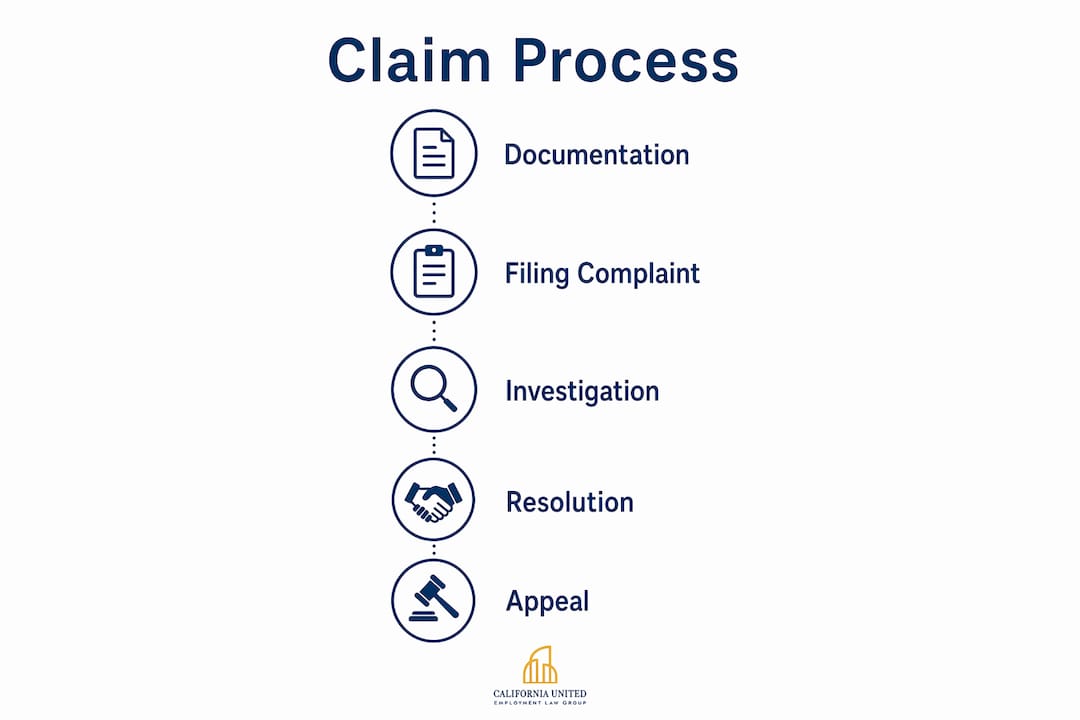
Document everything now. Collect emails, text messages, written reprimands, termination letters, performance reviews, and any other tangible documentation that supports your account. Note dates, times, locations, and the names of any witnesses.
Report internally if it is safe to do so. Many employers have HR departments or written complaint procedures. Reporting internally creates a record and may trigger your employer’s obligation to investigate. Keep copies of anything you submit.
Submit an intake form to the CRD within three years. In most FEHA employment cases, you generally must submit an intake form to the California Civil Rights Department within three years of the date you were last harmed. Missing this deadline can prevent you from pursuing some or all FEHA claims, so prompt action matters.
Complete the intake interview. After you submit the form, the CRD generally reviews the information and may contact you to evaluate whether a formal complaint can be accepted for investigation. The CRD can only investigate potential violations of the laws it enforces.
Understand the CRD’s role. The CRD is an impartial investigator, not your advocate. If your complaint is not accepted, it does not mean the agency disbelieves you. It means the alleged conduct, even if proven, may not violate the specific laws the CRD enforces.
Request a Right-to-Sue notice if needed. If you prefer to file a private lawsuit rather than go through the CRD investigation, you must first obtain a Right-to-Sue notice from the CRD. This notice allows you to file a private lawsuit, but court filing deadlines still apply after the notice issues.
Know that retaliation is separately actionable. Firing, demoting, disciplining, or otherwise materially disadvantaging an employee because the employee filed a CRD complaint may violate FEHA’s anti-retaliation protections. If your employer retaliates after you report discrimination, that act is an independent legal violation you can also pursue.
Potential remedies in a successful discrimination claim can include reinstatement, back pay, compensatory damages, workplace policy changes, attorney’s fees, and, in appropriate cases, punitive damages or other relief depending on the facts. Outcomes vary, and no result is guaranteed. Outcomes vary, and no result is guaranteed.
| Stage | Key Action | Deadline |
|---|---|---|
| Documentation | Gather emails, records, witness contacts | As soon as possible |
| Internal report | Submit complaint to HR or management | Per employer policy |
| CRD intake form | File with California Civil Rights Department | Within 3 years of last harm |
| Right-to-Sue notice | Request from CRD before filing a private lawsuit | Before court filing |
Pro Tip: Knowing how to prove workplace harassment under California law before you file can help you organize your documentation more effectively.
Local Legal Support For Monterey Park Employees
Facing discrimination at work is stressful. Knowledgeable legal counsel familiar with California employment law and Los Angeles County practice can help you evaluate deadlines, evidence, agency options, and potential litigation strategy.
California United Law Group represents employees in Monterey Park and throughout the surrounding region in matters involving:
- Sexual orientation and gender identity discrimination
- Workplace harassment and hostile work environment claims
- Wrongful termination connected to protected characteristics
- Retaliation for reporting discrimination or participating in investigations
- Wage and hour violations and other California Labor Code claims
The firm handles cases from the earliest stages of a dispute through litigation, so you are not left to navigate the CRD process or court proceedings on your own. The firm focuses on representing employees, not employers, which allows its practice to center on worker-side employment claims. Representation depends on conflict checks, case evaluation, and a signed engagement agreement.
If you believe you have experienced sexual orientation discrimination in Monterey Park, contact California United Law Group to discuss your situation with an employment attorney. Contacting the firm does not create an attorney-client relationship unless and until the firm agrees in writing to represent you.
Key Takeaways
California employees in Monterey Park are protected against sexual orientation discrimination under both FEHA and Title VII, with FEHA generally providing broader coverage for discrimination claims starting at five employees and harassment protections applying more broadly.
| Point | Details |
|---|---|
| FEHA covers 5+ employee workplaces | Discrimination protections apply to hiring, pay, promotion, training, and termination for employers with five or more employees. |
| Harassment protections are universal | Every California employer, regardless of size, must maintain a workplace free from unlawful harassment under FEHA. |
| Perceived orientation is protected | FEHA covers employees discriminated against based on an employer’s assumption about their sexual orientation, even if that assumption is wrong. |
| Three-year filing deadline | You must submit an intake form to the CRD within three years of the date you were last harmed in an employment case. |
| Retaliation is a separate violation | Firing, disciplining, or otherwise materially disadvantaging an employee because the employee filed a CRD complaint may independently violate FEHA’s anti-retaliation protections, regardless of whether the underlying discrimination claim ultimately succeeds. |