
TL;DR:
- California law strongly protects retail workers at Americana at Brand from harassment, regardless of store size.
- Harassment involves severe or persistent conduct based on protected characteristics that create a hostile environment.
- Victims can pursue legal action for uncapped damages, back pay, and attorney fees, with support from experienced lawyers.
If you work retail at Americana at Brand in Glendale, you may assume that fighting workplace harassment is a losing battle. Many workers believe their employer is too powerful, or that the law simply does not apply to them. That assumption is wrong. Retail workers in California are protected by some of the strongest anti-harassment laws in the country, and you have the right to take legal action. This guide walks you through the legal framework, what qualifies as harassment, real outcomes from California retail cases, and the exact steps to protect yourself.
Table of Contents
- Understanding harassment laws for retail workers at Americana at Brand
- What counts as harassment in a California retail setting?
- Real-life outcomes: Harassment lawsuits involving California retailers
- What to do if you experience harassment: Documentation, evidence, and reporting
- The uncomfortable truth about retail harassment claims in California
- Connect with legal help for your harassment claim
- Frequently asked questions
Key Takeaways
| Point | Details |
|---|---|
| FEHA covers retail workers | Even single-store retail employers at Americana at Brand must comply with California harassment laws. |
| Clear definitions matter | Knowing what counts as harassment helps you spot violations and take the right action. |
| Evidence is crucial | Detailed documentation and reporting make or break a successful harassment claim. |
| Legal outcomes are real | Past California retail cases resulted in substantial settlements and damages for workers. |
Understanding harassment laws for retail workers at Americana at Brand
California’s primary anti-harassment law is the Fair Employment and Housing Act, commonly called FEHA. It applies to virtually every retailer operating at Americana at Brand, from large anchor stores to small boutiques. FEHA is enforced by the California Civil Rights Department (CRD) and gives retail employees powerful tools to fight back against harassment on the job.
One critical distinction: FEHA’s harassment protections extend to all employers, with no minimum employee threshold, while most other FEHA claims—such as discrimination—require five or more employees. That means even the smallest boutique in the complex has no exemption. That means even the smallest shop in the complex must comply.
FEHA covers every retail store. All employers in California—regardless of size—must comply with FEHA’s harassment protections. There is no minimum headcount.
FEHA also goes further than federal law. Under Title VII, the federal civil rights law prohibiting employment discrimination, emotional distress damages are capped. Under FEHA, broader protections and remedies apply, including uncapped emotional distress damages and attorney fee recovery. That is a meaningful difference when you are weighing whether to pursue a claim.
Protected characteristics under FEHA include:
- Race, color, national origin, and ancestry
- Sex, gender identity, and gender expression
- Sexual orientation
- Age (40 and older)
- Physical disability and mental disability
- Medical condition
- Genetic information
- Religion
- Pregnancy and related conditions
- Marital status
- Military or veteran status
Every retailer at Americana at Brand, whether it is a national chain or a local operator, is bound by these retail worker protections. If your employer allows harassment based on any of these characteristics, you have legal recourse. Understanding the law is your first step toward using it.
What counts as harassment in a California retail setting?
Not every uncomfortable moment at work rises to the level of legal harassment. California law is specific about what qualifies. To have a valid claim, the conduct must be based on a protected characteristic and must be either severe enough on its own or so persistent that it changes the conditions of your work environment.

California law recognizes two main types of harassment:
| Type | Definition | Retail example |
|---|---|---|
| Hostile work environment | Repeated or severe conduct that creates an intimidating or offensive workplace | A manager making ongoing racial jokes or a coworker repeatedly making unwanted sexual comments |
| Quid pro quo | A supervisor conditions job benefits on tolerating harassment | A shift manager threatens to cut your hours unless you go on a date with them |
California courts have established clear standards for both types of claims. In Fisher v. San Pedro Peninsula Hospital (1989) 214 Cal.App.3d 590, 608, the court identified the foundational elements of hostile work environment and quid pro quo harassment that California courts continue to apply. The California Supreme Court further confirmed in Aguilar v. Avis Rent A Car System, Inc. (1999) 21 Cal.4th 121, 129–130 that verbal harassment in the workplace violates FEHA when it is “sufficiently severe or pervasive to alter the conditions of the victim’s employment.” In Roby v. McKesson Corp. (2009) 47 Cal.4th 686, 706, the Supreme Court confirmed that quid pro quo harassment—where a supervisor conditions job benefits on tolerating unwanted conduct—constitutes a distinct form of FEHA harassment.
Retail settings create unique situations. Schedule manipulation, threats about performance reviews, and comments made in stockrooms or break rooms all count. The conduct does not have to happen on the sales floor to be actionable.
How to determine if your situation qualifies:
- Identify whether the conduct targets a protected characteristic (race, sex, age, disability, religion, etc.).
- Assess whether the behavior is severe (a single egregious act) or pervasive (repeated over time).
- Consider whether a reasonable person in your position would find the environment hostile or abusive.
- Consider whether a reasonable person in your position would have found the work environment hostile, intimidating, offensive, or abusive—and whether you personally experienced it that way. You do not need to show your productivity declined.
- Check whether a supervisor, coworker, or even a customer was responsible, since FEHA covers multiple scenarios.
You can also review how to prove harassment under California law to understand the evidentiary standards that apply.
Pro Tip: Minor annoyances, personality clashes, or isolated rude comments usually do not meet the legal threshold. However, a single act of extreme conduct, such as a physical assault or an explicit threat tied to a protected characteristic, can qualify on its own.
Real-life outcomes: Harassment lawsuits involving California retailers
You might wonder whether retail harassment claims actually result in meaningful outcomes. The answer is yes, and California’s verdict history proves it.
While no publicly reported lawsuit specifically names Americana at Brand, every retailer in Glendale operates under the same California law. Recent retail settlements show that major chains are not immune. Target settled a harassment and retaliation case in 2025. Costco settled a similar claim in 2026. Earlier verdicts include a $4 million settlement against Vons and a $30.6 million verdict against Ralphs.
| Retailer | Outcome | Year |
|---|---|---|
| Ralphs | $30.6 million verdict | Prior |
| Vons | $4 million settlement | Prior |
| Target | Settlement (amount undisclosed) | 2025 |
| Costco | Settlement (amount undisclosed) | 2026 |
These prior case outcomes are provided for informational context only. Past results do not guarantee or predict a similar outcome in your matter. Every case depends on its own specific facts, evidence, and legal circumstances.
These cases are not outliers. They reflect a legal environment where California courts and juries take harassment seriously and hold employers accountable.
What a successful outcome could mean for you:
- Compensation for emotional distress, which has no cap under FEHA
- Back pay and lost wages if you were demoted or forced out
- Reinstatement to your position if you were wrongfully terminated
- Punitive damages if the employer acted with malice, oppression, or fraud
- Recovery of attorney fees, meaning you may not need to pay legal costs out of pocket
California courts have affirmed all of these remedies in real cases. The Supreme Court established in Commodore Home Systems, Inc. v. Sup.Ct. (1982) 32 Cal.3d 211, 221 that punitive damages are available in civil actions for FEHA violations, underscoring California’s strong deterrence policy. Compensatory damages, including emotional distress damages, have been recoverable in civil FEHA actions since State Personnel Bd. v. Fair Employment & Housing Comm’n (1985) 39 Cal.3d 422, 434. And if you are pushed out of your job for speaking up, Yanowitz v. L’Oreal USA, Inc. (2005) 36 Cal.4th 1028 confirmed that retaliatory actions—even a series of individually subtle adverse acts—can support a separate FEHA retaliation claim.
Reviewing proving workplace harassment can help you understand what evidence drives these outcomes. The financial stakes are real, and so is the possibility of justice.
What to do if you experience harassment: Documentation, evidence, and reporting
If you are facing harassment right now, the steps you take in the coming days can shape the outcome of your entire case. Acting quickly and carefully matters.
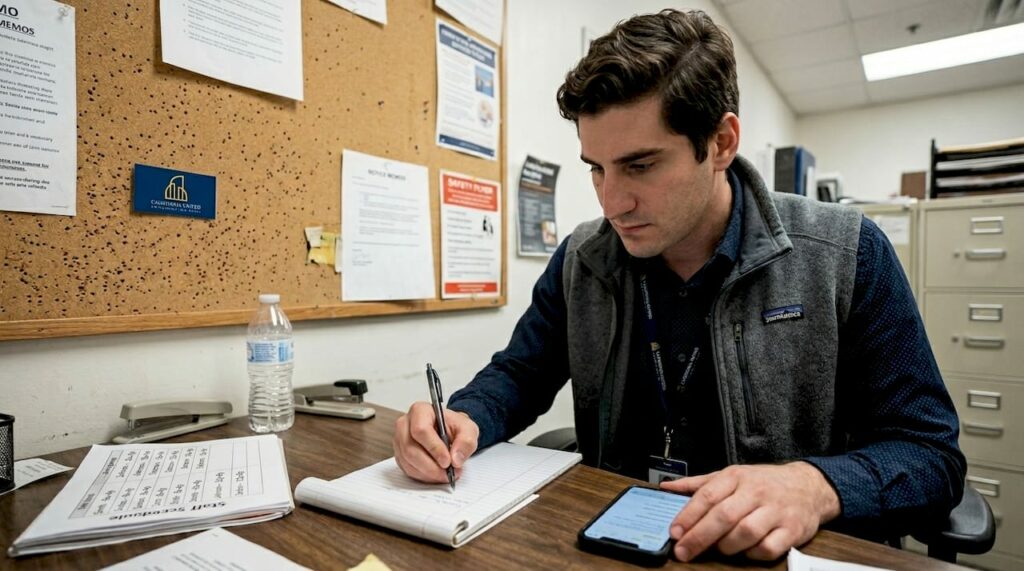
Thorough documentation of every incident, including dates, locations, witnesses, and specific details of what was said or done, is the foundation of a strong claim. Do not rely on memory alone.
Follow these steps:
- Write down every incident as soon as it happens. Include the date, time, location, who was present, and exactly what was said or done.
- Save all relevant communications. Emails, text messages, voicemails, and social media messages can all serve as evidence.
- Note any witnesses. Coworkers who observed the harassment may be willing to provide statements later.
- Report to HR or your direct manager (unless they are the harasser). Keep a copy of any written complaints you submit.
- File with the California Civil Rights Department if your employer does not resolve the issue. You can also consult an employment attorney before or during this process.
⚠️ Important: Under California law, you must file a complaint with the California Civil Rights Department before you can sue in civil court—a step called exhausting your administrative remedies. As of January 1, 2020, you generally have three years from the date of the harassment to file your CRD complaint. Missing this deadline can permanently bar your claim. Consulting an attorney early protects your rights.
Pro Tip: Do not delete any messages, even ones that seem minor or unrelated. A pattern of small incidents can build a compelling case when reviewed together. Preserving evidence of harassment is often what separates a strong claim from a weak one.
Where to report:
- Your store’s HR department or a regional HR contact
- The California Civil Rights Department (CRD), which handles administrative filings
- An employment attorney who can advise you on timing and strategy
For a full breakdown of your rights, see the detailed protections for Americana workers and review the steps for proving your case before filing.
The uncomfortable truth about retail harassment claims in California
Here is something we see often: retail workers who have a valid claim never pursue it. Not because the law fails them, but because fear stops them before they even start.
Fear of retaliation is real. Fear that no one will believe you is real. And when there is no well-known precedent at your specific location, it can feel like you are fighting alone. But that reasoning is flawed, and it costs workers real money and real justice.
FEHA’s uncapped emotional distress damages and attorney fee provisions exist precisely because the legislature recognized that harassment victims need a fighting chance. The law is not passive. FEHA’s uncapped damages and attorney fee provisions were specifically enacted by the California Legislature to ensure that harassment victims have meaningful access to justice—including the ability to secure qualified legal representation without paying upfront.
The absence of a prior lawsuit at Americana at Brand does not mean harassment does not happen there. It may simply mean workers have not yet come forward. One person speaking up can change that.
True change often starts with one person. You do not need a precedent at your specific location to have a valid claim. California law applies equally to every retailer in Glendale.
Retaliation for reporting harassment is also illegal, and employers know it. If you face pushback after reporting, that itself becomes a separate legal claim. Learn more about protection from retaliation and how it strengthens your overall case. The process is not easy, but it is navigable, and you do not have to do it alone.
Connect with legal help for your harassment claim
If you work at Americana at Brand and believe you are experiencing workplace harassment, you deserve clear answers and real support. California United Law Group, P.C. represents retail employees across California in harassment, discrimination, and retaliation cases. We understand FEHA inside and out, and we know how to investigate, build, and present the strongest possible case on behalf of retail workers.
👉 Start by reviewing our employment law expertise to understand how we can help you. You can also read our California harassment guide to confirm whether your situation qualifies. A consultation costs you nothing, and knowing your rights costs even less. Do not wait until the situation gets worse.
Frequently asked questions
Does FEHA apply to all retail employers at Americana at Brand?
Yes. FEHA covers harassment claims for any employer with at least one employee, which includes every retailer operating at Americana at Brand regardless of size.
What is the process to file a harassment claim against a retailer?
Start by documenting each incident thoroughly, report to your employer, and if the issue remains unresolved, file a complaint with the California Civil Rights Department or consult an employment attorney.
Are there limits on damages in a California retail harassment lawsuit?
No. Under FEHA, there are no caps on emotional distress or punitive damages, which is one reason FEHA offers broader remedies than federal Title VII.
Can I be fired for reporting harassment as a retail worker?
No. Retaliating against an employee for reporting harassment is illegal under California law, and Target’s retaliation settlement in 2025 is one example of how significant retaliation claims can be, and how seriously California’s legal framework holds employers accountable.
—
The information provided in this article is for general informational purposes only and does not constitute legal advice. Reading this article does not create an attorney-client relationship with California United Law Group, P.C. or any of its attorneys. Outcomes in legal matters depend on the specific facts, evidence, and circumstances of each individual case. Please consult a qualified California employment attorney before taking any legal action.
Recommended
- Workplace harassment protections for Americana at Brand retail workers in 2026 – California United Law Group
- What Counts as Workplace Harassment in California? – California United Law Group
- How to Prove Workplace Harassment in California: A Legal Guide for Employees – California United Law Group
- Santa Monica Sexual Harassment Laws: Employee Rights – California United Law Group