
DISCLAIMER: This article is for general informational and educational purposes only and does not constitute legal advice. The information provided may not reflect the most current legal developments. Wage and hour laws are complex and fact-specific. For advice about your specific situation, please consult with a qualified employment attorney.
Finding fair pay can feel out of reach for many hospitality workers in Inglewood struggling with missed wages or denied breaks. Comprehensive wage and hour laws under California and Los Angeles regulations offer important wage protections that apply directly to your daily work. Understanding these laws gives you the knowledge to spot violations, assert your rights with confidence, and take steps toward recovering what you have earned.
Table of Contents
- What Wage and Hour Laws Require in Inglewood
- Types of Hospitality Wage Violations in California
- How Unpaid Hours and Off-the-Clock Work Happen
- Workers’ Rights and How to Assert Them
- Legal Options for Recovering Unpaid Wages
Key Takeaways
| Point | Details |
|---|---|
| Minimum Wage Compliance | Hospitality workers in Inglewood must be paid at least $16.00 per hour under California’s state minimum wage (effective January 1, 2024). Local ordinances may require higher rates. Verify current minimum wage requirements as rates change periodically. |
| Prohibition of Wage Violations | Workers are protected against wage theft, including improper classification and denied overtime pay. |
| Document Your Work | Keeping detailed records of hours worked and pay can help workers assert their rights and resolve potential disputes. |
| Legal Avenues for Recovery | Workers have multiple options, such as filing administrative claims or pursuing civil lawsuits, to recover unpaid wages effectively. |
What Wage and Hour Laws Require in Inglewood
Hospitality workers in Inglewood are protected by comprehensive wage and hour laws designed to ensure fair compensation and working conditions. California’s minimum wage standards establish foundational requirements that directly impact workers in the hospitality sector, providing critical economic safeguards.
In Inglewood, employers must adhere to several key wage and hour regulations:
- Minimum wage of at least $16.00 per hour for all employees under California law (as of January 1, 2024), with potential for higher local rates
- Mandatory meal and rest break provisions
- Overtime compensation for hours worked beyond standard shifts
- Accurate record-keeping of employee work hours
- Prohibition of wage theft and improper compensation practices
The Los Angeles Office of Wage Standards plays a crucial role in enforcing these regulations. They ensure that hospitality employers in Inglewood not only meet state minimums but also comply with additional local ordinances that provide enhanced worker protections. These standards cover critical areas like:
Here is a summary comparing hospitality wage protection agencies and their roles:
| Agency Name | Main Function | Key Services Provided |
|---|---|---|
| Los Angeles Office of Wage Standards | Enforces local ordinances | Wage enforcement, health benefits |
| Division of Labor Standards Enforcement | State-level labor protection | Investigates claims, educates workers |
| Office of Wage Standards | Worker complaint support | Confidential reporting, guidance |
Note: Enforcement mechanisms and agency jurisdictions can change. Contact the relevant agency or consult with an attorney to verify current procedures and requirements.
- Guaranteed minimum hourly rates
- Health benefit requirements
- Training wage provisions
- Comprehensive worker protection mechanisms
Pro tip: Keep detailed personal records of your work hours and wages to help protect your legal rights and quickly identify any potential wage discrepancies.
Types of Hospitality Wage Violations in California
Hospitality workers in California face numerous potential wage violations that can significantly impact their financial well-being. Labor standards enforcement mechanisms protect workers from systematic compensation misconduct across the hospitality industry.
Common wage violations in California’s hospitality sector include:
- Minimum Wage Violations: Paying less than the state-mandated minimum wage (currently $16.00 per hour as of January 1, 2024, but subject to change)
- Overtime Compensation Failures: Not paying required overtime rates for hours worked beyond standard shifts
- Meal and Rest Break Violations: Denying legally mandated break periods
- Tip Credit Misappropriation: Improper handling or retention of employee tips
- Misclassification of Workers: Incorrectly categorizing employees as independent contractors
The complexity of wage violations often stems from employers attempting to reduce labor costs at workers’ expense. Some employers deliberately misclassify workers, deny overtime, or implement improper wage calculation methods to minimize compensation. This systematic approach can result in significant financial losses for hospitality workers who may not understand their legal rights.
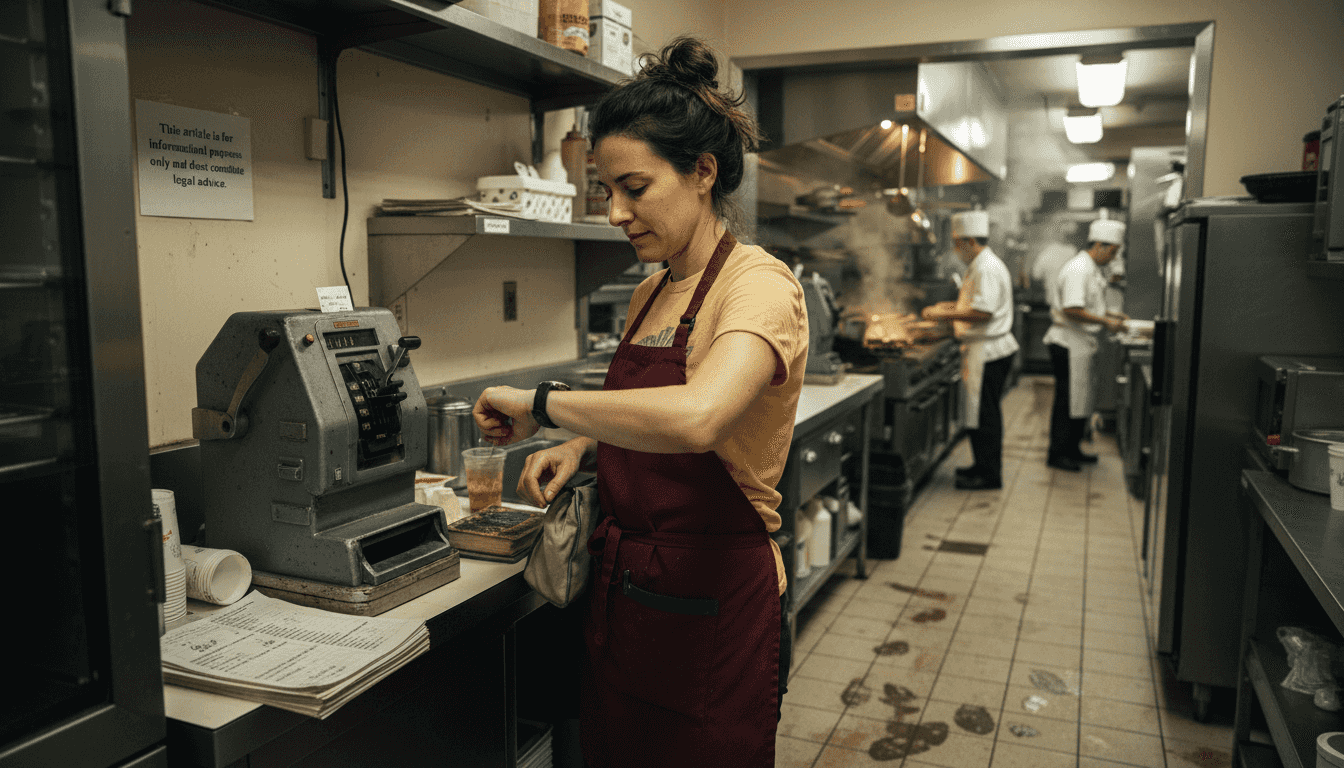
Employers found guilty of these violations can face substantial penalties, including back wage payments, fines, and potential legal action. Workers have multiple avenues for addressing these violations, including filing complaints with the Division of Labor Standards Enforcement and seeking legal representation.
Pro tip: Document every hour worked, save pay stubs, and track your complete compensation to build a strong case if wage violations occur.
How Unpaid Hours and Off-the-Clock Work Happen
Labor standards enforcement reveals that unpaid hours and off-the-clock work represent significant wage violations in the hospitality industry, often occurring through subtle and systematic practices that exploit workers’ time and labor.
Common scenarios of unpaid work in hospitality settings include:
- Pre-Shift Preparation: Requiring employees to arrive early to set up workstations without compensation
- Post-Shift Cleanup: Mandating workers complete cleaning or administrative tasks after clocking out
- Mandatory Training: Conducting unpaid training sessions outside scheduled work hours
- Travel Between Work Sites: Requiring employees to travel between locations without compensating travel time
- Setup and Shutdown Tasks: Performing essential job preparation without official clock-in
Employers frequently use strategic tactics to avoid paying for these additional hours. Some managers create workplace cultures that implicitly pressure workers to complete tasks without compensation, framing extra work as “team commitment” or “professional responsibility.” This psychological manipulation can make employees hesitant to demand payment for their time, effectively stealing labor through social pressure and implied job security threats.
This table highlights the differences between unpaid work scenarios and how they financially affect hospitality workers:
| Unpaid Work Scenario | Common Example | Potential Financial Loss |
|---|---|---|
| Pre-shift preparation | Setting up workstations | Dozens of hours per year |
| Post-shift tasks | End-of-day cleaning | Accumulates over time |
| Mandatory training | Meetings after clock-out | Unpaid training hours |
| Site travel | Driving between locations | Missed travel compensation |
The financial impact of these practices can be substantial. Workers might lose hundreds or even thousands of dollars annually through uncompensated labor, which disproportionately affects low-wage hospitality employees who can least afford such losses. California labor laws explicitly require employers to pay for all hours worked, including preparatory and concluding tasks directly related to job responsibilities.
Pro tip: Track every minute of work-related activity, including pre-shift and post-shift tasks, and maintain a detailed personal log of your hours to protect your wage rights.
Workers’ Rights and How to Assert Them
Labor rights enforcement provides critical protections for hospitality workers in Inglewood, ensuring employees can confidently assert their legal entitlements without fear of workplace retaliation.
Hospitality workers in California have fundamental rights that include:
- Minimum Wage Guarantees: Receiving at least the California state minimum wage of $16.00 per hour (as of January 1, 2024) or applicable local minimum wage, whichever is higher
- Overtime Compensation: Payment at 1.5 times regular rate for hours worked beyond 8 per day or 40 per week
- Mandatory Rest Breaks: 10-minute paid breaks for every 4 hours worked
- Meal Period Protections: 30-minute unpaid meal breaks for shifts longer than 5 hours
- Anti-Retaliation Safeguards: Protection from adverse actions for reporting wage violations
Assertive strategies for protecting workplace rights involve multiple approaches. Workers can file formal complaints with state agencies, document all work-related activities, and seek guidance from employment law professionals. The Office of Wage Standards provides confidential channels for reporting violations, ensuring workers can challenge unfair practices without compromising their job security.
Workers should understand that California law provides robust protections against workplace exploitation. Employers who violate wage and hour regulations can face significant financial penalties, including back wage payments, fines, and potential legal sanctions. Documentation becomes crucial in these scenarios, with detailed records of hours worked, communications, and incident descriptions serving as powerful evidence.
Pro tip: Keep a contemporaneous, detailed log of all work hours, including start/end times, break periods, and any unpaid work tasks, to strengthen potential wage claims.
Legal Options for Recovering Unpaid Wages
Wage claim procedures provide Inglewood hospitality workers with multiple pathways to recover stolen wages and hold employers accountable for labor law violations. Understanding these legal mechanisms is crucial for protecting workers’ financial rights.
Hospitality workers can pursue unpaid wages through several strategic options:
- Administrative Wage Claim: Filing a complaint with the California Division of Labor Standards Enforcement
- Civil Lawsuit: Pursuing direct legal action against the employer in court
- Private Attorney Representation: Engaging employment law specialists to negotiate settlements
- Collective Action: Joining class-action lawsuits with similarly affected workers
- Labor Commissioner Hearing: Requesting a formal administrative review of wage violations
The success of any wage recovery action depends on the specific facts of each case, the strength of available evidence, and applicable legal standards. While California law provides these recovery mechanisms, there is no guarantee of a particular outcome. Employees should consult with an attorney to evaluate the merits of their specific situation before pursuing any legal action.
The wage recovery process involves comprehensive documentation and strategic legal approaches. Workers must compile detailed evidence including pay stubs, work schedules, communication records, and documentation of hours worked. The burden of proof initially falls on the employee, making meticulous record-keeping essential for successful wage claims.
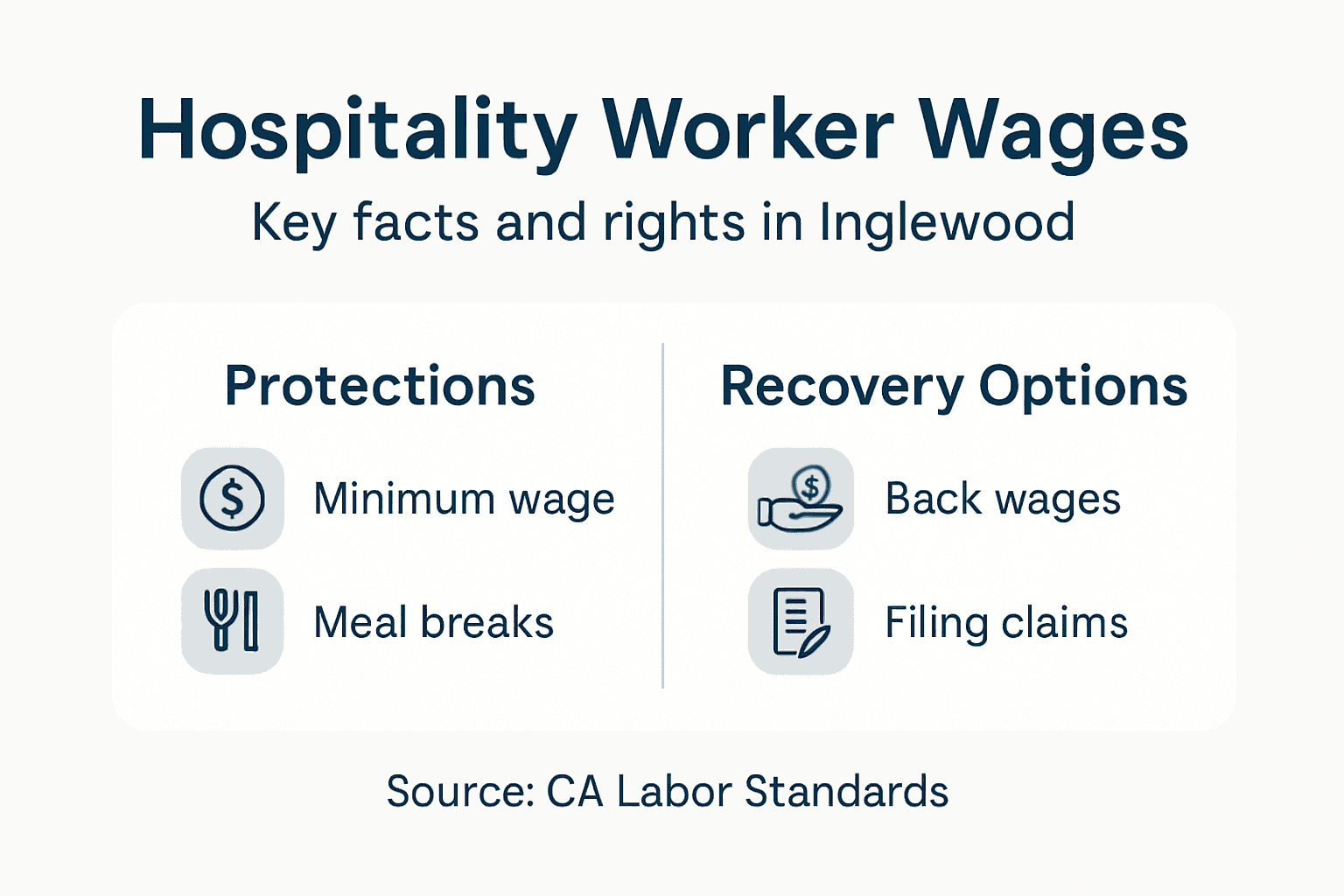
California law provides robust protections for workers seeking unpaid wages. Potential recoveries can include back wages, liquidated damages, penalties, and in some cases, attorney fees. The Division of Labor Standards Enforcement offers a structured process that allows workers to pursue compensation without immediate court costs, making legal recourse more accessible.
California courts have consistently reinforced these protections. In Brinker Restaurant Corp. v. Superior Court (2012) 53 Cal.4th 1004, the California Supreme Court clarified that employers must relieve employees of all duties during meal periods and relinquish control over their activities. The court in Augustus v. ABM Security Services, Inc. (2016) 2 Cal.5th 257 further held that employers cannot require employees to remain on-call during rest breaks. These decisions underscore California’s strong public policy protecting workers’ meal and rest period rights. Additionally, in Bell v. Farmers Insurance Exchange (2004) 115 Cal.App.4th 715, the court recognized that class actions are an appropriate and superior means of adjudicating wage and hour violations affecting multiple employees.
Pro tip: Preserve all employment documents, including digital communications and scheduling records, as these can serve as critical evidence in wage recovery proceedings.
Protect Your Rights As An Inglewood Hospitality Worker
Wage theft, unpaid hours, and improper compensation can deeply affect your financial security and well-being. If you are facing challenges such as denied overtime pay, missed meal breaks, or off-the-clock work, you are not alone. These common violations can leave hardworking hospitality employees in Inglewood vulnerable and unsure of how to assert their legal rights.
At California United Law Group, P.C., we understand the complexities of California Labor Code and wage and hour laws that impact hospitality workers. Our experienced team is dedicated to standing with employees against unfair wage practices and advocating for your workplace rights. If you believe your rights have been violated, we can evaluate your situation and discuss your legal options. Each case is unique and outcomes depend on the specific facts and circumstances. Contact us to learn how we may be able to assist you in pursuing your wage and hour claims.
The information in this article is current as of the publication date and is subject to change. Wage and hour laws are frequently updated through legislation, regulations, and court decisions. This article provides general information only and should not be relied upon as a substitute for specific legal advice about your situation.
Frequently Asked Questions
What is the minimum wage for hospitality workers in Inglewood?
The minimum wage for all employees in Inglewood is at least $16.00 per hour under California state law (as of January 1, 2024). Inglewood may have additional local wage ordinances that require higher rates. Workers should verify the current applicable minimum wage, as rates are subject to periodic increases.
What protections do hospitality workers have regarding meal and rest breaks?
Hospitality workers are entitled to mandatory meal and rest breaks, which include 10-minute paid breaks for every 4 hours worked and a 30-minute unpaid meal break for shifts longer than 5 hours.
How can hospitality workers recover unpaid wages in Inglewood?
Workers can recover unpaid wages by filing an administrative wage claim with the California Division of Labor Standards Enforcement, pursuing a civil lawsuit, or joining collective actions with other affected workers.
What should hospitality workers do if they experience wage violations?
Workers should document all work-related activities, keep detailed records of hours worked, and file complaints with the relevant state agencies for protection against wage violations.
Recommended
- Employment Lawyer Inglewood – Los Angeles Employment Lawyers | California United Law Group, P.C.
- Wage & Hour – Los Angeles Employment Lawyers | California United Law Group, P.C.
- Employment Lawyer Long Beach – Los Angeles Employment Lawyers | California United Law Group, P.C.
- Employment Lawyer West Hollywood – Los Angeles Employment Lawyers | California United Law Group, P.C.
- Wage Theft in Buena Park – Impact on Amusement Workers | Serendib Law Firm