
Some California employees experience changes in treatment at work after returning from medical leave. This matters because federal and California laws including the Family and Medical Leave Act and California Family Rights Act strictly prohibit employers from punishing workers for exercising their legal right to medical leave. Learn how to recognize medical leave retaliation and understand the protections available under California and federal law.
Table of Contents
- Defining Retaliation After Medical Leave
- California’s Legal Protections For Employees
- How Retaliation Manifests In The Workplace
- Employee Rights And Employer Obligations
- Steps To Take If Retaliation Occurs
Key Takeaways
| Point | Details |
|---|---|
| Retaliation Definition | Retaliation after medical leave involves negative actions taken by employers against employees who utilize their legal right to medical leave. |
| Federal and State Protections | Both federal and California laws protect employees from retaliation, offering extensive job and healthcare protections during medical leave. |
| Documentation Importance | Employees experiencing retaliation should meticulously document all interactions and communications to build a strong legal case. |
| Action Steps | In cases of retaliation, employees should report incidents, consult legal counsel, and pursue official grievance procedures to protect their rights. |
Defining Retaliation After Medical Leave
Retaliation after medical leave involves an employer taking adverse actions against an employee who has exercised their legal right to medical leave. These actions occur when an employer takes negative steps against an employee because the employee exercised their right to medical leave. Medical leave retaliation can manifest through various subtle and direct workplace behaviors that negatively impact an employee’s professional standing and career trajectory.’
California courts have consistently held that employers may not retaliate against employees who exercise their rights under CFRA or FMLA. For example, in Lonicki v. Sutter Health Central (2008) 43 Cal.4th 201, the California Supreme Court reinforced employee protections under these statutes. The court emphasized that employees must be able to exercise their leave rights without fear of adverse consequences upon their return to work.
Under federal guidelines, prohibited workplace retaliation encompasses a wide range of potential employer actions, including:
- Terminating employment unexpectedly
- Reducing work hours or compensation
- Demoting an employee to a less desirable position
- Creating a hostile work environment
- Denying promotions or professional opportunities
- Changing job responsibilities without valid business reasons
The legal framework protecting employees is designed to ensure workers can access medical leave without fear of professional consequences. Adverse employment actions are particularly problematic when they occur immediately following an employee’s medical leave request or return to work. These actions must demonstrate a clear connection between the medical leave and the subsequent negative treatment.
Workplace retaliation often relies on employers attempting to disguise discriminatory actions as legitimate business decisions. Employees experiencing such treatment must document every interaction, communication, and potential instance of differential treatment. Collecting evidence becomes crucial in establishing a clear pattern of retaliation that goes beyond standard workplace management practices.
Pro tip: Keep detailed records of all communications, performance evaluations, and workplace interactions before and after your medical leave to build a strong potential legal case.
California’s Legal Protections for Employees
California provides robust legal safeguards for employees seeking medical leave, offering comprehensive protections that extend beyond federal mandates. Employee rights under state law create a powerful framework that shields workers from potential workplace discrimination and retaliation.
The state’s legal protections encompass multiple critical areas:
- Job protection during medical leave
- Prohibition of retaliatory actions
- Requirement for maintaining equivalent job positions
- Protection against wage and benefit disruptions
- Legal recourse for improper employer actions
- Preservation of healthcare benefits during leave periods
Under CFRA, these protections generally apply to employers with five or more employees. Under FMLA, protections apply to employers with 50 or more employees. Additionally, employees must meet specific eligibility requirements, including having worked at least 1,250 hours in the previous 12 months and having at least 12 months of service with the employer.
Under California law, employees are protected by both the Family and Medical Leave Act (FMLA) and the California Family Rights Act (CFRA), which provide comprehensive coverage for workers experiencing serious health conditions or requiring family care. These laws mandate that employers cannot take adverse actions against employees who legitimately utilize their medical leave rights.

Employers in El Monte and throughout California are strictly prohibited from engaging in retaliatory behaviors. Workplace retaliation can manifest through various mechanisms, including unexpected termination, unexpected job reassignment, reduced work hours, or creating a hostile work environment. Employees experiencing such treatment have legal mechanisms to challenge these discriminatory practices and seek appropriate remedies.
Pro tip: Maintain comprehensive documentation of all workplace communications and interactions related to your medical leave to strengthen potential legal claims.
Here is a comparison of federal and California protections for employees after medical leave:
| Protection Area | Federal Law (FMLA) | California Law (CFRA & State) |
|---|---|---|
| Job Security | Up to 12 weeks protected | Up to 12 weeks, often broader scopes |
| Healthcare Continuation | Covers health insurance | Covers health insurance plus more |
| Scope of Family Care | Limited family members | Broader definition of family members; includes domestic partners |
| Remedies for Violations | Reinstatement, damages | Reinstatement, damages, state claims |
How Retaliation Manifests in the Workplace
Workplace retaliation after medical leave can take numerous subtle and direct forms designed to undermine an employee’s professional standing. Workplace retaliation patterns reveal complex strategies employers might use to penalize workers who exercise their legal rights.
Typical manifestations of medical leave retaliation include:
- Unexpected job termination
- Sudden demotion without clear cause
- Reduction in work hours or compensation
- Unfavorable shift or schedule changes
- Exclusion from professional opportunities
- Negative performance evaluations
- Creating a hostile work environment
- Denying previously promised promotions
Subtle retaliation often operates through seemingly legitimate management decisions that ultimately disadvantage the employee. An employer might restructure departments, redistribute responsibilities, or modify performance expectations in ways that appear neutral but strategically undermine an employee’s professional trajectory.
In some cases, employers may assert legitimate business reasons for employment decisions that employees believe are retaliatory. This is why documentation and legal analysis are important. These calculated approaches make documenting and proving retaliation challenging, requiring employees to maintain meticulous records of workplace interactions, communication patterns, and performance evaluations before and after medical leave.
Pro tip: Contemporaneously document every workplace interaction and communication following your medical leave to establish a clear chronological record of potential retaliatory behaviors.
Employee Rights and Employer Obligations
In El Monte workplaces, employees and employers have specific legal responsibilities regarding medical leave. Employee protections under law establish clear guidelines for maintaining workplace fairness and preventing discriminatory practices.
Key employee rights include:
- Job-protected medical leave
- Maintenance of health insurance benefits
- Restoration to equivalent position upon return
- Protection from retaliatory actions
- Right to file complaints about potential violations
- Confidentiality of medical information
- Reasonable workplace accommodations
- Continued performance evaluation fairness
It is important to note that not all negative employment actions following medical leave constitute unlawful retaliation. To establish a retaliation claim, an employee must generally show: (1) they engaged in protected activity (taking medical leave); (2) the employer took adverse employment action against them; and (3) there was a causal connection between the protected activity and the adverse action.
Employer obligations extend beyond mere compliance, requiring proactive measures to protect employee rights. Employers must create transparent policies, provide clear communication about leave procedures, and ensure consistent application of regulations across all departments.
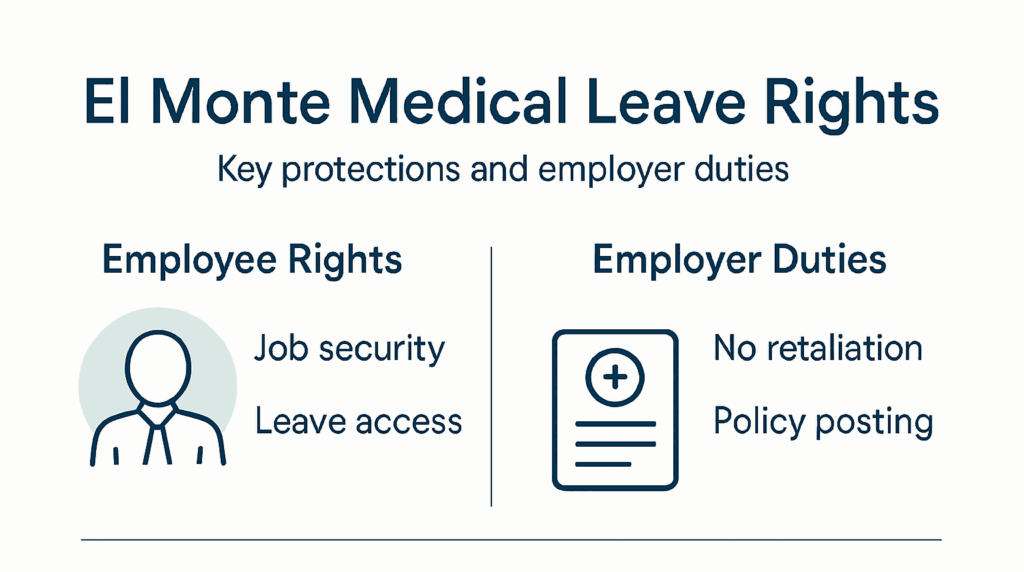
Critical legal requirements mandate that employers cannot take adverse actions that discourage employees from utilizing their medical leave rights. This includes maintaining the same salary, benefits, and professional opportunities that existed before the leave. Employers who violate these standards may face significant legal consequences and potential financial penalties.
Pro tip: Familiarize yourself with your company’s specific medical leave policies and document all interactions related to your leave request to protect your professional interests.
Steps to Take If Retaliation Occurs
When medical leave retaliation becomes apparent, employees must take strategic and deliberate actions to protect their professional rights. Immediate steps for documenting workplace retaliation can significantly strengthen potential legal claims and demonstrate a clear pattern of discriminatory behavior.
Critical initial actions include:
- Documenting all potentially retaliatory incidents
- Preserving written and electronic communications
- Collecting performance records before and after medical leave
- Identifying potential witnesses
- Reporting incidents to human resources
- Maintaining a detailed chronological log of events
- Avoiding confrontational interactions with employers
- Seeking confidential legal consultation
Employees should be aware of important deadlines. For CFRA claims, employees must file a complaint with the California Civil Rights Department (formerly DFEH) within three years of the alleged violation. For FMLA claims, a lawsuit must generally be filed within two years of the alleged violation, or three years if the violation was willful. Missing these deadlines can bar your claim.
Formal reporting procedures require careful navigation. Employees should follow their organization’s established grievance protocols, ensuring all communications are professional, factual, and supported by concrete evidence. Internal reporting creates an official record and provides employers an opportunity to address potential violations.
Should internal resolution prove ineffective, employees have additional recourse through external agencies. Filing complaints with the Equal Employment Opportunity Commission (EEOC) or California’s Labor Commissioner’s Office can trigger formal investigations into potential workplace violations. Professional legal representation becomes crucial in understanding the complexities of medical leave retaliation claims.
Pro tip: Create a secure, separate file containing all documentation related to your medical leave and potential retaliation, keeping original workplace documents intact and unaltered.
The following summarizes key actions for employees responding to retaliation:
| Step | Purpose | Impact on Legal Claims |
|---|---|---|
| Document all incidents | Build a factual record | Provides clear evidence |
| Preserve communications | Retain proof of employer actions | Supports pattern of behavior |
| Identify witnesses | Obtain corroborating accounts | Strengthens testimony |
| Consult legal counsel | Understand legal options | Increases case effectiveness |
California courts apply the McDonnell Douglas burden-shifting framework to retaliation claims under FEHA (which includes CFRA). Under this framework, the employee must first establish a prima facie case of retaliation. If successful, the burden shifts to the employer to articulate a legitimate, non-retaliatory reason for the adverse action. The employee then has the opportunity to show that the employer’s stated reason is pretextual.
Protect Your Rights Against Medical Leave Retaliation in El Monte Workplaces
Facing retaliation after taking medical leave can feel overwhelming and unfair. If you have experienced adverse actions like unexpected job termination, reduced hours, or hostile treatment after your leave, you are not alone. These forms of workplace retaliation violate your protected rights under both federal and California laws, including the Family and Medical Leave Act and the California Family Rights Act. Understanding these protections is crucial but enforcing them can require expert guidance.
At California United Law Group, P.C., our dedicated team helps employees in El Monte and across California stand up to retaliation and wrongful termination. We represent employees in wrongful termination and retaliation claims. If you suspect retaliation after your medical leave, be mindful of the filing deadlines discussed above and consider consulting with an attorney to understand your options. Learn how our Wrongful Termination & Retaliation lawyers can assist you. Get informed about your rights under California Employment Law and connect with trusted advocates ready to support every step of your claim. Visit California United Law Group, P.C. today to protect your future and hold employers accountable.
Frequently Asked Questions
What constitutes retaliation after medical leave?
Retaliation after medical leave generally occurs when an employer takes adverse actions against an employee for exercising their rights to medical leave, such as termination, demotion, or creating a hostile work environment.
How can I prove retaliation after taking medical leave?
To prove retaliation, document all workplace interactions, communication related to your medical leave, and any adverse actions taken against you after your leave. Collect performance evaluations and identify potential witnesses to support your case.
What legal protections do employees have against retaliation after medical leave?
Employees are generally protected under both federal and state laws, including the Family and Medical Leave Act (FMLA) and the California Family Rights Act (CFRA), which prohibit employers from taking retaliatory actions against employees who use their medical leave rights.
What steps should I take if I experience retaliation after my medical leave?
If you experience retaliation, document all incidents, preserve communications, report the actions to human resources, and consider seeking legal advice if internal resolutions fail. Additionally, maintain a chronological log of events to strengthen your case.
Recommended
- Employment Lawyer El Monte – Los Angeles Employment Lawyers | California United Law Group, P.C.
- Retaliation in the Workplace: Your Rights and Legal Options in California – Los Angeles Employment Lawyers | California United Law Group, P.C.
- Long Beach Workers Reporting Safety Violations: Your Rights – California United Law Group
- Employment Lawyer Monterey Park – Los Angeles Employment Lawyers | California United Law Group, P.C.
- Finding an Employment Law Attorney Near Me