
Facing unfair treatment at work because of your accent, ethnicity, or cultural background can leave you feeling isolated and frustrated. For many employees in Monterey Park, understanding what counts as national origin discrimination and knowing your legal rights is the first step toward protection and justice. This guide explains how California law shields you from discrimination at every stage of employment and what you can do if your workplace rights are threatened.
Table of Contents
- Defining National Origin Discrimination At Work
- Types And Examples Of Unlawful Treatment
- California Feha Protections And Legal Framework
- Employee Rights And Filing A Claim
- Employer Duties And Compliance Requirements
Key Takeaways
| Point | Details |
|---|---|
| Understanding National Origin Discrimination | Discrimination based on ethnicity, accent, or perceived identity is illegal under federal law. Employers must avoid making employment decisions based on stereotypes. |
| Employee Rights and Protections | Employees can file complaints through state and federal agencies, ensuring protection from retaliation regardless of immigration status. |
| Employer Responsibilities | Employers must proactively prevent discrimination, maintain clear procedures, and provide training to comply with legal standards. |
| Documentation Importance | Keeping detailed records of discriminatory incidents is crucial for filing complaints and supporting legal claims. |
Defining National Origin Discrimination at Work
Workplace national origin discrimination occurs when employees experience unfair treatment based on their ethnicity, cultural background, accent, or perceived national identity. The U.S. Equal Employment Opportunity Commission enforces federal prohibitions against this form of discrimination under Title VII of the Civil Rights Act of 1964, which applies to employers with 15 or more employees. California’s Fair Employment and Housing Act (FEHA) provides even broader protections, covering employers with 5 or more employees.
This type of discrimination can manifest in multiple ways, including but not limited to:
- Refusing to hire candidates with specific ethnic backgrounds
- Making employment decisions based on accent or linguistic characteristics
- Creating a hostile work environment through derogatory comments about national origin
- Providing unequal job assignments or advancement opportunities
- Implementing policies that disproportionately impact certain national origin groups
National origin discrimination extends beyond simple geographic distinctions. It encompasses complex interactions involving cultural identity, language proficiency, and systemic workplace biases. Federal EEOC guidelines clarify that national origin discrimination includes unfair treatment related to birthplace, ancestry, cultural practices, and linguistic traits specific to ethnic groups, as well as discrimination based on perceived national origin even where the perception is incorrect.
Employers cannot make employment decisions based on stereotypes, assumptions, or perceived differences related to an individual’s national origin.
Legally Protected Characteristics include:
- Accent and language abilities
- Country of origin
- Ethnic background
- Cultural traditions
- Physical or cultural characteristics associated with a specific national origin
Pro tip: Document any instances of potential national origin discrimination carefully, including dates, specific comments, and witnesses, which can be crucial evidence if you need to file a formal complaint.
Types and Examples of Unlawful Treatment
National origin discrimination can manifest through various forms of unlawful workplace treatment, ranging from subtle bias to overt harassment. Disparate treatment laws protect employees from intentional discriminatory actions that target individuals based on their national origin, ethnicity, or cultural background.
Common examples of unlawful treatment include:
- Refusing to hire or promote qualified candidates due to their accent or ethnic name
- Making derogatory comments about an employee’s cultural background
- Creating workplace policies that disproportionately impact specific ethnic groups
- Assigning less desirable job tasks based on national origin
- Providing unequal training or professional development opportunities
- Subjecting employees to offensive jokes or stereotypical remarks
Discriminatory practices can occur in multiple employment contexts, including recruitment, compensation, job assignments, and workplace interactions. Equal Employment Opportunity Commission guidelines highlight that unlawful treatment extends beyond direct employment decisions and encompasses creating a hostile work environment.
Employers are prohibited from making employment decisions based on stereotypes, assumptions, or perceived differences related to an employee’s national origin.
California courts have specifically recognized that discrimination based on an employee’s foreign accent constitutes national origin discrimination. In Galvan v. Dameron Hospital Ass’n (2019) 37 Cal.App.5th 549, the court held that adverse employment decisions based on accent are a sufficient basis for finding unlawful discrimination.
Specific Prohibited Actions:
- Screening job candidates based on accent or appearance
- Requiring unnecessary language proficiency tests
- Implementing English-only workplace rules without business necessity
- Making hiring or promotion decisions that consistently exclude certain ethnic groups
- Tolerating workplace harassment related to national origin
Pro tip: Keep detailed documentation of any discriminatory incidents, including dates, specific language used, and potential witnesses, which can be critical evidence if you need to file a formal complaint.

California FEHA Protections and Legal Framework
The California Fair Employment and Housing Act (FEHA) provides robust legal protections against national origin discrimination in the workplace. California law recognizes that a single incident of harassing conduct can be sufficient to create a triable issue regarding a hostile work environment if the conduct unreasonably interferes with the employee’s work performance or creates an intimidating, hostile, or offensive working environment. In Beltran v. Hard Rock Hotel Licensing, Inc. (2023) 97 Cal.App.5th 865, the court emphasized that Government Code section 12923 provides that harassment cases are rarely appropriate for disposition on summary judgment, and a single incident may suffice depending on its severity.
Key protections under FEHA include:
- Prohibiting discrimination based on ancestry, national origin, and ethnic background
- Protecting employees from harassment and discriminatory treatment
- Requiring employers to prevent and address workplace discrimination
- Ensuring equal employment opportunities regardless of national origin
- Mandating reasonable accommodations for cultural and linguistic differences
Employer Responsibilities under FEHA are extensive and strictly enforced. Employers must proactively prevent discrimination, investigate complaints thoroughly, and take immediate corrective actions. California workplace rights emphasize that language restrictions are only permissible when they meet specific business necessity standards.
FEHA provides comprehensive protection against national origin discrimination, holding employers accountable for discriminatory conduct in the workplace.
Specific Legal Protections:
Here’s a summary of how various laws protect against national origin discrimination:
| Legal Framework | Coverage Area | Type of Protections | Unique Feature |
|---|---|---|---|
| Federal Law (EEOC) | United States workplaces | Anti-discrimination, complaint investigation | Applies nationwide, covers all employers |
| California FEHA | California-only workplaces | Broader harassment protections, employee accommodations, individual liability for harassers | Single incident may be actionable if sufficiently severe; personal liability for harassers under Gov. Code § 12940(j)(3) |
| Local Ordinances | Monterey Park and localities | Additional reporting resources, language access | May provide multilingual employee support |
- Protection for employees regardless of immigration status
- Prohibition of English-only workplace rules without valid business justification
- As the Ninth Circuit recognized in Garcia v. Spun Steak Co. (1993) 998 F.2d 1480, English-only rules may constitute national origin discrimination because non-English speakers cannot enjoy workplace conversation privileges when limited to a language they cannot speak. However, such rules may be upheld where justified by business necessity and employees receive adequate notice.
- Legal recourse for employees experiencing discriminatory treatment
- Requirement for employers to accommodate cultural and religious practices
- Comprehensive coverage of direct and indirect forms of discrimination
Pro tip: Maintain a detailed record of any discriminatory incidents, including dates, specific language, and potential witnesses, which can be crucial evidence in potential legal proceedings.
Employee Rights and Filing a Claim
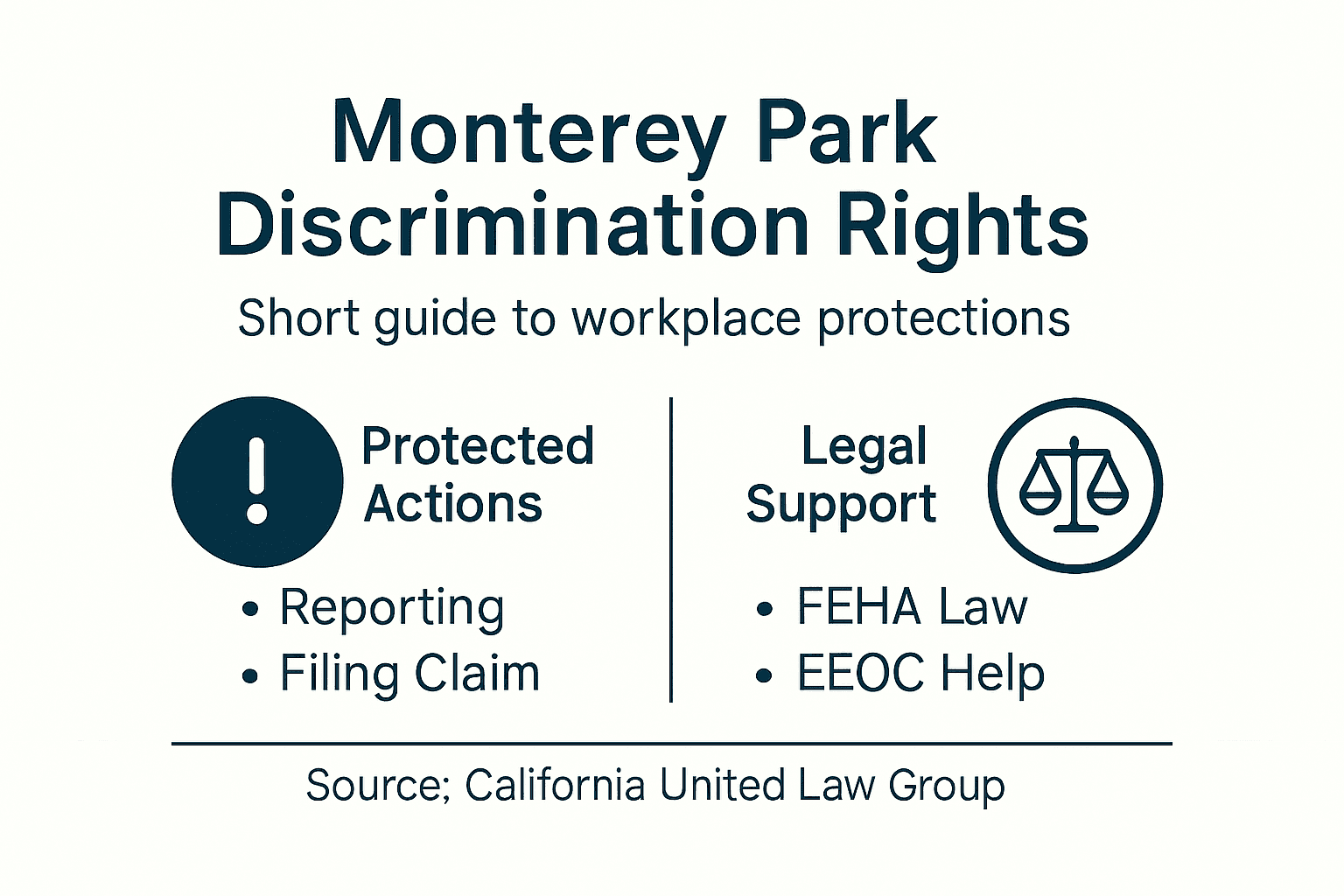
Employees experiencing national origin discrimination in Monterey Park have multiple legal avenues to protect their rights. Filing a discrimination complaint can be accomplished through state and federal agencies that investigate workplace violations and provide critical protections for workers.
Key steps in the claims process include:
- Documenting specific instances of discriminatory treatment
- Gathering supporting evidence such as emails, witness statements, and performance records
- Identifying dates and details of discriminatory incidents
- Preserving communication records related to the discrimination
- Maintaining a confidential personal log of events
Legal Filing Options exist through two primary channels: the California Civil Rights Department (CRD) and the federal Equal Employment Opportunity Commission (EEOC). Federal discrimination complaint procedures require careful documentation and timely filing to preserve legal rights.
Employees are protected from retaliation when filing legitimate discrimination complaints, regardless of their immigration status.
California law provides broad anti-retaliation protections. In Yanowitz v. L’Oreal USA, Inc. (2005) 36 Cal.4th 1028, the California Supreme Court held that an employer retaliates against an employee when it takes an adverse employment action because the employee opposed conduct forbidden by FEHA, even if the underlying discrimination claim is ultimately unsuccessful.
Important Considerations for Filing:
- Complaints with the California Civil Rights Department (CRD) must generally be filed within three years of the last discriminatory act under FEHA. Federal EEOC complaints must be filed within 300 days in California (a ‘deferral state’). Missing these deadlines can permanently bar your claims, so prompt action is critical.
- Evidence quality and comprehensiveness are critical to successful claims
- Multiple filing options exist for maximum legal protection
- Free consultations are available from employment rights organizations
- Legal representation can significantly strengthen your claim
Pro tip: Create a detailed, chronological record of discriminatory incidents, including specific dates, witnesses, and direct quotes, which can serve as crucial evidence in your legal proceedings.
Employer Duties and Compliance Requirements
Employers in Monterey Park must proactively prevent national origin discrimination and comply with comprehensive legal standards. Workplace anti-discrimination guidelines require employers to provide clear, accessible information about worker rights in languages commonly used at the workplace.
Key employer responsibilities include:
- Developing and implementing non-discriminatory hiring practices
- Providing annual workplace rights notifications
- Creating clear policies against national origin discrimination
- Training managers and supervisors on legal compliance
- Establishing effective complaint investigation procedures
- Maintaining confidential and thorough employment records
Legal Compliance Obligations extend beyond simple policy creation. Federal employment discrimination regulations mandate that employers must actively prevent harassment, ensure equal opportunity, and respond promptly to potential discriminatory situations.
Employers have mandatory legal obligations to prevent and address workplace discrimination. Under FEHA, employers must take immediate and appropriate corrective action when they know or should know of harassing conduct.
Specific Employer Requirements:
- Post required anti-discrimination notices in visible workplace areas
- Conduct regular training on workplace discrimination prevention
- Document and investigate all discrimination complaints
- Provide reasonable workplace accommodations
- Maintain strict confidentiality during investigations
- Protect employees from retaliation
Pro tip: Develop comprehensive written policies that clearly outline prohibited discriminatory behaviors and establish transparent reporting mechanisms for potential workplace violations.
This comparison highlights employee versus employer responsibilities under anti-discrimination law:
| Responsibility Area | Employee Role | Employer Role |
|---|---|---|
| Documentation | Record incidents, gather evidence | Maintain thorough employment records |
| Policy Awareness | Know rights and reporting channels | Provide clear, accessible policies |
| Action Steps | File complaints, consult legal help | Respond promptly, investigate all claims |
| Training/Knowledge | Stay informed on protections | Train staff on compliance requirements |
Stand Strong Against National Origin Discrimination in Monterey Park
National origin discrimination in the workplace can feel isolating and unfair. If you are facing unfair treatment based on your ethnicity, accent, or cultural background, you need trusted advocates who understand your rights under California FEHA and federal laws. This article highlights critical protections against hostile environments, wrongful hiring practices, and discriminatory policies that affect many employees every day.
At California United Law Group, P.C., we specialize in representing employees through every stage of workplace disputes including discrimination and wrongful termination. If you believe you have experienced national origin discrimination, understanding your legal options is an important first step. Explore how we can support you by visiting our Uncategorized page for more employment law insights or learn about wrongful termination protections on our Wrongful Termination page. When you are ready to take action, visit California United Law Group, P.C. and connect with our dedicated team to protect your workplace rights today.
Disclaimer: This article provides general information about national origin discrimination laws and is not legal advice. Every case is unique, and outcomes depend on specific facts and circumstances. If you believe you have experienced workplace discrimination, consult with a qualified employment attorney to discuss your specific situation.
Frequently Asked Questions
What is national origin discrimination in the workplace?
National origin discrimination occurs when employees face unfair treatment based on their ethnicity, cultural background, accent, or perceived national identity. It is recognized as illegal under federal employment laws.
What types of actions are considered national origin discrimination?
Actions that may constitute national origin discrimination include refusing to hire candidates based on their ethnic background, making employment decisions based on accent or linguistic characteristics, and fostering a hostile work environment through derogatory comments.
What legal protections are available against national origin discrimination?
Legal protections include the California Fair Employment and Housing Act (FEHA) and federal laws enforced by the Equal Employment Opportunity Commission (EEOC), which prohibit discrimination based on national origin and require employers to take action against discriminatory practices.
How can an employee file a complaint for national origin discrimination?
Employees can file a discrimination complaint through state agencies like the California Civil Rights Department (CRD) or the federal Equal Employment Opportunity Commission (EEOC). It is important to document specific instances of discrimination and gather supporting evidence prior to filing.
Recommended
- Employment Lawyer Monterey Park – Los Angeles Employment Lawyers | California United Law Group, P.C.
- Employment Lawyer El Monte – Los Angeles Employment Lawyers | California United Law Group, P.C.
- What Counts as Workplace Harassment in California? – Los Angeles Employment Lawyers | California United Law Group, P.C.
- Is Age Discrimination Common in Torrance Manufacturing? – California United Law Group